Wide Open. Gear

The Best Drones Under $1,000

Every drone you can buy for under $1,000 comes in under 249 g - which means the price ceiling and the US registration rule are the same decision.

By Stephen V.Last updated How we pick

Under $1,000 the drone to buy is the DJI Mini 5 Pro — a 1-inch 50 MP camera, 4K/60 HDR, omnidirectional obstacle sensing plus forward LiDAR and roughly 36 minutes of flight, all in an aircraft that still comes in under 249 g. It is for anyone who wants aerial stills good enough to print and does not want to register the aircraft. The budget pick is the DJI Mini 4K, the cheapest drone in our registry with a live price: a 1/2.3-inch sensor, 4K UHD, a three-axis mechanical gimbal and about 31 minutes per battery. It is the cheapest honest route into real aerial video, and nothing about it is a toy.

Every drone below carried a live price under $1,000 when our price layer last ran, on November 24, 2026, and the table prints each one’s current number with that date under it. All four have real headroom under the ceiling — the most expensive reads around three quarters of it — so this is not a band that falls apart on the next price move.

Here is the argument for the band, and it is a genuinely useful one rather than an arbitrary ceiling. $1,000 and 249 g are the same line. Every drone in our registry priced under $1,000 is built to come in under 249 g, and in the United States a drone flown recreationally under that weight does not need to be registered with the FAA. The first drone that costs more than $1,000 — the DJI Air 3S at 724 g — is also the first one that does. So the price decision and the paperwork decision are one decision, which is why this page exists separately from our best drones for photography roundup.

That other page ranks on image quality and includes the Air 3S, because if the best aerial picture is what you want, the dual-camera 724 g aircraft is the answer and the registration is just a form. This page inverts the order: the ceiling comes first, the weight class follows from it, and what we rank inside it is how much useful flying each dollar buys — sensor size, flight time, obstacle sensing and what is actually in the box.

One disclosure up front, because padding a list is worse than a short one: every drone in our registry is a DJI. We do not currently carry an Autel, a Skydio or a Potensic, so this page does not pretend to compare brands. It compares the four sub-$1,000 aircraft we can actually describe from published specifications, and it tells you which one to buy.

How this is funded: we earn a commission if you buy through our links, at no extra cost to you. It never changes which product we recommend, and we’ll tell you plainly when to skip one. Full disclosure.

Quick picks

Ranked on published specs and buyer fit. Select a row to jump to the full write-up. We have not tested these products — here is exactly what we do instead.

#ProductBest forPrice
1
DJI Mini 5 Pro

DJI Mini 5 Pro

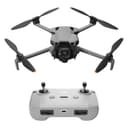
The first sub-249 g drone with a true 1-inch sensor, which is the single biggest jump in aerial image quality you can get without crossing the weight line that triggers US registration. You get 50 MP stills, 4K/60 HDR and omnidirectional obstacle sensing backed by a forward LiDAR that still sees in near-darkness. It costs about as much as a mid-range mirrorless body, and that is the only real catch.

Best overall
$759.00 · View on Amazon

Price as of November 24, 2026. #ad How we’re funded

2
DJI Mini 3

DJI Mini 3

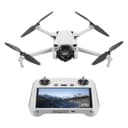
The step up from the Mini 4K: a larger sensor, true vertical shooting for social, and longer battery life, still under 249 g. If you post to Reels or TikTok from the air, the native vertical mode alone can justify the jump.

Best for vertical video
$465.00 · View on Amazon

$549.0015% off

Price as of November 24, 2026. #ad How we’re funded

3
DJI Flip

DJI Flip

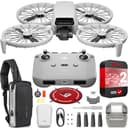
The safest way to learn to fly. Full-coverage propeller guards let you fly indoors and close to people without shredding a prop or a finger, and it still shares the Mini's 1/1.3-inch 48 MP sensor and a real 3-axis gimbal - so the footage is a long way above a toy. It comes in under 249 g too. The catch is bulk: the guard cage makes it chunkier folded than a Mini, and it is less sure-footed in gusty wind.

Best first drone
$449.00 · View on Amazon

Price as of November 24, 2026. #ad How we’re funded

4
DJI Mini 4K

DJI Mini 4K

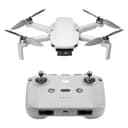
The easiest way into aerial video, and it stays under the 249 g line that keeps registration simple for most hobby fliers in the US. A 3-axis gimbal and stable 4K make it far more capable than the price suggests — the honest entry point before you spend real money on a drone.

Budget pick
$299.00 · View on Amazon

Price as of November 24, 2026. #ad How we’re funded

The picks in full

#1Best overall

DJI Mini 5 Pro

The first sub-249 g drone with a true 1-inch sensor, which is the single biggest jump in aerial image quality you can get without crossing the weight line that triggers US registration. You get 50 MP stills, 4K/60 HDR and omnidirectional obstacle sensing backed by a forward LiDAR that still sees in near-darkness. It costs about as much as a mid-range mirrorless body, and that is the only real catch.

Strengths

  • 1-inch, 50 MP sensor is a real step up in detail and low light over every smaller-sensor mini
  • Stays under 249 g, so it dodges the heavier US registration rules for recreational flying
  • Omnidirectional obstacle sensing with a forward LiDAR that works down to very low light

Trade-offs

  • Costs as much as a mid-range mirrorless camera
  • You will still want the pricier Fly More kit for spare batteries and a screen controller
Camera1-inch CMOS, 50 MP
Video4K/60 HDR, 4K/120 slow motion
WeightUnder 249 g
Obstacle sensingOmnidirectional + forward LiDAR
Max flightUp to ~36 min (standard battery)

Specifications read from the manufacturer listing, on July 20, 2026.

#2Best for vertical video

DJI Mini 3

The step up from the Mini 4K: a larger sensor, true vertical shooting for social, and longer battery life, still under 249 g. If you post to Reels or TikTok from the air, the native vertical mode alone can justify the jump.

Strengths

  • Larger sensor and better low-light than the Mini 4K
  • True vertical (portrait) shooting for social
  • Longer battery life, still under 249 g

Trade-offs

  • No obstacle sensors on the base model
  • Costs meaningfully more than the Mini 4K
Camera1/1.3-inch sensor, 4K HDR
Stabilization3-axis mechanical gimbal
WeightUnder 249 g
FeatureTrue vertical shooting mode

Specifications read from the manufacturer listing, on July 18, 2026.

#3Best first drone

DJI Flip

The safest way to learn to fly. Full-coverage propeller guards let you fly indoors and close to people without shredding a prop or a finger, and it still shares the Mini's 1/1.3-inch 48 MP sensor and a real 3-axis gimbal - so the footage is a long way above a toy. It comes in under 249 g too. The catch is bulk: the guard cage makes it chunkier folded than a Mini, and it is less sure-footed in gusty wind.

Strengths

  • Full-coverage propeller guards make indoor and close-quarters flying far more forgiving
  • Same 1/1.3-inch 48 MP sensor and 3-axis gimbal as the pricier Minis
  • Palm takeoff and under 249 g - approachable and registration-light for hobby use

Trade-offs

  • The propeller cage makes it bulkier folded than a Mini
  • Lighter and less stable in gusty wind than the heavier Air series
Camera1/1.3-inch CMOS, 48 MP
Video4K up to 60fps HDR
Stabilization3-axis mechanical gimbal
WeightUnder 249 g
Max flightUp to ~31 min
IncludesFlip, DJI RC-N3 controller, one battery, spare propellers, gimbal protector; this listing adds a sling bag, landing pad and a 2-year CPS extended warranty

Specifications read from the manufacturer listing, on September 15, 2026.

#4Budget pick

DJI Mini 4K

The easiest way into aerial video, and it stays under the 249 g line that keeps registration simple for most hobby fliers in the US. A 3-axis gimbal and stable 4K make it far more capable than the price suggests — the honest entry point before you spend real money on a drone.

Strengths

  • Under 249 g, so it dodges the heavier registration rules for hobby use
  • 3-axis mechanical gimbal for genuinely smooth 4K
  • Long transmission range and beginner-friendly flight modes

Trade-offs

  • Smaller sensor than the pricier Mini 3/4 Pro
  • No obstacle avoidance
Camera1/2.3-inch sensor, 4K UHD
Stabilization3-axis mechanical gimbal
WeightUnder 249 g
Max flightUp to ~31 min per battery

Specifications read from the manufacturer listing, on July 18, 2026.

How we ranked these

1. Sensor size, because it is the specification that decides whether the footage survives a grey day. The spread here is wide: a 1-inch sensor on the Mini 5 Pro, 1/1.3-inch on the Mini 3 and the Flip, and 1/2.3-inch on the Mini 4K. That ordering explains most of the price gaps on this page and nearly all of the difference you will see in the files.

2. Flight time per battery, as published. Three of these are rated around 31 minutes and the Mini 5 Pro around 36 on its standard battery. In practice you fly less than the rating, because you land with a reserve, but the published figure is the right way to compare them.

3. Obstacle sensing, which is what stops a $500 mistake. This is the single biggest gap in this band. The Mini 5 Pro has omnidirectional sensing plus forward LiDAR. The cheaper aircraft here do not match that, and on a first flight that difference is worth more than a sensor upgrade.

4. What is in the box, read off the live listing. Drone listings bundle differently and the bundle moves the price. We say what each listing we link actually includes rather than quoting a bare-aircraft figure against a kit price.

5. The 249 g line, which all four clear.

We have not flown these drones — here is exactly what we do instead — and every figure is DJI’s own published specification or the verified live listing, with the date we read it. No scores, because a score would imply a measurement we did not take.

What the top of the band buys

The Mini 5 Pro is the only drone here with a 1-inch sensor, and that is most of what you are paying for. A 1-inch sensor is several times the area of the Mini 4K’s, which shows up as cleaner shadows, usable footage later into the evening and stills at 50 MP you can actually crop into. It shoots 4K/60 in HDR and 4K/120 for slow motion.

The other half of the money goes on safety and endurance: omnidirectional obstacle sensing with forward LiDAR, and around 36 minutes on the standard battery. LiDAR is the feature that matters in low light, where camera-based sensing struggles exactly when you most want help. If you intend to fly near trees, buildings or at dusk, that is the upgrade to buy, and it is why this aircraft is also the top pick on our photography drone roundup and on our DJI camera roundup.

What it does not do is escape the sub-249 g compromises. Every drone on this page is light, and light aircraft are more affected by wind than heavier ones. None of them is a replacement for a 724 g airframe in a stiff breeze on a coast, and no amount of sensor makes them one.

The middle: vertical video, or propeller guards

The Mini 3 and the Flip read within about $20 of each other today and they share a 1/1.3-inch sensor class, so the choice between them is not about image quality. It is about which problem you have.

The Mini 3 has a true vertical shooting mode. The camera rotates so the sensor is used in portrait orientation, rather than shooting wide and cropping the sides off in the edit. If what you publish is Reels, Shorts or TikToks, that is not a convenience — it is the difference between a 4K vertical frame and a cropped-out centre strip. 4K HDR, three-axis mechanical gimbal, sub-249 g.

The Flip has its propellers enclosed from the factory. That is the whole argument and it is a good one: the most common way a first drone dies is a propeller finding a branch, a doorframe or a hand. It carries a 1/1.3-inch 48 MP camera, 4K up to 60fps HDR, a three-axis mechanical gimbal and about 31 minutes of flight. Note that the listing we link bundles a sling bag, a landing pad and a two-year DJI Care extended warranty with the aircraft, controller, battery and spare propellers — which is why its price sits where it does against a bare Mini.

The bottom of the band is better than it sounds

The Mini 4K is the cheapest drone we list with a live price and it is a real aircraft, not a toy: 4K UHD video, a mechanical three-axis gimbal rather than software stabilization, roughly 31 minutes per battery and under 249 g. The mechanical gimbal is the part worth dwelling on, because it is what separates a drone from a flying phone camera — motors physically holding the lens level, with no resolution lost to digital correction.

The compromise is the sensor. At 1/2.3-inch it is the smallest here by a distance, which means noise arrives earlier in the evening and the stills do not take much cropping. Obstacle sensing is also where the money was saved. For learning to fly, for holiday footage and for establishing shots in good light, none of that will stop you — and we put the Mini 4K directly against the Mini 3 on our Mini 4K vs Mini 3 comparison if you are deciding between exactly those two.

What this band does not buy, and the rules to read first

Two focal lengths. No drone under $1,000 has a second camera. The DJI Air 3S pairs a 1-inch 50 MP wide at roughly 24mm equivalent with a 1/1.3-inch 48 MP telephoto at roughly 70mm, which is two framings from one flight. It is over this ceiling and over 249 g, and it is on our DJI camera roundup.

Freedom from the rules. Staying under 249 g means no FAA registration for recreational flight. It does not mean no rules. Remote ID, airspace authorisation, line-of-sight requirements and local restrictions can all still apply, and flying for anything commercial is a different regime entirely. Read the FAA’s own page before your first flight, and our drone photography starter guide covers what that means in practice along with the settings worth changing.

Spare batteries. Every price on this page is for a kit with one battery, unless the listing says otherwise. One battery is roughly half an hour of flying, and the second battery is the accessory that most changes how much you actually get out of a drone. Budget for it.
Frequently asked questions

What is the best drone under $1,000?

The DJI Mini 5 Pro. It is the only drone in this band with a 1-inch sensor, it shoots 4K/60 HDR and 4K/120, it has omnidirectional obstacle sensing plus forward LiDAR, and it is rated at roughly 36 minutes on the standard battery - all while staying under 249 g, so recreational flight needs no FAA registration.

Do I need to register a drone under $1,000 with the FAA?

Every drone in this roundup is built to come in under 249 g, and in the United States a drone flown recreationally under that weight does not require FAA registration. That is not the same as having no rules - Remote ID, airspace authorisation and line-of-sight requirements can still apply, and any commercial flying is a different regime. Check the FAA's own page before you fly.

What is the cheapest drone worth buying?

The DJI Mini 4K. It shoots 4K UHD, it has a real three-axis mechanical gimbal rather than software stabilization, it flies for about 31 minutes per battery and it comes in under 249 g. Its 1/2.3-inch sensor is the smallest in this roundup, so it struggles earlier as the light drops and the stills do not crop well - but for learning to fly and for daylight footage it is a genuine camera drone.

Is the DJI Mini 5 Pro worth it over the Mini 3?

If image quality is the reason you are buying, yes. The Mini 5 Pro moves from a 1/1.3-inch sensor to a 1-inch 50 MP one, adds 4K/120, adds omnidirectional obstacle sensing with forward LiDAR, and flies a few minutes longer. If you mainly publish vertical video, the Mini 3's true vertical shooting mode is a feature the specification sheets undersell, and the money saved buys spare batteries.

Which drone under $1,000 is best for beginners?

The DJI Flip, because its propellers are enclosed by guards from the factory and a clipped propeller is the most common way a first drone ends. It carries a 1/1.3-inch 48 MP camera, 4K up to 60fps HDR, a three-axis mechanical gimbal and about 31 minutes of flight. The listing we link also bundles a sling bag, a landing pad and a two-year extended warranty.

Are all drones under $1,000 made by DJI?

Every drone in our own registry is, and we would rather say that than pad this page with aircraft we cannot describe from published specifications. There are non-DJI drones in this price range from other manufacturers; we do not currently carry them, so we make no claims about them.

Sources

Keep reading