Wide Open. Gear

The Best Shotgun Mic for iPhone

Directional mics that plug straight into an iPhone — which one fits your port, which one monitors, and when a shotgun is the wrong answer entirely.

By Stephen V.Last updated How we pick

An iPhone shoots genuinely good video and records genuinely mediocre sound. The built-in mics sit at the edge of the phone, point at nothing in particular, and pick up the room, the traffic and your hand moving on the case. A small directional mic clipped to the phone fixes all of that for less than the price of a case and a screen protector.

The one thing that decides this purchase before anything else is which port your iPhone has. An iPhone 15 or newer has USB-C; an iPhone 14 or older has Lightning; and a mic built for one will not work on the other. After that it comes down to whether you also own a camera the mic should fit, and whether you need to hear what you are recording while you record it. Below are the picks for each case, plus the honest answer about when a clip-on wireless mic beats a shotgun outright.

How this is funded:we earn a commission if you buy through our links, at no extra cost to you. It never changes which product we recommend, and we’ll tell you plainly when to skip one. Full disclosure.

Quick picks

Ranked on published specs and buyer fit. Select a row to jump to the full write-up. We have not tested these products — here is exactly what we do instead.

#ProductBest forPrice
1
RODE VideoMic Me-C+

RODE VideoMic Me-C+

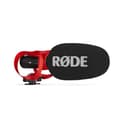
The shotgun mic built for a modern iPhone and nothing else. It plugs straight into the USB-C port, is MFi certified so the stock Camera app and Voice Memos both see it, and it needs no app, no adapter and no battery. There is even a 3.5mm headphone jack on the mic so you can monitor while you film — rare at this size and price.

Best for USB-C iPhones
$79.00 · View on Amazon

Price as of September 3, 2026. #ad How we’re funded

2
RODE VideoMic Me-L

RODE VideoMic Me-L

The same idea as the Me-C+, for the Lightning iPhones that the Me-C+ cannot fit. It plugs into the Lightning port and works with the stock Camera app, RODE's Reporter app and third-party recorders, with a directional pattern that pulls your voice out of the street noise around it. If your phone is an iPhone 14 or older, this is the one.

Best for Lightning iPhones
$48.95 · View on Amazon

$109.0055% off

Price as of September 3, 2026. #ad How we’re funded

3
RODE VideoMic GO II

RODE VideoMic GO II

The best on-camera mic for most creators, and the one to buy if you buy one. It plugs into a camera by 3.5mm or straight into a computer or phone over USB, needs no battery, and sounds dramatically better than any built-in mic. Directional enough to reject room noise, simple enough to forget about.

Best for phone and camera
$94.99 · View on Amazon

$109.0013% off

Price as of September 3, 2026. #ad How we’re funded

4
Deity V-Mic D4 Mini

Deity V-Mic D4 Mini

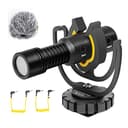
The value on-camera shotgun. It draws power straight from the camera's mic jack — no battery to forget — and delivers clean, directional sound for less than most rivals. A strong wind rating makes it a sensible cheap upgrade for outdoor talking-to-camera on a mirrorless or phone.

Best value
$49.95 · View on Amazon

Price as of September 3, 2026. #ad How we’re funded

The picks in full

#1Best for USB-C iPhones

RODE VideoMic Me-C+

The shotgun mic built for a modern iPhone and nothing else. It plugs straight into the USB-C port, is MFi certified so the stock Camera app and Voice Memos both see it, and it needs no app, no adapter and no battery. There is even a 3.5mm headphone jack on the mic so you can monitor while you film — rare at this size and price.

Strengths

  • Plugs directly into a USB-C iPhone or iPad — no adapter, no dongle
  • MFi certified, so it works in the stock Camera app and Voice Memos
  • Headphone jack on the mic for real-time monitoring while recording
  • Furry windshield in the box for outdoor shooting

Trade-offs

  • USB-C devices only — it will not work on an iPhone 14 or older
  • No gain control, so you set levels in the recording app
TypeDirectional smartphone shotgun
ConnectionUSB-C (MFi certified)
Monitoring3.5mm headphone output on the mic
IncludesFurry windshield
WeightAbout 21 g

Specifications read from the manufacturer listing, on September 3, 2026.

#2Best for Lightning iPhones

RODE VideoMic Me-L

The same idea as the Me-C+, for the Lightning iPhones that the Me-C+ cannot fit. It plugs into the Lightning port and works with the stock Camera app, RODE's Reporter app and third-party recorders, with a directional pattern that pulls your voice out of the street noise around it. If your phone is an iPhone 14 or older, this is the one.

Strengths

  • Plugs straight into a Lightning iPhone with no adapter
  • Directional pattern cuts the noise around what you are filming
  • Premium furry windshield included for outdoor use
  • Made in Australia with a 2-year warranty

Trade-offs

  • Lightning only — useless on an iPhone 15 or newer
  • No headphone monitoring, unlike the USB-C Me-C+
TypeDirectional smartphone shotgun
ConnectionLightning (iOS)
IncludesPremium furry windshield
Warranty2 years
WeightAbout 27 g

Specifications read from the manufacturer listing, on September 3, 2026.

#3Best for phone and camera

RODE VideoMic GO II

The best on-camera mic for most creators, and the one to buy if you buy one. It plugs into a camera by 3.5mm or straight into a computer or phone over USB, needs no battery, and sounds dramatically better than any built-in mic. Directional enough to reject room noise, simple enough to forget about.

Strengths

  • Works as both a camera mic (3.5mm) and a USB mic
  • No battery — powered by the camera or USB port
  • Tight directional pattern cuts room and side noise

Trade-offs

  • No headphone monitoring or on-mic gain controls
  • Still picks up handling noise without a shock mount
TypeOn-camera shotgun (condenser)
Outputs3.5mm TRS and USB-C
PowerCamera or USB (no battery)
PatternSupercardioid (directional)

Specifications read from the manufacturer listing, on July 18, 2026.

#4Best value

Deity V-Mic D4 Mini

The value on-camera shotgun. It draws power straight from the camera's mic jack — no battery to forget — and delivers clean, directional sound for less than most rivals. A strong wind rating makes it a sensible cheap upgrade for outdoor talking-to-camera on a mirrorless or phone.

Strengths

  • Powered by the camera — no battery to charge or forget
  • Good wind rejection for the price
  • Very affordable for a directional shotgun

Trade-offs

  • No headphone monitoring or USB output
  • Needs a device that supplies plug-in power
TypeOn-camera shotgun (condenser)
Output3.5mm TRS/TRRS
PowerPlug-in power from camera (1-5V)
PatternSupercardioid

Specifications read from the manufacturer listing, on July 18, 2026.

Check your port first

This is the whole decision in one line. iPhone 15, 15 Plus, 15 Pro, 15 Pro Max and the entire iPhone 16 series use USB-C, so they take the VideoMic Me-C+ (or any USB-C mic) directly. iPhone 14 and every model before it use Lightning, which is what the VideoMic Me-L is built for. RODE is explicit about this on both listings, and there is no adapter that makes the wrong one work properly. Buying the wrong port is the single most common mistake here.

The 3.5mm mics — the VideoMic GO II in analogue mode, the Deity V-Mic D4 Mini — are a different case. Modern iPhones have no headphone jack, so a 3.5mm mic needs Apple’s USB-C (or Lightning) to 3.5mm adapter in between. That works, and it is how a lot of people run a camera mic on a phone, but it is one more small thing to lose in a bag. The VideoMic GO II sidesteps it entirely by also having a USB-C output.

Do you want to hear what you are recording?

On a phone this matters more than it does on a camera, because the phone gives you almost no feedback about your audio until you play the clip back. The VideoMic Me-C+ has a 3.5mm headphone output on the mic itself, so you can plug earphones into the microphone and monitor live — genuinely unusual at this size and price. The Me-L does not, and neither does the Deity. If you are shooting anything you cannot re-shoot, that single feature is worth the price gap.

When a shotgun is the wrong tool

A shotgun mic on a phone works because it is close to your face. Point it at someone standing six feet away in a noisy street and it will still sound like a noisy street. If your subject is away from the phone, moving around, or being interviewed, a wireless clip-on mictravels with them and beats any shotgun for consistent close sound. If you always film yourself at arm’s length, the shotgun wins on simplicity, price and never needing a charge.

And if you are filming on a real camera at least as often as the phone, skip the phone-only mics and buy one mic that does both — that is what the VideoMic GO II is doing on this list. Our full shotgun microphone guide covers the camera-first options in more depth.
Frequently asked questions

Which shotgun mic works with an iPhone 15 or 16?

Any mic with a USB-C connector, and the RODE VideoMic Me-C+ is the one built specifically for the job — it is MFi certified, so the stock Camera app and Voice Memos both recognise it with no app or setup. A 3.5mm camera mic will also work if you add Apple's USB-C to 3.5mm adapter.

Will a USB-C mic work on an iPhone 14?

No. The iPhone 14 and every earlier model use a Lightning port, and RODE states plainly that the VideoMic Me-C+ is not compatible with them. For Lightning iPhones you want the VideoMic Me-L, which is the same idea built for the older connector.

Do I need an app to use a shotgun mic on an iPhone?

No. An MFi-certified mic like the VideoMic Me-C+ is recognised by iOS itself, so the stock Camera app, Voice Memos and third-party recorders all pick it up as soon as you plug it in. RODE's Reporter app gives you more control if you want it, but nothing requires it.

Can I monitor audio while filming on my phone?

Only if the mic gives you somewhere to plug headphones. The VideoMic Me-C+ has a 3.5mm headphone output built into the mic for exactly this. Most phone mics do not, which means you find out about a problem when you play the clip back — worth paying for if you shoot things you cannot repeat.

Shotgun mic or wireless mic for iPhone video?

A shotgun is better when the phone is close to your voice — selfie video, walk-and-talk, arm's-length vlogging — because it is simpler, cheaper and never needs charging. A wireless clip-on is better when the subject is away from the phone or moving, because the mic goes with them. They solve different problems.

Do these mics need batteries?

The phone mics here draw their power from the iPhone itself, so there is nothing to charge. That is a real advantage over wireless systems, which need both the transmitter and receiver charged before you can film anything.

Sources

Keep reading