Wide Open. Gear

The Best Lenses for Travel Photography

The lens you carry all day beats the lens that stays in the hotel. Weight, range and filter threads, ranked for one-bag travel on Sony, Fujifilm and full-frame.

By Stephen V.Last updated How we pick

If you shoot Sony APS-C and want one lens for a whole trip, the answer is the Sony E 16-55mm f/2.8 G — a 24–82mm equivalent range at a constant f/2.8, which covers the street scene, the portrait of your travel companion and the dinner table without a lens change, at 494 g. It is expensive and it is still the right buy, because the alternative is carrying three primes and changing them in the rain. If you would rather travel light than travel covered, the Sigma 30mm f/1.4 DC DN at 265 g is the one-prime answer, and it costs a fraction as much. On Fujifilm, the XF10-24mm f/4 R OIS WR is the weather-resistant one-lens pick; on Sony full-frame, the Tamron 17-28mm f/2.8 is the light, filter-friendly wide zoom and the Sony FE 35mm f/1.8 is the single prime that does the most jobs.

Travel is the one genre where the specification that decides everything is weight, and it is the one buyers reliably ignore. A 900 g zoom and a 300 g prime are identical on a tripod and nothing alike on the eighth hour of a walking day. The lens that is on your camera when the light goes gold is the lens that takes the photograph, and that is a decision made by your shoulder, not by an MTF chart. Everything below is listed with its real published weight for exactly that reason.

The second thing that matters, and the second thing people skip, is the filter thread. Travel means midday sun, water, glass, and skies you want to hold detail in — a circular polarizer and a neutral-density filter do more for travel photographs than another stop of aperture. A lens with a conventional screw thread (67mm on both Tamrons here, 72mm on the Fujifilm) takes cheap, common filters. A bulbous ultra-wide that takes none forces you into an expensive square-filter holder you will not pack.

How this is funded:we earn a commission if you buy through our links, at no extra cost to you. It never changes which product we recommend, and we’ll tell you plainly when to skip one. Full disclosure.

Quick picks

Ranked on published specs and buyer fit. Select a row to jump to the full write-up. We have not tested these products — here is exactly what we do instead.

#ProductBest forPrice
1
Sony E 16-55mm f/2.8 G

Sony E 16-55mm f/2.8 G

The one zoom to rule an APS-C kit. A constant f/2.8 across a 24-82mm equivalent range means it covers vlogging, portraits and everyday shooting without swapping lenses, and it is genuinely sharp corner to corner. Pricey, but it replaces two or three primes for run-and-gun video work.

Best overall for Sony APS-C
$1,698.00 · View on Amazon

Price as of October 27, 2026. #ad How we’re funded

2
Sigma 30mm f/1.4 DC DN

Sigma 30mm f/1.4 DC DN

The default everyday prime for a Sony crop body like the ZV-E10 or a6400. A ~45mm equivalent field of view, a bright f/1.4 aperture for low light and blur, and a price that makes it a no-brainer first upgrade from the kit zoom.

Best lightweight prime
$344.00 · View on Amazon

Price as of October 27, 2026. #ad How we’re funded

3
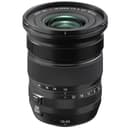
Fujifilm XF10-24mmF4 R OIS WR

Fujifilm XF10-24mmF4 R OIS WR

The X-mount landscape zoom, and the only pick here that combines stabilization, weather resistance and an aperture ring. A 15-36mm equivalent range covers the classic landscape focal lengths rather than stopping short of them, which means it can be the only lens you carry on a hike.

Best for Fujifilm
$1,199.00 · View on Amazon

Price as of October 27, 2026. #ad How we’re funded

4
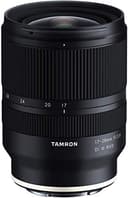
Tamron 17-28mm f/2.8 Di III RXD

Tamron 17-28mm f/2.8 Di III RXD

The sensible way into full-frame wide-angle on Sony. You give up the last 3mm of width against a 14-24mm and you get a lens that costs far less, weighs 420 g, and takes ordinary 67mm screw-in filters — which matters more for landscape work than the extra millimeters do, because a polarizer and an ND are how you control a sky and a waterfall.

Best for Sony full-frame
$491.99 · View on Amazon

Price as of October 27, 2026. #ad How we’re funded

5
Sony FE 35mm f/1.8

Sony FE 35mm f/1.8

The most useful single prime for a hybrid creator. 35mm is wide enough for handheld vlogging and environmental shots, fast enough for low light, and the autofocus is quick and near-silent — unlike the cheaper 50mm f/1.8. On APS-C it becomes a natural ~52mm everyday lens.

Best for photo and video
$798.00 · View on Amazon

Price as of October 27, 2026. #ad How we’re funded

The picks in full

#1Best overall for Sony APS-C

Sony E 16-55mm f/2.8 G

The one zoom to rule an APS-C kit. A constant f/2.8 across a 24-82mm equivalent range means it covers vlogging, portraits and everyday shooting without swapping lenses, and it is genuinely sharp corner to corner. Pricey, but it replaces two or three primes for run-and-gun video work.

Strengths

  • Constant f/2.8 across a versatile 24-82mm equivalent range
  • Sharp across the frame; G-series build quality
  • Fast, quiet autofocus for video

Trade-offs

  • Expensive — more than most crop bodies
  • No optical stabilization; heavier than a prime
Mount / formatSony E, APS-C
Focal length16-55mm (24-82mm equivalent)
Max apertureConstant f/2.8
Weight494 g

Specifications read from the manufacturer listing, on August 17, 2026.

#2Best lightweight prime

Sigma 30mm f/1.4 DC DN

The default everyday prime for a Sony crop body like the ZV-E10 or a6400. A ~45mm equivalent field of view, a bright f/1.4 aperture for low light and blur, and a price that makes it a no-brainer first upgrade from the kit zoom.

Strengths

  • ~45mm equivalent — a natural, versatile field of view
  • Bright f/1.4 for low light and background blur
  • Excellent image quality for the money

Trade-offs

  • APS-C only
  • A little wide for tight headshot portraits
Mount / formatSony E, APS-C
Focal length30mm (45mm equivalent)
Max aperturef/1.4
Weight265 g

Specifications read from the manufacturer listing, on July 18, 2026.

#3Best for Fujifilm

Fujifilm XF10-24mmF4 R OIS WR

The X-mount landscape zoom, and the only pick here that combines stabilization, weather resistance and an aperture ring. A 15-36mm equivalent range covers the classic landscape focal lengths rather than stopping short of them, which means it can be the only lens you carry on a hike.

Strengths

  • 15-36mm equivalent — wide enough for big scenes, long enough for a tighter composition
  • Optical stabilization plus Fujifilm's WR weather resistance
  • About 385 g, with a conventional 72mm filter thread

Trade-offs

  • Constant f/4 — slower than the Tamron 11-20mm f/2.8 for night work
  • Costs considerably more than the third-party X-mount ultra-wides
  • Fujifilm publishes no stop rating for the OIS on its specification page
Mount / formatFujifilm X, APS-C
Focal length10-24mm (15-36mm equivalent)
Max apertureConstant f/4
StabilizationOptical (OIS); no stop figure published
Filter thread72mm
WeightAbout 385 g (excluding caps and hood)

Specifications read from the manufacturer listing, on October 16, 2026.

#4Best for Sony full-frame

Tamron 17-28mm f/2.8 Di III RXD

The sensible way into full-frame wide-angle on Sony. You give up the last 3mm of width against a 14-24mm and you get a lens that costs far less, weighs 420 g, and takes ordinary 67mm screw-in filters — which matters more for landscape work than the extra millimeters do, because a polarizer and an ND are how you control a sky and a waterfall.

Strengths

  • Constant f/2.8 across the range — unusual at this price and useful after dark
  • 67mm front filter thread, so standard circular polarizers and NDs screw straight on
  • 420 g, light enough to carry all day on a hike

Trade-offs

  • 17mm is not as dramatic as a 14mm or 15mm for tight interiors and big skies
  • Sony E only — no Canon RF or Nikon Z version
  • No optical stabilization; you rely on your body's IBIS or a tripod
Mount / formatSony E, full-frame
Focal length17-28mm
Max apertureConstant f/2.8 (minimum f/22)
Filter thread67mm
Closest focus0.19 m at 17mm, 0.26 m at 28mm
Weight420 g

Specifications read from the manufacturer listing, on October 16, 2026.

#5Best for photo and video

Sony FE 35mm f/1.8

The most useful single prime for a hybrid creator. 35mm is wide enough for handheld vlogging and environmental shots, fast enough for low light, and the autofocus is quick and near-silent — unlike the cheaper 50mm f/1.8. On APS-C it becomes a natural ~52mm everyday lens.

Strengths

  • Fast, quiet autofocus that suits video and stills
  • 35mm is wide enough for arm's-length vlogging
  • Compact and light for its speed

Trade-offs

  • Costs more than the 50mm f/1.8
  • Not as much subject compression as an 85mm for portraits
Mount / formatSony E, full-frame
Focal length35mm (52mm on APS-C)
Max aperturef/1.8
Weight280 g

Specifications read from the manufacturer listing, on July 18, 2026.

One zoom or one prime? Answer this first

Every travel lens question reduces to this trade, and there is no universally right answer — only a right answer for how you travel.

A zoom if your trip is unrepeatable. A week in a city you will not return to is not the time to discover you cannot frame the cathedral. A 16-55mm on APS-C covers 24mm wide to 82mm tight, which is the range almost every travel photograph actually lives in. You pay for that in money and in roughly 230 g over a prime.

A prime if your trip is long or your back is the constraint. A 265 g Sigma 30mm f/1.4 on a crop body gives you a ~45mm equivalent — close to how your eye frames a scene — plus two full stops more light than an f/2.8 zoom, which is the difference between hand-holding a lit street at night and not. You reframe by walking, which is what you were doing anyway.

The honest middle path is one zoom and one fast prime, and if that is your plan, buy the zoom first. A prime-only kit will frustrate you on exactly one day of the trip; a slow-zoom-only kit will frustrate you every evening.

Full-frame travel: wide and light, not wide and heroic

On Sony full-frame the Tamron 17-28mm f/2.8 is the pick, and the reasoning is deliberately unglamorous. You give up the last 3mm of width against a 14-24mm, and in exchange you get 420 g, a constant f/2.8 and a 67mm screw-in filter thread. For travel, those three things beat the extra millimeters every time: the polarizer you can actually fit is worth more than a focal length you will use on two frames.

It focuses to 0.19 m at 17mm, which matters more than it sounds on a trip — it lets a wide lens double as a close-up lens for market stalls and food, so you are not carrying a macro as well. There is no optical stabilization, so you are relying on your body’s IBIS or a surface, and the lens is Sony E only. If you want one full-frame prime instead, the FE 35mm f/1.8 at 280 g is the better travel choice than a 50mm: 35mm is wide enough to show where you are standing, and on an APS-C body it becomes a ~52mm everyday lens if you later switch.

Fujifilm travel: the one weather-resistant pick

The XF10-24mm f/4 R OIS WR is the only lens on this page that combines optical stabilization, weather resistance and an aperture ring, and for travel that combination is worth more than a stop of aperture. A 15–36mm equivalent range covers the big landscape and the tighter composition, so on a hike it can genuinely be the only lens you carry, at about 385 g with a conventional 72mm filter thread.

The cost is f/4 rather than f/2.8, which shows up after dark, and Fujifilm publishes no stop rating for the OIS on its own specification page — so we are not going to quote one. If night shooting is a priority for your trip, pair it with a fast prime rather than expecting one zoom to do both.

What to carry, by trip

City break, three to five days. One standard zoom. The 16-55mm on APS-C or a 35mm prime on full-frame. You will walk twenty kilometers a day and change lenses never.

Hiking and landscape. One wide-ish zoom with a filter thread and a polarizer screwed into it: the XF10-24mm on Fujifilm, the 17-28mm on Sony full-frame. If the trip is specifically about landscapes rather than travel generally, our landscape lens roundup ranks the ultra-wides properly.

Long trip, one bag, mixed subjects. One fast prime on the body, one zoom in the bag. The Sigma 30mm f/1.4 and the 16-55mm is the classic APS-C pairing and weighs 759 g together — less than many single full-frame standard zooms.

Travel video. The FE 35mm f/1.8 or the 16-55mm, both of which have fast, quiet autofocus that does not record itself. Our video lens roundup goes further into focus breathing and parfocal behavior.

The specifications that matter on a trip

Weight, with the body. Add the lens weight to your camera and then imagine it on a neck strap for ten hours. A 494 g zoom on a 377 g body is 871 g; the same body with the 265 g Sigma is 642 g. That 229 g gap is the difference between a camera you take out at dinner and one you leave in the room.

Filter thread, and whether it is a common size. 67mm and 72mm are everywhere and cheap. A lens that needs an 82mm or takes no filter at all means a second purchase, and on a trip that means no polarizer.

Closest focus. Travel photography is half landscapes and half details — the food, the tile, the hands. A lens that focuses to about 0.2 m saves you from carrying a second lens for that; one that stops at 0.4 m does not.

Maximum aperture, for evenings not for blur. On a trip the practical value of f/1.4 or f/2.8 is hand-holdability after sunset, not background separation. If you want to understand how much light each stop is actually worth, see aperture, explained, and prime vs zoom lenses for the full version of the trade above.

One thing that is not on that list: ultimate corner sharpness. Every lens here is sharp enough that the limiting factor on a travel photograph will be the light, the moment and whether you were carrying the camera at all.

Frequently asked questions

What is the best lens for travel photography?

For Sony APS-C, the Sony E 16-55mm f/2.8 G — a 24-82mm equivalent range at constant f/2.8 covers nearly every travel photograph without a lens change. If weight matters more than range, a compact fast prime such as the Sigma 30mm f/1.4 DC DN at 265 g is the better buy, and it costs far less.

Is one lens enough for a trip?

Usually, yes, if it is a standard zoom. A 24-80mm equivalent range covers streets, interiors, portraits and details. One-prime travel also works well and weighs less, but you reframe by walking — which is fine in a city and limiting at a viewpoint.

What focal length is best for travel?

A 24-80mm equivalent range if you want one zoom; around 35mm equivalent if you want one prime, because it is wide enough to show the place and tight enough for a portrait. Ultra-wide lenses are specialist tools for interiors and big landscapes, not general travel lenses.

Do I need a weather-sealed lens for travel?

It helps if your trips involve coastlines, dust or rain, and it costs money you could spend on glass. The Fujifilm XF10-24mm is the weather-resistant pick here. Sealing is not a substitute for care — see our weather-sealing explainer for what the ratings actually promise.

Prime or zoom for travel photography?

Zoom if the trip is short and unrepeatable, prime if the trip is long or weight is your real constraint. A fast prime buys you two stops of light for night shooting and saves 200 g or more; a zoom buys you every frame you would otherwise miss.

Why does the filter thread matter on a travel lens?

Because a circular polarizer and a neutral-density filter do more for travel images than an extra stop of aperture, and both screw into a conventional thread. Common sizes such as 67mm and 72mm are cheap and available everywhere; a lens that takes no front filter forces you into a bulky square-filter holder.

How much should a travel lens weigh?

Under about 500 g for a zoom and under about 300 g for a prime is the band where a lens stays on the camera all day. There is no hard rule, but add the published lens weight to your body weight before you buy — the total is what you will be carrying.

Sources

Keep reading