Wide Open. Gear

The Creator Audio Kit Under $500

The budget where you stop compromising — a broadcast desk mic, a wireless kit that saves bad takes, or both ways of recording covered at once.

By Stephen V.Last updated How we pick

Five hundred dollars is the point where creator audio stops being about damage limitation. Under $200 you are choosing which single compromise to accept. Here you can buy a microphone that makes an ordinary bedroom sound like a room somebody thought about, or a wireless system that rescues a badly levelled take rather than losing it — and, if you choose carefully, cover both the desk and the camera in one go.

Two features justify the step up, and they are worth naming because everything else at this price is marketing. The first is a dynamic capsule with onboard processing, which rejects room reflections by design and fixes the problem most creators actually have. The second is 32-bit float recording, which gives a wireless system so much headroom that a clipped or whisper-quiet take can be pulled back in the edit. Below are the picks, then the worked kits that fit the budget. Prices move, so plan against the live figure on each card.

How this is funded:we earn a commission if you buy through our links, at no extra cost to you. It never changes which product we recommend, and we’ll tell you plainly when to skip one. Full disclosure.

Quick picks

Ranked on published specs and buyer fit. Select a row to jump to the full write-up. We have not tested these products — here is exactly what we do instead.

#ProductBest forPrice
1
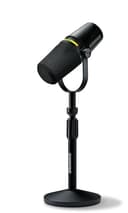
Shure MV7+

Shure MV7+

The mic that fixes bad rooms, in its current form. The same forgiving dynamic capsule that made the original MV7 the default podcast mic, now with USB-C, onboard digital processing and a real-time denoiser. Shure has discontinued the original MV7, so this is the MV7 you buy new today.

Best at a desk
$319.00 · View on Amazon

Price as of September 3, 2026. #ad How we’re funded

2
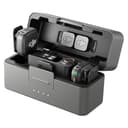
DJI Mic 3 (2 TX + RX + Charging Case)

DJI Mic 3 (2 TX + RX + Charging Case)

DJI's current wireless flagship, and the kit to buy if you are starting from scratch. It keeps the 32-bit float safety net and the charging case that made the Mic 2 popular, then shrinks the transmitter to 16 grams, stretches battery life to a full working day, and adds timecode for multi-camera edits. Less visible on a collar, harder to run flat.

Best on a person
$219.00 · View on Amazon

$329.0033% off

Price as of September 3, 2026. #ad How we’re funded

3
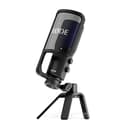
RODE NT-USB+

RODE NT-USB+

A studio-grade USB condenser that skips the complexity. Plug it into a computer, hear yourself through the built-in headphone jack with zero latency, and record clean, detailed voice with no interface to buy. Condensers pick up room sound, so it wants a quiet, treated space — get that right and it sounds superb.

Best value desk mic
$169.00 · View on Amazon

$179.006% off

Price as of September 3, 2026. #ad How we’re funded

4
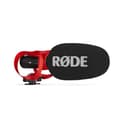
RODE VideoMic GO II

RODE VideoMic GO II

The best on-camera mic for most creators, and the one to buy if you buy one. It plugs into a camera by 3.5mm or straight into a computer or phone over USB, needs no battery, and sounds dramatically better than any built-in mic. Directional enough to reject room noise, simple enough to forget about.

Best on a camera
$94.99 · View on Amazon

$109.0013% off

Price as of September 3, 2026. #ad How we’re funded

The picks in full

#1Best at a desk

Shure MV7+

The mic that fixes bad rooms, in its current form. The same forgiving dynamic capsule that made the original MV7 the default podcast mic, now with USB-C, onboard digital processing and a real-time denoiser. Shure has discontinued the original MV7, so this is the MV7 you buy new today.

Strengths

  • Dynamic capsule rejects room echo and background noise
  • USB-C, real-time denoiser and onboard DSP
  • Customizable LED touch panel; still offers XLR

Trade-offs

  • Costs more than most USB condensers
  • Wants close, on-axis placement to sound its best
TypeDynamic (USB-C + XLR)
PatternCardioid
ProcessingOnboard DSP, real-time denoiser
ConnectionUSB-C and XLR

Specifications read from the manufacturer listing, on July 18, 2026.

#2Best on a person

DJI Mic 3 (2 TX + RX + Charging Case)

DJI's current wireless flagship, and the kit to buy if you are starting from scratch. It keeps the 32-bit float safety net and the charging case that made the Mic 2 popular, then shrinks the transmitter to 16 grams, stretches battery life to a full working day, and adds timecode for multi-camera edits. Less visible on a collar, harder to run flat.

Strengths

  • 16g transmitters — genuinely hard to spot on camera
  • 32-bit float and 24-bit recording onboard, plus timecode
  • 8h transmitter and 10h receiver, around 28h with the case

Trade-offs

  • More menus and modes than a simple two-button system
  • Steps up in price from the still-excellent Mic 2
TypeWireless clip-on system
Transmitters2 included, with charging case
Recording32-bit float / 24-bit, timecode
RangeUp to 400m line of sight

Specifications read from the manufacturer listing, on August 26, 2026.

#3Best value desk mic

RODE NT-USB+

A studio-grade USB condenser that skips the complexity. Plug it into a computer, hear yourself through the built-in headphone jack with zero latency, and record clean, detailed voice with no interface to buy. Condensers pick up room sound, so it wants a quiet, treated space — get that right and it sounds superb.

Strengths

  • Studio-quality detail from a plug-and-play USB mic
  • Built-in headphone jack for zero-latency monitoring
  • On-mic controls and included pop filter

Trade-offs

  • Condenser — reveals room echo and background noise
  • Needs a stand or boom arm for best placement
TypeUSB condenser
PatternCardioid
MonitoringBuilt-in headphone output
ConnectionUSB-C

Specifications read from the manufacturer listing, on July 18, 2026.

#4Best on a camera

RODE VideoMic GO II

The best on-camera mic for most creators, and the one to buy if you buy one. It plugs into a camera by 3.5mm or straight into a computer or phone over USB, needs no battery, and sounds dramatically better than any built-in mic. Directional enough to reject room noise, simple enough to forget about.

Strengths

  • Works as both a camera mic (3.5mm) and a USB mic
  • No battery — powered by the camera or USB port
  • Tight directional pattern cuts room and side noise

Trade-offs

  • No headphone monitoring or on-mic gain controls
  • Still picks up handling noise without a shock mount
TypeOn-camera shotgun (condenser)
Outputs3.5mm TRS and USB-C
PowerCamera or USB (no battery)
PatternSupercardioid (directional)

Specifications read from the manufacturer listing, on July 18, 2026.

Why a dynamic mic changes more than a better condenser

The instinct at this budget is to buy a more sensitive microphone. That is usually the wrong move. Condensers are more sensitive to everything — your voice, but also the reflection off the desk, the wall behind you and the fan across the room. A dynamic capsule is far less sensitive and needs you close to it, which is exactly why it sounds clean in an untreated bedroom: it simply does not hear much beyond about a foot. Add onboard processing that levels your voice and cuts steady background noise, and an ordinary room stops being the limiting factor.

The trade is that you must stay close and reasonably on-axis. If you move around, lean back, or want a mic that is forgiving of poor technique, a good condenser in a quiet room is still the more natural-sounding recording. Our full USB microphone roundup covers both types in more depth.

Three kits that fit inside $500

The podcast and voiceover kit.Put most of the budget into one broadcast dynamic with USB and XLR outputs. USB now, XLR later if you ever add an interface or a second host — which means the microphone survives every upgrade after it. What is left covers closed-back headphones and a way to get the mic properly close.

The video kit. A 32-bit float wireless system plus an on-camera shotgun. The wireless pair handles dialogue and interviews with the mic on the person; the shotgun handles pieces to camera, ambience and the shots where clipping a transmitter to someone is not practical. This pairing covers essentially every situation a solo filmmaker meets, and leaves room in the budget.

The do-both kit.A value USB condenser for the desk, a wireless pair for the field, and an on-camera shotgun for the camera. Three mics, three genuinely different jobs, and at the prices shown on the cards above they land around the $500 mark together — check the live figures before you buy, because that total is the one that moves. This is the kit for a creator who films, streams and records voiceover in the same week.

What still is not worth buying yet

Not a mixer. Not a rack of outboard processing. Not a second condenser “for backup.” At this level the remaining gains come from technique and the room: getting closer, pointing the mic correctly, recording room tone, and putting something soft on the hard surfaces around you. A $500 microphone in a bare tiled room still sounds like a bare tiled room.

If audio is genuinely handled, the next money goes elsewhere entirely — a key light does more for how finished a video feels than any further microphone will.
Frequently asked questions

What is the best creator microphone under $500?

For desk work, a broadcast dynamic with USB and XLR outputs and onboard processing — it rejects room noise by design and it is the pick that survives every future upgrade. For video work, a 32-bit float wireless system, because it puts the mic on the person and gives you the headroom to rescue a badly levelled take. Which one is 'best' depends entirely on where the sound happens.

Dynamic or condenser microphone for a home setup?

Dynamic, in almost every untreated room. A dynamic capsule hears very little beyond about a foot away, so echo, keyboards and fans largely disappear. A condenser sounds more open and detailed but hears everything, which means it needs a quiet, soft room to deliver on that. Fix the room and the condenser wins; do not fix the room and the dynamic wins.

Is 32-bit float recording worth paying for?

On a solo shoot, yes. It means a take that clipped or came in far too quiet can usually be recovered in the edit rather than re-shot, which matters most when nobody is watching the levels because you are also directing and operating. On a set with a dedicated sound person it is a much smaller advantage.

Do I need XLR at this budget?

Not immediately, but buying a mic that offers it costs you nothing and keeps the door open. USB gets you recording today with no interface. XLR is what you plug into later if you add a second host, a mixer or a field recorder — and a mic with both outputs means that upgrade does not require replacing the microphone.

Can $500 cover both a desk mic and a camera mic?

Yes. A value USB condenser, a wireless clip-on pair and an on-camera shotgun together land near the $500 mark at the prices shown on this page, and they cover three genuinely different jobs. Check the live prices on the cards before committing, since that combined total is the one most likely to move.

What should I buy after the microphone?

Closed-back headphones, then something to get the mic closer to your mouth, then something soft on the reflective surfaces in the room. Those three do more for the recording than the next tier of microphone would. Once audio is genuinely handled, lighting is the next thing viewers notice.

Sources

Keep reading