Wide Open. Gear

The Best Compact Cameras

The pocketable cameras worth buying when you don't want to carry a bag of lenses — a premium prime compact, a do-it-all zoom, and a pocket gimbal, matched to how you shoot.

By Stephen V.Last updated How we pick

The best camera is the one you have with you, and that is the whole case for a compact. A good fixed-lens camera slips into a jacket pocket or a small bag, so it comes on the trips and the walks where a mirrorless body and two lenses stay home. Modern compacts pair that portability with sensors big enough to leave a phone far behind — which is exactly the point, because if a compact doesn’t clearly beat the phone in your pocket, there’s no reason to carry it.

So we judge these on sensor size first, then on the lens and what the camera is really built to do. The picks split cleanly by job: a premium large-sensor camera with a fixed prime for the best image quality, a pocketable zoom compact that does a bit of everything including vlogging, and a pocket gimbal camera for the smoothest walk-and-talk video you can get this small. None of them takes interchangeable lenses — that’s the trade for the size — so the one you buy is defined by the lens it’s born with.

Every pick shows a live Amazon price and a buy button, so you can act on the recommendation without hunting for it. We haven’t physically tested these bodies — we say so, and we explain what we do instead on our methodology page. Want something you can change lenses on instead? Start with our best APS-C cameras guide.

How this is funded:we earn a commission if you buy through our links, at no extra cost to you. It never changes which product we recommend, and we’ll tell you plainly when to skip one. Full disclosure.

Quick picks

Ranked on published specs and buyer fit. Select a row to jump to the full write-up. We have not tested these products — here is exactly what we do instead.

#ProductBest forPrice
1
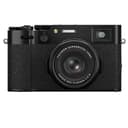
Fujifilm X100VI

Fujifilm X100VI

The camera everyone wants and few can find in stock. A fixed 35mm-equivalent lens, a gorgeous hybrid viewfinder, in-body stabilization and 40 megapixels make it a superb everyday and street camera — just know it is a deliberate, one-focal-length tool, not a do-everything body, and it sells above list.

Best overall
$2,119.00 · View on Amazon

$2,295.008% off

Price as of July 31, 2026. #ad How we’re funded

2
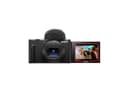
Sony ZV-1 II

Sony ZV-1 II

The most grab-and-go vlogging camera here: a wide 18-50mm equivalent zoom, a flip-out screen, and the best-in-class directional mic mean you can walk out the door and shoot talking-head video with no lens or mic to buy. The catch is the 1-inch sensor and no in-body stabilization.

Best all-rounder for vlogging
$948.00 · View on Amazon

$1,049.9910% off

Price as of July 31, 2026. #ad How we’re funded

3
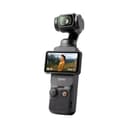
DJI Osmo Pocket 3

DJI Osmo Pocket 3

Not a traditional camera at all — a pocket gimbal with a 1-inch sensor bolted on — and that is exactly why it is the best walk-and-talk vlogging tool here. The 3-axis gimbal gives you glass-smooth motion no mirrorless body can match handheld, in something the size of a chunky pen.

Best for smooth video
$438.00 · View on Amazon

$499.0012% off

Price as of July 31, 2026. #ad How we’re funded

The picks in full

#1Best overall

Fujifilm X100VI

The camera everyone wants and few can find in stock. A fixed 35mm-equivalent lens, a gorgeous hybrid viewfinder, in-body stabilization and 40 megapixels make it a superb everyday and street camera — just know it is a deliberate, one-focal-length tool, not a do-everything body, and it sells above list.

Strengths

  • 40 MP sensor with in-body stabilization
  • Unique optical/electronic hybrid viewfinder
  • Pocketable, beautifully built, film-simulation color

Trade-offs

  • Fixed 35mm-equivalent lens only — no zoom, no swapping
  • Chronically out of stock and sold above list price
SensorAPS-C X-Trans CMOS 5 HR, 40 MP
LensFixed 23mm f/2 (35mm equivalent)
Video6.2K30, 4K60
Stabilization5-axis in-body (IBIS)
Weight521 g with battery

Specifications read from the manufacturer listing, on July 18, 2026.

#2Best all-rounder for vlogging

Sony ZV-1 II

The most grab-and-go vlogging camera here: a wide 18-50mm equivalent zoom, a flip-out screen, and the best-in-class directional mic mean you can walk out the door and shoot talking-head video with no lens or mic to buy. The catch is the 1-inch sensor and no in-body stabilization.

Strengths

  • Wider 18-50mm equivalent lens fits your face in an arm's-length selfie shot
  • Built-in directional 3-capsule mic and included windscreen are genuinely usable
  • Product-showcase and background-blur buttons are made for talking-to-camera

Trade-offs

  • 1-inch sensor trails APS-C rivals in low light
  • No in-body stabilization, so walking footage needs the digital crop
Sensor1-inch stacked CMOS, 20.1 MP
LensFixed 18-50mm equivalent f/1.8-4 zoom
Video4K30, FHD up to 120p
StabilizationDigital (Active) only, no IBIS
Weight292 g with battery

Specifications read from the manufacturer listing, on July 18, 2026.

#3Best for smooth video

DJI Osmo Pocket 3

Not a traditional camera at all — a pocket gimbal with a 1-inch sensor bolted on — and that is exactly why it is the best walk-and-talk vlogging tool here. The 3-axis gimbal gives you glass-smooth motion no mirrorless body can match handheld, in something the size of a chunky pen.

Strengths

  • Mechanical 3-axis gimbal — smoother than any in-body system
  • Large 1-inch sensor for a pocket device; 4K120 slow-mo
  • Face tracking spins the camera to keep you centered

Trade-offs

  • Fixed lens and a tiny screen
  • Short battery life; wind noise needs the add-on mic or windscreen
Sensor1-inch CMOS
Stabilization3-axis mechanical gimbal
Video4K120, up to 4K60 normal
Form factorPocket handheld gimbal camera
Weight179 g

Specifications read from the manufacturer listing, on July 18, 2026.

How to choose a compact camera

Start with the sensor, because it’s what separates a real camera from a phone. The Fujifilm X100VI has a large APS-C sensor — the same size found in many interchangeable-lens cameras — which is why its image quality, low-light performance and background blur are in a different league. The Sony ZV-1 II and DJI Osmo Pocket 3 use smaller 1-inch sensors, still far bigger than a phone’s and plenty for travel and video, but a clear step below the X100VI for outright quality.

Then decide what you need from the lens, since you can’t change it. The X100VI has a fixed 35mm-equivalent prime— one focal length, wonderful for street, travel and everyday photos, but it doesn’t zoom, so you move your feet. The ZV-1 II has a wide-to-short-tele zoomthat’s more flexible and wide enough to fit your face in an arm’s-length selfie, which is why it doubles as a vlogging camera. The Osmo Pocket 3 isn’t a traditional camera at all — it’s a pocket gimbal with a 1-inch sensor bolted on, so it gives you glass-smooth motion no other camera here can match handheld.

Finally, match the camera to the job. For the best photos in the smallest serious camera, and a viewfinder to shoot with in bright sun, the X100VI is the one people obsess over — just know it sells above list and is often out of stock. For a genuine do-everything pocket camera that shoots good stills and vlogs, the ZV-1 II is the sensible all-rounder. For travel and walk-and-talk video where smooth motion matters most, the Osmo Pocket 3 wins. Whichever you choose, a good microphone does more for video than any sensor upgrade, and our travel photography tips will get more out of whatever you carry.

A note on other compacts

Two names come up a lot that we haven’t featured as priced picks. The Canon PowerShot G7 X Mark IIIis a classic 1-inch pocket zoom that many YouTubers grew up on, but stock is thin and it often sells at a premium — check its live price against the ZV-1 II, which usually does more for the money. And a GoProor similar action camera is the pick if you want something waterproof and crash-proof for POV and sports rather than a general-purpose compact. If you think you’ll want to swap lenses later, a small interchangeable-lens body from our travel cameras or beginner mirrorlessguides is the better long-term buy — you give up a little pocketability for a lot more room to grow.
Frequently asked questions

Are compact cameras still worth buying over a phone?

Yes, if the compact has a genuinely bigger sensor and a better lens - which all three of these do. A larger sensor gathers far more light, so you get cleaner low-light shots, real background blur and more detail than a phone. The X100VI's APS-C sensor is the biggest jump; the 1-inch sensors in the ZV-1 II and Osmo Pocket 3 are smaller but still clearly ahead of a phone. If a compact doesn't beat your phone, don't bother.

Which compact camera is best for travel?

The Fujifilm X100VI if image quality and a viewfinder matter most, since its APS-C sensor and fixed 35mm-equivalent lens are ideal for street and everyday travel photos in a pocketable body. If you want a zoom for flexibility and the option to vlog, the Sony ZV-1 II is the more versatile all-rounder. For travel where smooth video is the priority, the Osmo Pocket 3's gimbal is unbeatable at this size.

Why doesn't a compact camera have interchangeable lenses?

That's the deliberate trade for the small size. A fixed lens lets the camera be far more pocketable and, in the X100VI's case, lets the lens be optimized for one focal length. If you want to change lenses, you need a mirrorless body, which is bigger and means carrying glass - see our travel cameras and beginner mirrorless guides for those options.

Is the Fujifilm X100VI worth the premium over the others?

For image quality, yes - its APS-C sensor, 40 megapixels, in-body stabilization and hybrid viewfinder put it well ahead of the 1-inch-sensor compacts, and the fixed 35mm lens is a joy for street and travel. The catches are real, though: it's a single-focal-length tool, it costs a lot more, and it routinely sells above list and out of stock. Buy it because you want that specific camera, not as a do-everything device.

Which of these is best for vlogging?

For talking to the camera while walking, the DJI Osmo Pocket 3, because its mechanical gimbal delivers smooth motion nothing else here can match and it fits in a pocket. For a more traditional camera that shoots strong stills and also vlogs well, the Sony ZV-1 II has a wide lens, a flip screen and a good built-in mic. The X100VI can shoot video but its fixed lens and form factor make it a stills-first camera.

Sources

Keep reading