Wide Open. Gear

The Best Key Light for YouTube

The light that makes a channel look consistent from video to video — from a desk panel you never touch to a COB you can shape properly.

By Stephen V.Last updated How we pick

A YouTube key light has a harder job than a light for calls. You are further from it, often standing rather than seated, and you need the same look on Tuesday that you got on Friday — because a channel where every video is lit differently reads as amateur long before anyone can explain why. That pushes you toward more output than a desk panel, and toward a light you can put on a stand and shape.

The real fork is between an edge-lit desk panel, which is tidy, software-controlled and perfect for a seated talking-head at a fixed desk, and a COB light with a softbox, which is brighter, far more controllable and the thing you buy once you want the image to look shot rather than lit. Below are the picks for each, plus the accent light that does most of the work in the background of every setup you have ever admired.

How this is funded:we earn a commission if you buy through our links, at no extra cost to you. It never changes which product we recommend, and we’ll tell you plainly when to skip one. Full disclosure.

Quick picks

Ranked on published specs and buyer fit. Select a row to jump to the full write-up. We have not tested these products — here is exactly what we do instead.

#ProductBest forPrice
1
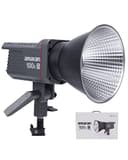
Aputure Amaran 100x S

Aputure Amaran 100x S

The step into a light that will still be in your kit years later. Aputure's Amaran line brings serious build quality, app control and reliable color accuracy, and the Bowens mount plus a bright 100W output make it a proper key light. If you want one light you won't outgrow, start here.

Best overall
$199.00 · View on Amazon

Price as of September 3, 2026. #ad How we’re funded

2
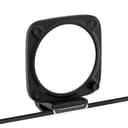
Elgato Key Light Neo

Elgato Key Light Neo

The streamer's key light, made simple. Elgato's Key Light Neo is an edge-lit panel you control from software on your PC or phone — no reaching behind the light to adjust it mid-stream. The soft, diffused output is flattering, and it clamps neatly to a desk. It is about convenience and integration, not raw power.

Best for a fixed desk
$89.99 · View on Amazon

Price as of September 3, 2026. #ad How we’re funded

3
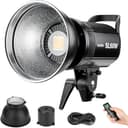
Godox SL60W LED

Godox SL60W LED

The COB light that gets serious creators off ring lights. A 60W daylight-balanced bulb on a Bowens mount means you can bolt on a real softbox and shape proper, cinematic light. Add a stand and modifier and you have a starter studio key light that punches far above its price.

Best value COB
$109.00 · View on Amazon

Price as of September 3, 2026. #ad How we’re funded

4
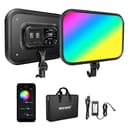
Neewer 18-inch RGB LED Panel

Neewer 18-inch RGB LED Panel

The fun light. A full-color RGB panel lets you throw a colored wash behind you — the blue-or-purple gamer/creator look — as well as clean white key light, with a high CRI so faces still look right. One panel behind you plus a key light in front is the classic two-light creator setup.

Best background accent
$125.18 · View on Amazon

$139.9911% off

Price as of September 3, 2026. #ad How we’re funded

The picks in full

#1Best overall

Aputure Amaran 100x S

The step into a light that will still be in your kit years later. Aputure's Amaran line brings serious build quality, app control and reliable color accuracy, and the Bowens mount plus a bright 100W output make it a proper key light. If you want one light you won't outgrow, start here.

Strengths

  • Bright, color-accurate 100W daylight output
  • Bowens mount and app/remote control
  • Aputure build quality and reliable support

Trade-offs

  • Costs more than a Godox SL60
  • White light only — colored looks need gels, not a built-in RGB mode
Type100W bi-color LED
ColorBi-color 2700-6500K, CRI 95+
MountBowens
ControlOn-unit, remote and app

Specifications read from the manufacturer listing, on August 17, 2026.

#2Best for a fixed desk

Elgato Key Light Neo

The streamer's key light, made simple. Elgato's Key Light Neo is an edge-lit panel you control from software on your PC or phone — no reaching behind the light to adjust it mid-stream. The soft, diffused output is flattering, and it clamps neatly to a desk. It is about convenience and integration, not raw power.

Strengths

  • Adjust brightness and color from your PC or phone
  • Soft, diffused, flattering output
  • Integrates with Elgato's streaming ecosystem

Trade-offs

  • Less raw output than a COB light with a softbox
  • Priced above generic panels for the software convenience
TypeEdge-lit LED panel
ColorBi-color 2900-7000K
ControlSoftware (PC), app, on-unit
MountingDesk clamp / stand

Specifications read from the manufacturer listing, on July 18, 2026.

#3Best value COB

Godox SL60W LED

The COB light that gets serious creators off ring lights. A 60W daylight-balanced bulb on a Bowens mount means you can bolt on a real softbox and shape proper, cinematic light. Add a stand and modifier and you have a starter studio key light that punches far above its price.

Strengths

  • Bright 60W daylight output for a genuine key light
  • Bowens mount fits countless softboxes and modifiers
  • Silent fan option and steady, flicker-free output

Trade-offs

  • Daylight only — no color-temperature adjustment
  • You still need to buy a stand and softbox
Type60W COB LED
Color5600K daylight
MountBowens
PowerAC mains

Specifications read from the manufacturer listing, on July 18, 2026.

#4Best background accent

Neewer 18-inch RGB LED Panel

The fun light. A full-color RGB panel lets you throw a colored wash behind you — the blue-or-purple gamer/creator look — as well as clean white key light, with a high CRI so faces still look right. One panel behind you plus a key light in front is the classic two-light creator setup.

Strengths

  • Full RGB color plus accurate white light
  • High CRI/TLCI for good skin tones
  • App control and built-in lighting effects

Trade-offs

  • Needs a stand (not always included)
  • One panel alone is a background accent, not a key light
Type18.3-inch RGB LED panel
ColorFull RGB, 2500-8500K white
Color accuracyCRI/TLCI 97+
ControlOn-unit and app

Specifications read from the manufacturer listing, on July 18, 2026.

Why output buys you options

A brighter light is not about blasting your face. It is about being able to put a big softbox in front of it, stand further back, close the aperture on your camera and still have a clean image — and about overpowering whatever daylight is coming through the window so your footage looks the same at 9am and 5pm. A 100W COB with a softbox is a genuinely soft, large source. A small panel at the same distance is a small, harder one, no matter how much you diffuse it.

That is the honest case for stepping up from a desk panel. The honest case against is space: a COB needs a light stand, a softbox and somewhere to leave them, which is a real cost in a room you also live in. If your setup has to disappear between videos, the desk panel wins on practicality and you should not feel bad about it.

Colour accuracy is the spec worth reading

CRI and TLCI ratings describe how faithfully a light renders colour compared to daylight. Cheap LEDs with poor ratings tend to render skin tones slightly green or sallow, and the correction you apply in the grade never quite lands because the information was missing at capture. Ratings in the mid-nineties and above are what you want, and the picks here that publish a figure are noted on their cards below. It matters much more on YouTube than on a call, because you are grading the footage afterwards.

One light is a setup. Two lights is a look.

Start with the key: in front, slightly to one side, above eye level, angled down. That alone gets you most of the way. The second light almost never goes on your face — it goes behind you, washing a wall or a shelf with colour, which separates you from the background and gives the frame depth. That is what an RGB panel or a light wand is for, and it is the cheapest upgrade in the whole chain once your key is sorted. Our video lighting kits guide covers full multi-light setups if you want to go further.

Get the light right and the camera matters less than you think. Pair any of these with a YouTube camera and a decent microphone and you have the whole production chain covered.
Frequently asked questions

What key light do YouTubers actually use?

Two camps. Seated talking-head creators at a fixed desk mostly use edge-lit panels like the Elgato because they are tidy and controlled from software. Anyone shooting at a distance, standing, or wanting a cinematic look uses a COB light with a softbox, because it is brighter and far more shapeable. Both are legitimate; the choice follows how and where you film.

How many lights do I need for YouTube?

One, to start. A single key light in front and above you is the difference between looking lit and looking dim, and it is most of the improvement available. The second light is best spent behind you on the background rather than on your face — it adds depth and separation, which is what makes a setup look considered.

Is a COB light worth it over a panel?

If you have the space, yes. A COB with a softbox is brighter, which lets you stand further back, use a bigger diffuser and overpower daylight from a window so your footage is consistent all day. If your filming space has to pack away between videos, a desk panel is the more practical buy and the gap is smaller than it looks.

What is CRI and why does it matter?

CRI, and its video equivalent TLCI, measure how faithfully a light renders colour compared to a reference. Low-rated LEDs push skin tones green or sallow, and because the colour information was never captured properly, grading afterwards cannot fully fix it. Look for figures in the mid-nineties and above, which the better lights publish.

Do I need bi-colour or is daylight-only fine?

Daylight-only is fine if you control the room and always shoot the same way — it is usually brighter for the money. Bi-colour earns its keep when you film in different rooms, or alongside window light and warm household lamps, because you can match the light to whatever else is in the shot rather than fighting it in the edit.

Where should the key light go?

In front of you, off to one side by roughly thirty to forty-five degrees, above eye level and angled down. Straight-on light flattens the face; light from below looks unsettling; light from behind silhouettes you. Move it closer and dim it rather than further away and brighter — a close, large source is what makes light look soft.

Sources

Keep reading