Wide Open. Gear

The Best Mic for an Android Phone

USB-C plug-in shotguns, tiny wireless systems and a wired lav — the mics that work with an Android phone, and which one fits how you film.

By Stephen V.Last updated How we pick

If you film on an Android phone, buy the RODE VideoMic Me-C+ — a directional shotgun that plugs straight into the phone’s USB-C port with no adapter, no app and no battery. RODE publishes it as designed for Android and iOS devices with a USB-C port, which is the whole reason it leads this list: almost every mic marketed at phone creators is sold as an iPhone accessory, and most of the cheap ones assume a headphone jack your phone does not have. The Me-C+ also carries a 3.5mm headphone output on the mic itself, so you can hear what you are recording. If you need to be more than an arm’s length from the phone, go wireless with the DJI Mic Mini. If the mic must be invisible on camera, the Hollyland Lark M2 is the one. And if you want broadcast-style lavalier sound for the least money and do not mind a cable, the RODE smartLav+ still does that job.

The thing that makes Android mic shopping confusing is that “works with Android” is not one compatibility question, it is two. The first is physical: nearly all current Android phones have a USB-C port and no headphone jack, so a mic either terminates in USB-C or needs a USB-C adapter. The second is software: your phone has to route audio from that mic into the app you are recording in, and the stock camera app on some Android phones will quietly ignore an external mic even when the phone recognizes it. That is not a fault in the mic, and it has a reliable fix — see the section below.

Pick on distance, not price. If you hold the phone and talk into it, a plug-in shotgun is smaller, cheaper and has nothing to charge. If you are further than about three feet away, or there is traffic, a room, or a second person involved, no on-phone mic will save you and wireless is the answer. Everything below is chosen for that split.

How this is funded:we earn a commission if you buy through our links, at no extra cost to you. It never changes which product we recommend, and we’ll tell you plainly when to skip one. Full disclosure.

Quick picks

Ranked on published specs and buyer fit. Select a row to jump to the full write-up. We have not tested these products — here is exactly what we do instead.

#ProductBest forPrice
1
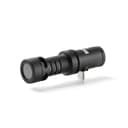
RODE VideoMic Me-C+

RODE VideoMic Me-C+

The shotgun mic built for a modern iPhone and nothing else. It plugs straight into the USB-C port, is MFi certified so the stock Camera app and Voice Memos both see it, and it needs no app, no adapter and no battery. There is even a 3.5mm headphone jack on the mic so you can monitor while you film — rare at this size and price.

Best overall
$79.00 · View on Amazon

Price as of October 10, 2026. #ad How we’re funded

2
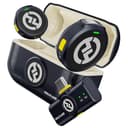
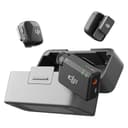
DJI Mic Mini (2 TX + RX)

DJI Mic Mini (2 TX + RX)

The wireless mic to buy if invisibility and price matter more than pro features. It is tiny — genuinely hard to spot clipped on a collar — with huge battery life and clean audio, for well under the Mic 2. You lose 32-bit float and some range, but for talking-head and interviews it is plenty.

Best wireless
$79.00 · View on Amazon

$99.0020% off

Price as of October 10, 2026. #ad How we’re funded

3
Hollyland Lark M2

Hollyland Lark M2

The wireless system built around being unseen: the transmitters are round, coin-sized clips or magnetic buttons that vanish on camera. Audio is clean, range is strong, and the price undercuts the big names. If your priority is a mic your audience never notices, this is the one.

Best invisible on camera
$76.00 · View on Amazon

Price as of October 10, 2026. #ad How we’re funded

4
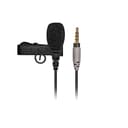
RODE smartLav+

RODE smartLav+

The cheapest way to get broadcast-style lavalier sound, if you don't mind a cable. It is a proper wired lav that plugs into a phone's headphone jack (or an adapter), so a single presenter gets clean, close, consistent audio for very little. Wired means no batteries and no dropouts.

Best wired lav
$55.90 · View on Amazon

$59.005% off

Price as of October 10, 2026. #ad How we’re funded

The picks in full

#1Best overall

RODE VideoMic Me-C+

The shotgun mic built for a modern iPhone and nothing else. It plugs straight into the USB-C port, is MFi certified so the stock Camera app and Voice Memos both see it, and it needs no app, no adapter and no battery. There is even a 3.5mm headphone jack on the mic so you can monitor while you film — rare at this size and price.

Strengths

  • Plugs directly into a USB-C iPhone or iPad — no adapter, no dongle
  • MFi certified, so it works in the stock Camera app and Voice Memos
  • Headphone jack on the mic for real-time monitoring while recording
  • Furry windshield in the box for outdoor shooting

Trade-offs

  • USB-C devices only — it will not work on an iPhone 14 or older
  • No gain control, so you set levels in the recording app
TypeDirectional smartphone shotgun
ConnectionUSB-C (MFi certified)
Monitoring3.5mm headphone output on the mic
IncludesFurry windshield
WeightAbout 21 g

Specifications read from the manufacturer listing, on September 3, 2026.

#2Best wireless

DJI Mic Mini (2 TX + RX)

The wireless mic to buy if invisibility and price matter more than pro features. It is tiny — genuinely hard to spot clipped on a collar — with huge battery life and clean audio, for well under the Mic 2. You lose 32-bit float and some range, but for talking-head and interviews it is plenty.

Strengths

  • Extremely small and light — nearly invisible on camera
  • Long battery life and simple, reliable operation
  • Well under the price of the Mic 2

Trade-offs

  • No 32-bit float; shorter range than the Mic 2
  • No onboard recording backup
TypeWireless clip-on system
Transmitters2 included, with charging case
BatteryUp to ~48h with the case
ConnectionCamera, USB-C, Bluetooth

Specifications read from the manufacturer listing, on July 18, 2026.

#3Best invisible on camera

Hollyland Lark M2

The wireless system built around being unseen: the transmitters are round, coin-sized clips or magnetic buttons that vanish on camera. Audio is clean, range is strong, and the price undercuts the big names. If your priority is a mic your audience never notices, this is the one.

Strengths

  • Coin-sized clip/magnetic transmitters are nearly invisible
  • Strong range and clean, hi-fi audio
  • Undercuts DJI and RODE on price

Trade-offs

  • No 32-bit float recording
  • Charging case adds bulk to an otherwise tiny kit
TypeWireless clip-on system
Transmitters2 included, with charging case
RangeUp to ~1000 ft line of sight
ConnectionCamera, USB-C, Lightning

Specifications read from the manufacturer listing, on July 18, 2026.

#4Best wired lav

RODE smartLav+

The cheapest way to get broadcast-style lavalier sound, if you don't mind a cable. It is a proper wired lav that plugs into a phone's headphone jack (or an adapter), so a single presenter gets clean, close, consistent audio for very little. Wired means no batteries and no dropouts.

Strengths

  • Genuine broadcast-style lavalier sound for very little
  • Wired — no batteries, no interference, no dropouts
  • Includes a windshield and mount clip

Trade-offs

  • Cable tethers you; needs an adapter for many devices
  • One presenter only per mic
TypeWired lavalier (omnidirectional)
ConnectionTRRS (3.5mm), phone-compatible
PowerNone required (wired)
IncludesWindshield, mount clip, pouch

Specifications read from the manufacturer listing, on July 18, 2026.

Will it work with my Android phone?

Three checks, in order, and they take a minute.

The port.If your phone has USB-C — which it almost certainly does — a USB-C mic like the Me-C+ plugs in directly, and a wireless receiver like the DJI Mic Mini’s or the Lark M2’s does too. A 3.5mm mic such as the smartLav+ needs a USB-C-to-headphone adapter, and it needs one with a DAC in it (the cheap passive ones only work on phones that still have analogue audio on the port).

The app. Open your recording app and check the audio source. Stock camera apps vary enormously between manufacturers in how willingly they use an external mic. If yours ignores it, a third-party video app that lets you select the input fixes it immediately, and is worth setting up before a shoot rather than during one.

The levels. None of these mics have a gain dial, so your recording app sets the level. Record fifteen seconds, play it back on headphones, and adjust before you film the thing that matters. This is the step everyone skips and it is the only one that catches a dead or distorted take.

Plug-in shotgun or wireless?

A plug-in shotgun sits on the phone and points where the phone points. It is directional, so it favors what is in front of it and rejects some of what is beside and behind it. That makes it excellent for holding the phone and talking to it, for filming something in front of you, and for b-roll where you want the sound of the scene rather than a voice. It needs no charging, no pairing and no second device. Its limit is distance: at six feet in a normal room it is already picking up more room than voice, because directionality reduces room sound, it does not eliminate it.

A wireless clip-on puts the microphone on the person instead of on the camera, which is the only way to get close-mic sound at a distance. Six inches from a mouth in a bad room beats six feet in a good one, every time. You pay for that with two batteries to charge, a receiver on the phone, and a little more to think about before you roll. Both wireless systems here ship with two transmitters, so a two-person interview is covered by one purchase.

Our lavalier vs shotgun mic guide works through this trade-off in more depth, and how to choose a microphone covers the wider decision if you also record at a desk.

What about the iPhone versions of these mics?

Worth knowing if you are reading comparisons written for iPhone users. RODE makes a Lightning version of the same idea, the VideoMic Me-L, for older iPhones — it will not work on an Android phone at all, because the connector is wrong. The USB-C Me-C+ is the one to buy for Android, and it is also the current iPhone pick, which is why it appears on our best shotgun mic for iPhone roundup too. Wireless systems are mostly port-agnostic: the receiver connects over USB-C, and the same kit moves between an Android phone, an iPhone and a camera.

Getting the most out of whichever you buy

Get closer than feels natural. Distance is the single biggest factor in how a recording sounds, ahead of the mic itself. Halving the distance to your mouth does more for your audio than doubling your budget.

Use the windshield. Both RODE mics here include one. Outdoors, a breeze you can barely feel will produce a low rumble that makes a clip unusable, and no editing fixes it. Put the furry windshield on and leave it on.

Point the phone, not just the mic. A directional mic mounted on your phone aims where the phone aims. If you are filming yourself on the rear camera with the mic facing away from you, you are recording the street.

Record a safety copy. If you are doing something you cannot re-shoot, let the phone record its own audio as well, or have a second person record on theirs. Audio is the one thing in video you cannot fix later.
Frequently asked questions

What is the best microphone for an Android phone?

The RODE VideoMic Me-C+. It plugs straight into a USB-C Android phone with no adapter or battery, it is directional so it favors your voice over the room, and it has a headphone jack on the mic so you can monitor while you record. RODE publishes it as designed for Android and iOS devices with a USB-C port.

Do external mics work with Android camera apps?

Usually, but not always with the stock camera app — Android manufacturers differ in whether their own app will use an external input. The phone itself will recognize a USB-C mic; if the camera app ignores it, use a third-party video app that lets you pick the audio source. Test this before a shoot, not during one.

Can I use a 3.5mm microphone with an Android phone?

Yes, with a USB-C-to-headphone adapter, and it is worth buying one with a DAC built in rather than the cheapest passive dongle. That is how a wired lavalier like the RODE smartLav+ connects to a modern Android phone that has no headphone jack.

Is a wireless mic better than a plug-in mic for phone video?

It is better whenever you are more than a few feet from the phone, because it puts the microphone inches from the speaker's mouth. For holding the phone and talking into it, a plug-in shotgun is smaller, cheaper, needs no charging and sounds excellent.

Will an iPhone microphone work on an Android phone?

A USB-C one generally will; a Lightning one never will, because the connector is physically wrong. That is the key difference between RODE's VideoMic Me-C+ and the Lightning VideoMic Me-L — only the USB-C model is an Android option.

Do I need a wireless mic with two transmitters?

Only if you record two people. Both wireless kits here include two transmitters and a charging case as standard, so the two-person case is covered without buying anything extra — useful for interviews even if you mostly film alone.

How do I stop wind noise when filming outside on a phone?

Fit the furry windshield that comes in the box, keep the mic out of direct wind where you can, and use something solid as a shield — a wall, a car, your own body. Wind rumble is low-frequency distortion in the recording rather than something layered on top of it, so it cannot be removed afterwards.

Sources

Keep reading