Wide Open. Gear

The Best Lenses for Wildlife Photography

Telephoto zooms ranked on reach you can actually carry. 400mm to 600mm on Sony, Canon, Nikon and Fujifilm, with every published weight and aperture on the table.

By Stephen V.Last updated How we pick

For most people getting serious about wildlife, the answer is the Tamron 150-500mm f/5-6.7 Di III VC VXD — it reaches 500mm, it weighs 1,725 g, and Tamron builds it for Nikon Z as well as Sony E, which makes it the only pick here that is not locked to one camera system. If your budget is the hard constraint, the Canon RF 100-400mm f/5.6-8 IS USM gets you to 400mm at about 635 g and costs a fraction of everything else on this page. If you specifically photograph birds, the Sony FE 200-600mm f/5.6-6.3 G OSS and the NIKKOR Z 180-600mm f/5.6-6.3 VR are the 600mm zooms their systems are built around. And on Fujifilm, the XF70-300mm f/4-5.6 R LM OIS WR frames like a 457mm lens at 580 g, which is the best reach-per-gram figure in this roundup.

Wildlife is the genre where the gap between the lens people want and the lens they use is widest. A 600mm prime is the correct optical answer to almost every wildlife problem and the wrong practical answer for almost every wildlife photographer, because it costs as much as a car and weighs more than the rest of your bag. Everything below is a zoom, every one is currently sold new, and every figure quoted is the manufacturer’s own published number — read from their specification pages on the date stamped on this page, not estimated.

We do not own these lenses and we do not pretend to. What follows is a ranking built from published specifications and honest buyer-fit reasoning: how far each one reaches, what it weighs when you carry it up a hill, how much light it gives up at the long end, and what it costs you in filters and support gear. Where a manufacturer declines to publish a figure — Tamron quotes no stop rating for its VC stabilization, Fujifilm quotes none for this lens’s OIS — we say so instead of filling the gap.

How this is funded:we earn a commission if you buy through our links, at no extra cost to you. It never changes which product we recommend, and we’ll tell you plainly when to skip one. Full disclosure.

Quick picks

Ranked on published specs and buyer fit. Select a row to jump to the full write-up. We have not tested these products — here is exactly what we do instead.

#ProductBest forPrice
1
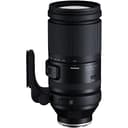
Tamron 150-500mm f/5-6.7 Di III VC VXD

Tamron 150-500mm f/5-6.7 Di III VC VXD

The wildlife lens most people should buy, because it is the only one here that gets to 500mm while still being a lens you can hand-hold and walk with. At 1,725 g it is roughly 400 g lighter than Sony's 200-600mm and it costs considerably less, and Tamron builds it for Nikon Z as well as Sony E — so it is the one recommendation on this page that is not locked to a single system. The compromises are real: f/6.7 at the long end and an expensive 82mm filter thread.

Best overall
$1,399.00 · View on Amazon

Price as of October 27, 2026. #ad How we’re funded

2
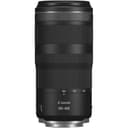
Canon RF 100-400mm f/5.6-8 IS USM

Canon RF 100-400mm f/5.6-8 IS USM

The cheapest honest route to 400mm on any current mirrorless mount, and at about 635 g it is lighter than some standard zooms — which matters more than the specification sheet suggests, because a 635 g telephoto is one you actually bring. The price of that is f/8 at the long end, so this is a lens for open daylight, not for dawn in the woods.

Best value
$749.00 · View on Amazon

Price as of October 27, 2026. #ad How we’re funded

3
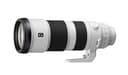
Sony FE 200-600mm f/5.6-6.3 G OSS

Sony FE 200-600mm f/5.6-6.3 G OSS

The lens serious Sony birders converge on, and the reason is the 600mm long end plus teleconverter support: with the 1.4x it becomes an 840mm f/9, and small birds stop being specks. It is also 2,115 g, which is the heaviest lens on this page by some margin — this is a monopod-and-hide lens, not a walk-around.

Best for birds on Sony
$2,098.00 · View on Amazon

Price as of October 27, 2026. #ad How we’re funded

4
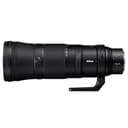
Nikon NIKKOR Z 180-600mm f/5.6-6.3 VR

Nikon NIKKOR Z 180-600mm f/5.6-6.3 VR

Nikon's answer to the 600mm zoom, and the detail that makes it the pick for Z shooters is the internal zoom: the barrel does not extend, so the balance never shifts on a gimbal head and there is no pumping action pulling dust into the lens. It is a 1,955 g lens with a 95mm front, so treat the weight as the entry fee rather than a surprise.

Best for Nikon Z
$2,096.95 · View on Amazon

$2,199.955% off

Price as of October 27, 2026. #ad How we’re funded

5
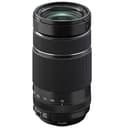
Fujifilm XF70-300mmF4-5.6 R LM OIS WR

Fujifilm XF70-300mmF4-5.6 R LM OIS WR

The crop-sensor shortcut to long reach. 300mm on Fujifilm's APS-C sensor frames like 457mm on full-frame, which means this 580 g lens sees further than the 635 g Canon and most of the 1,725 g Tamron — and it is weather-resistant, which none of the budget options are. The catch is that the same crop factor costs you background separation and light-gathering area.

Best reach per gram
$843.03 · View on Amazon

Price as of October 27, 2026. #ad How we’re funded

The picks in full

#1Best overall

Tamron 150-500mm f/5-6.7 Di III VC VXD

The wildlife lens most people should buy, because it is the only one here that gets to 500mm while still being a lens you can hand-hold and walk with. At 1,725 g it is roughly 400 g lighter than Sony's 200-600mm and it costs considerably less, and Tamron builds it for Nikon Z as well as Sony E — so it is the one recommendation on this page that is not locked to a single system. The compromises are real: f/6.7 at the long end and an expensive 82mm filter thread.

Strengths

  • 500mm of reach in a 1,725 g lens you can carry on a hike and shoot hand-held
  • Built for both Sony E and Nikon Z, so it fits two of the three big mirrorless systems
  • 0.6 m closest focus at 150mm is unusually short for a telephoto zoom — it doubles as a close-up lens for butterflies and frogs

Trade-offs

  • f/6.7 at 500mm, which pushes ISO up fast under a forest canopy or at dusk
  • 82mm filter thread — polarizers and protectors in that size are expensive
  • Tamron publishes no stop rating for its VC stabilization, so we cannot tell you what it is worth
Mount / formatSony E and Nikon Z, full-frame
Focal length150-500mm
Max aperturef/5-6.7 (minimum f/22-32)
Filter thread82mm
Closest focus0.6 m at 150mm, 1.8 m at 500mm
Weight1,725 g (Sony E), excluding the 155 g tripod mount

Specifications read from the manufacturer listing, on October 23, 2026.

#2Best value

Canon RF 100-400mm f/5.6-8 IS USM

The cheapest honest route to 400mm on any current mirrorless mount, and at about 635 g it is lighter than some standard zooms — which matters more than the specification sheet suggests, because a 635 g telephoto is one you actually bring. The price of that is f/8 at the long end, so this is a lens for open daylight, not for dawn in the woods.

Strengths

  • About 635 g — far lighter than every other full-frame telephoto here
  • Optical IS rated 5.5 stops at 400mm, and up to 6 stops on a body with its own stabilization
  • Takes common 67mm filters, and accepts Canon's RF 1.4x and 2x extenders for more reach

Trade-offs

  • f/8 at 400mm is the slowest aperture on this page — it needs good light or high ISO
  • Canon RF only, and Canon's own store lists it as no longer available, so stock is now retailer-dependent
  • No tripod collar, which is awkward on a gimbal head
Mount / formatCanon RF, full-frame
Focal length100-400mm
Max aperturef/5.6-8
Filter thread67mm
StabilizationOptical IS rated 5.5 stops, up to 6 stops with a stabilized body (CIPA)
WeightAbout 635 g

Specifications read from the manufacturer listing, on October 23, 2026.

#3Best for birds on Sony

Sony FE 200-600mm f/5.6-6.3 G OSS

The lens serious Sony birders converge on, and the reason is the 600mm long end plus teleconverter support: with the 1.4x it becomes an 840mm f/9, and small birds stop being specks. It is also 2,115 g, which is the heaviest lens on this page by some margin — this is a monopod-and-hide lens, not a walk-around.

Strengths

  • 600mm at the long end with only a third of a stop lost versus 500mm lenses
  • Takes Sony's 1.4x and 2x teleconverters, so 840mm and 1,200mm are available
  • 11-blade circular aperture, which keeps out-of-focus highlights behind a subject clean

Trade-offs

  • 2,115 g — the heaviest lens here, and it needs a monopod for a long session
  • 2.4 m closest focus means you cannot shoot anything that lands near you
  • 95mm filters are expensive, and Sony E only
Mount / formatSony E, full-frame
Focal length200-600mm
Max aperturef/5.6-6.3 (minimum f/32-36)
Filter thread95mm
Closest focus2.4 m (0.2x maximum magnification)
Weight2,115 g

Specifications read from the manufacturer listing, on October 23, 2026.

#4Best for Nikon Z

Nikon NIKKOR Z 180-600mm f/5.6-6.3 VR

Nikon's answer to the 600mm zoom, and the detail that makes it the pick for Z shooters is the internal zoom: the barrel does not extend, so the balance never shifts on a gimbal head and there is no pumping action pulling dust into the lens. It is a 1,955 g lens with a 95mm front, so treat the weight as the entry fee rather than a surprise.

Strengths

  • Internal zoom — the length never changes, so gimbal balance holds from 180mm to 600mm
  • VR rated 5.5 stops (CIPA, Normal mode, at the telephoto end)
  • 1.3 m closest focus at 180mm is genuinely short for a lens of this size

Trade-offs

  • 1,955 g — hand-holdable in bursts, tiring over a morning
  • 95mm filter thread, so a protector or polarizer is a real expense
  • Nikon Z only, and Nikon publishes no formal weather-sealing rating for it
Mount / formatNikon Z, full-frame
Focal length180-600mm (internal zoom)
Max aperturef/5.6-6.3 (minimum f/32-36)
Filter thread95mm
Closest focus1.3 m at 180mm, 2.4 m at 600mm
WeightAbout 1,955 g

Specifications read from the manufacturer listing, on October 23, 2026.

#5Best reach per gram

Fujifilm XF70-300mmF4-5.6 R LM OIS WR

The crop-sensor shortcut to long reach. 300mm on Fujifilm's APS-C sensor frames like 457mm on full-frame, which means this 580 g lens sees further than the 635 g Canon and most of the 1,725 g Tamron — and it is weather-resistant, which none of the budget options are. The catch is that the same crop factor costs you background separation and light-gathering area.

Strengths

  • 580 g with a 107-457mm equivalent field of view — the best reach-per-gram on this page
  • Weather-resistant construction and a linear motor, which is quiet enough for video
  • 0.83 m closest focus with 0.33x magnification, so it works as a near-macro lens for insects

Trade-offs

  • APS-C only — a smaller sensor means more noise at the high ISOs wildlife demands
  • f/5.6 at the long end, and Fujifilm publishes no stop rating for the OIS
  • 300mm is still 300mm optically; it will not resolve a distant bird the way a 600mm lens does
Mount / formatFujifilm X, APS-C
Focal length70-300mm (107-457mm equivalent)
Max aperturef/4-5.6 (minimum f/22)
Filter thread67mm
Closest focus0.83 m (0.33x at the telephoto end)
Weight580 g

Specifications read from the manufacturer listing, on October 23, 2026.

How we ranked these: four criteria, in this order

Wildlife lens arguments usually collapse into a focal-length contest, and that is the wrong first question. These are the four things that decide whether a telephoto earns its place in your bag, ordered by how often they are the limiting factor in a real photograph.

1. Reach you will carry. The reach that matters is the reach attached to your camera when the animal appears, which is a function of focal length andweight. A 600mm lens at 1,955 g and a 400mm lens at 635 g are not points on the same scale: one is a planned sit in a hide, the other goes on a dog walk. This is why the Tamron tops the list rather than the longer Sony and Nikon zooms — 500mm at 1,725 g is the best compromise between the two things that actually conflict.

2. Maximum aperture at the long end. Nobody shoots wildlife at the wide end, so the only aperture figure worth reading is the second one. f/6.3 and f/6.7 are a third to a half stop apart and effectively interchangeable; f/8 is a full stop and a bit darker than f/5.6, and in the hour around sunrise when mammals are actually moving, that stop is the difference between ISO 3200 and ISO 6400. It also affects autofocus: most mirrorless bodies focus fine at f/8, but with fewer phase-detect pixels active and less confidence in low contrast.

3. Closest focus, which nobody checks and everyone needs. Wildlife is not only distant. Dragonflies, frogs, lizards and garden birds land close, and a lens that will not focus nearer than 2.4 m simply cannot photograph them. The Tamron’s 0.6 m at 150mm and the Fujifilm’s 0.83 m with 0.33x magnification make both of those lenses genuinely dual-purpose; the Sony 200-600mm’s 2.4 m does not, and that is a real limitation rather than a quibble.

4. The cost that is not the lens price.A 95mm filter costs several times what a 67mm one does. A 2 kg lens needs a monopod or a gimbal head, and a tripod collar to mount it — the Canon does not have one. Teleconverter support is part of this calculation too: the Sony takes a 1.4x and becomes an 840mm f/9, which is a cheaper route to extreme reach than buying another lens. Our teleconverters explainer covers what you give up in exchange.

How much reach do you actually need?

The honest answer depends on the animal and on how close it lets you get, not on a number you can look up. But there are useful bands.

300-400mm (full-frame equivalent): deer, foxes, zoos, safari, large birds. Anything the size of a dog or bigger, anywhere it is habituated to people. This is where the Canon RF 100-400mm and the Fujifilm XF70-300mm live, and for a great many photographers it is enough forever. It is also the band where you can still hand-hold comfortably and track a moving subject by eye.

500mm: the general-purpose wildlife band. Small mammals, wading birds, raptors on a perch, anything shy. 500mm is the point where you stop being the limiting factor and the light starts being it. The Tamron 150-500mm is built exactly for this.

600mm and beyond: songbirds and birds in flight.A warbler at 15 m is a handful of pixels at 400mm and a photograph at 600mm. If small birds are your subject, the 600mm zooms are not a luxury — they are the entry requirement, and a teleconverter on top of one is how people get to 840mm without a prime.

Crop sensors change this arithmetic in your favor. An APS-C body multiplies the field of view by about 1.5x, so the Fujifilm’s 300mm frames like 457mm. That is a real advantage, and it is not free: the smaller sensor collects less light, so you pay for the extra reach in noise at the ISO settings wildlife forces on you. Our crop factor explainer works through the trade properly, and full-frame vs APS-C covers what the sensor size is worth elsewhere in your photography.

By camera system

Sony E.You have the most choice. The Tamron 150-500mm is the sensible buy and the FE 200-600mm G OSS is the step up for birds, with 1.4x and 2x teleconverters available. Pair either with a body that has good subject-recognition autofocus — see our wildlife camera roundup for which Sony bodies make sense.

Nikon Z. The NIKKOR Z 180-600mm is the obvious answer, and its internal zoom is a genuine advantage: the barrel does not extend, so the balance point stays put on a gimbal head and there is no pumping action drawing dust in. The Tamron 150-500mm is also made in Z mount, so Nikon shooters get the lighter option too.

Canon RF.The RF 100-400mm is the cheap, light way in, and it accepts Canon’s RF extenders if you later want 560mm or 800mm. Note that Canon’s own store now lists the lens as no longer available, so you are buying from retailer stock — check the current listing before you commit.

Fujifilm X. The XF70-300mm is the pick, and the crop factor does a lot of work for you. It is also the only weather-resistant lens on this page at anything like its price, which matters in a genre practiced at dawn in wet grass. Our weather-sealing explainer is honest about what those ratings do and do not promise.

What a long lens does not fix

Three things will ruin more wildlife photographs than your focal length will.

Shutter speed.A 600mm lens magnifies your own movement as much as it magnifies the bird. The old rule of 1/focal length is a floor for a static subject, not a target: for a bird in flight you want 1/2000 s or faster, and for a perched animal 1/1000 s. Stabilization helps with your shake and does nothing about the animal’s movement, which is the part that usually blurs. See image stabilization, explained for what a 5.5-stop rating actually buys you, and why are my photos blurry for diagnosing which kind of blur you have.

Autofocus mode. Continuous AF with subject detection, a tracking area that is not the whole frame, and back-button focus so you can hold focus without holding the shutter. Our autofocus modes guide and back-button focus cover the setup; how to pan your camera covers the technique for anything moving across you.

Support. Beyond about 1.5 kg, a lens is easier to keep steady on a monopod than in your hands, and a 2 kg lens on a gimbal head is the difference between a productive morning and a sore shoulder. If you are buying support alongside the lens, our tripod roundup and how to choose a tripod explain what load rating you need and why the published figure is optimistic.

Where we would spend the money

If you have one budget and one decision: buy the longest lens you will carry, then put the rest into the body’s autofocus rather than into glass. Wildlife photography fails at the autofocus stage far more often than at the resolution stage, and a 400mm frame you can crop is worth more than a 600mm frame that missed focus. Our camera or lens upgrade guide works through that trade in general; for this genre specifically, the lens comes first only until you have 400mm equivalent, and after that the body does.

And if you are not yet sure wildlife is your genre, start with the cheapest option that reaches 400mm equivalent, shoot for a season, and find out whether the thing limiting your photographs is the lens or the fieldcraft. It is usually the fieldcraft — how to photograph birds is more useful to most beginners than another 200mm of reach.
Frequently asked questions

What is the best lens for wildlife photography?

For most photographers, a 500mm-class telephoto zoom you can hand-hold — the Tamron 150-500mm f/5-6.7 Di III VC VXD at 1,725 g, available in Sony E and Nikon Z. If you photograph small birds specifically, the 600mm zooms (Sony FE 200-600mm, NIKKOR Z 180-600mm) are the better buy despite the weight. On a budget, the Canon RF 100-400mm reaches 400mm at about 635 g.

Is 400mm enough for wildlife photography?

For deer, foxes, safari animals, zoos and larger birds, yes. For songbirds and anything shy, 400mm leaves you cropping heavily. On an APS-C body, 300mm frames like roughly 450mm, which is why the Fujifilm XF70-300mm punches above its focal length.

Do I need 600mm for bird photography?

For small perched birds and birds in flight, 600mm is close to an entry requirement — a warbler at 15 m is a few hundred pixels at 400mm. For herons, raptors, waterfowl and anything habituated to people, 400-500mm is workable. A 1.4x teleconverter on a 500mm or 600mm zoom is the usual next step rather than buying a prime.

Is f/6.3 too slow for wildlife?

No, but it sets your working hours. f/6.3 and f/6.7 are fine in open daylight and manageable at dawn on a modern sensor at ISO 3200-6400. f/8 at the long end — the Canon RF 100-400mm — is a full stop darker and really wants good light. Nothing at this price is faster, because f/4 super-telephotos cost many times more and weigh far more.

How much does a wildlife lens weigh?

The lenses here run from 580 g (Fujifilm XF70-300mm) to 2,115 g (Sony FE 200-600mm), all manufacturer-published figures. Anything over about 1.5 kg is comfortable hand-held in bursts and tiring over a morning, so budget for a monopod. Add the tripod-collar weight where it is separate: Tamron's is 155 g on top of the 1,725 g lens.

Should I buy a telephoto zoom or a prime for wildlife?

A zoom, unless you already know exactly what you shoot and from where. Animals do not hold their distance, and the ability to pull back from 600mm to 200mm is how you keep a subject that walks toward you. Super-telephoto primes are sharper and faster, and they cost several times as much for a single focal length.

Does a crop-sensor camera help with wildlife photography?

Yes, in framing. An APS-C sensor gives roughly a 1.5x tighter field of view for the same lens, so a 300mm lens frames like 450mm. You pay for it in light-gathering area, which shows up as noise at the high ISO settings wildlife needs. It is a real advantage for reach-limited photography and a real disadvantage at dusk.

Do wildlife lenses need weather sealing?

It is worth paying for if you shoot at dawn, in wet grass or on a coast — which is most wildlife photography. Of the lenses here, the Fujifilm XF70-300mm is the one that publishes weather-resistant construction at a mid-range price. Treat sealing as insurance against incidental moisture rather than a license to shoot in a downpour.

What filter size do these lenses take, and does it matter?

They range from 67mm (Canon, Fujifilm) through 82mm (Tamron) to 95mm (Sony, Nikon), and it matters for cost: a 95mm protector or polarizer costs several times a 67mm one. Most wildlife shooters skip filters on a telephoto anyway, since there is no sky to darken and nothing to polarize — but it is a real expense if you want front protection.

Sources

Keep reading