Why a $400 lens beats a $400 camera upgrade
A newer body gives you better autofocus, more video modes and a nicer menu. A faster lens changes the picture itself: the background goes soft, the subject separates, and the shot you could not get in a restaurant at night becomes possible. If you own a competent camera and a kit zoom, the kit zoom is the weakest part of your setup by a wide margin — which is the whole argument in should you upgrade your camera or your lens, and it almost always points at the lens.
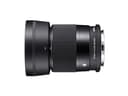
The number that does the work is maximum aperture. A kit zoom is typically f/3.5-5.6; the Sigma 30mm is f/1.4. That is roughly three and a half stops, or about eleven times more light, which is the difference between ISO 6400 and ISO 500 in the same room. It is also the difference between a background that is merely slightly soft and one that is genuinely melted — the effect explained in how to get a blurry background.
Which focal length to buy first
On an APS-C body, a 30mm (45mm equivalent) is the safe first prime: wide enough for a room, tight enough for a person, close to what your eye sees. Add a 56mm (84mm equivalent) second if you shoot faces, because at 84mm a portrait stops looking like a snapshot.
On full-frame, the 50mm is the cheap first prime. The classic full-frame portrait lens is an 85mm f/1.8, and it is worth knowing that it sits just above this band at the moment rather than inside it — if you shoot full-frame portraits and can stretch, that is where the money goes. Our portrait lens guide ranks that whole decision, and focal length explained covers what these numbers mean on your sensor.
What you give up under $500
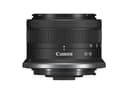
Stabilization. Five of the six picks have none at all — only the Canon RF-S10-18mm has optical IS. On a body with in-body stabilization that is a non-issue; on an APS-C body without it, you will need a faster shutter speed or a tripod for dim interiors.
Weather sealing and build. The RF 50mm f/1.8 has a plastic mount and no sealing, and the two Sigma DC DN primes are plastic-bodied. They are fine in normal use and not lenses to take out in a downpour.
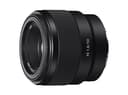
Autofocus speed, sometimes. The Sony FE 50mm f/1.8 uses an older DC motor that hunts and buzzes audibly, which is why it is the budget pick rather than the overall one. If you record video with on-camera audio, that buzz lands in your soundtrack; the Canon RF 50mm’s STM motor is much quieter for the same money on an RF body.
How we ranked these
Maximum aperture first, because that is what you are buying at this price; then the equivalent focal length on the body it fits, because a 56mm on APS-C and a 56mm on full-frame are different lenses in practice; then weight; then autofocus suitability for video. We have not tested these lenses — here is what we do instead. Specifications are each manufacturer’s published figures, and prices come only from the live price layer with the date above.