Wide Open. Gear

Alternatives to the Shure MV7

The MV7 has four properties worth paying for and one of them cannot be bought anywhere else on this site. Here is what to do about each.

By Stephen V.Last updated How we pick

The best alternative to a Shure MV7 for most people is the Audio-Technica AT2020USB-X — a USB-C cardioid with a headphone output and a mix control, for meaningfully less money, and it is the pick for anyone who records voice at a desk in a reasonably quiet room. The budget pick is the Blue Yeti, which costs a fraction of an MV7 and adds four switchable pickup patterns the Shure does not have. But there is an honest caveat you should read before either: the one thing the MV7 does that nothing else on this page does is ignore your room, and that is a hardware property you cannot buy around.

Prices come from our live price layer, which last ran on November 24, 2026, and the table prints each mic’s current number with that date under it. The MV7 and MV7+ are not in the list below — they are what you are replacing — but their published figures are quoted throughout so you can see exactly what you would be giving up.

Four things are worth paying for on an MV7, and separating them is the whole job of this page.

One: it is a dynamic microphone. A dynamic capsule is far less sensitive than a condenser, which sounds like a disadvantage and is the entire point. It hears what is close and loud — your mouth — and comparatively little of the keyboard, the fridge, the street or the bare wall behind you. Every single alternative on this page is a condenser. That is not an oversight; it is the state of our registry, and it is the specification you cannot replace with a different purchase.

Two: it has both USB and XLR. The MV7 runs straight into a computer today and into a proper audio interface later, which is a rare property and a real one — it means the mic survives your setup growing. Nothing below has an XLR output at all.

Three: it processes the sound on the mic. The MV7+ publishes onboard DSP with a real-time denoiser, and the original MV7 has a built-in headphone output for monitoring. Processing before the file is written is a different thing from fixing it afterwards.

Four: it is cardioid and only cardioid. This is the one place an alternative can beat it outright, and two picks below do, with four switchable patterns from a single unit.

So the ranking below is by how much of that list each mic replaces, cheapest useful answer first — and we have ordered room rejection above feature count, because an untreated room is the reason most people go looking for an MV7 in the first place.

How this is funded: we earn a commission if you buy through our links, at no extra cost to you. It never changes which product we recommend, and we’ll tell you plainly when to skip one. Full disclosure.

Quick picks

Ranked on published specs and buyer fit. Select a row to jump to the full write-up. We have not tested these products — here is exactly what we do instead.

#ProductBest forPrice
1
Audio-Technica AT2020USB-X

Audio-Technica AT2020USB-X

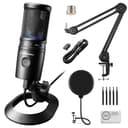
The quiet, no-nonsense USB condenser for people who just want clean sound. The AT2020 is a studio staple, and the USB-X version adds a headphone jack, on-mic mute and mix control without the hype or the RGB. It sounds excellent in a treated room and gets out of your way.

Best overall
$185.90 · View on Amazon

Price as of November 24, 2026. #ad How we’re funded

2
RODE VideoMic NTG

RODE VideoMic NTG

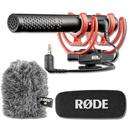
The shotgun that is also a USB microphone, which is exactly what a streamer wants. It carries the acoustic design of RODE's NTG5 broadcast shotgun, then adds a USB output so it can go straight into a computer, a variable gain dial, a high-pass filter, a -20dB pad, a high-frequency boost and a safety channel. The 3.5mm jack auto-senses whether it is plugged into a camera or a phone, and doubles as a headphone output when you are on USB.

Best room rejection
$299.99 · View on Amazon

Price as of November 24, 2026. #ad How we’re funded

3
HyperX QuadCast 2 S

HyperX QuadCast 2 S

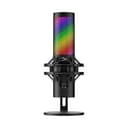
The streamer's USB condenser, with the RGB to match. A tap-to-mute top, a built-in shock mount and pop filter, and four pickup patterns make it a genuinely convenient all-in-one. It is a condenser, so it likes a quieter room — but for a gaming desk it is one of the tidiest packages going.

Best for streaming
$149.99 · View on Amazon

$199.9925% off

Price as of November 24, 2026. #ad How we’re funded

4
Blue Yeti USB Microphone

Blue Yeti USB Microphone

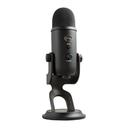
The USB mic everyone knows, and still a fair pick for its price and its four pickup patterns. The catch is that it is a sensitive condenser that hears everything — keyboard, room, the street. In a quiet space it sounds great; in a noisy one, a dynamic mic like the Shure MV7 will treat you better.

Budget pick
$69.86 · View on Amazon

$139.9950% off

Price as of November 24, 2026. #ad How we’re funded

The picks in full

#1Best overall

Audio-Technica AT2020USB-X

The quiet, no-nonsense USB condenser for people who just want clean sound. The AT2020 is a studio staple, and the USB-X version adds a headphone jack, on-mic mute and mix control without the hype or the RGB. It sounds excellent in a treated room and gets out of your way.

Strengths

  • Trusted studio capsule with a clean, natural sound
  • Headphone jack, mute and monitor mix on the mic
  • Understated design — no lights, no gimmicks

Trade-offs

  • Condenser needs a quiet, treated space
  • No stand upgrade in the box; wants a boom arm
TypeUSB condenser
PatternCardioid
MonitoringHeadphone output with mix control
ConnectionUSB-C

Specifications read from the manufacturer listing, on July 18, 2026.

#2Best room rejection

RODE VideoMic NTG

The shotgun that is also a USB microphone, which is exactly what a streamer wants. It carries the acoustic design of RODE's NTG5 broadcast shotgun, then adds a USB output so it can go straight into a computer, a variable gain dial, a high-pass filter, a -20dB pad, a high-frequency boost and a safety channel. The 3.5mm jack auto-senses whether it is plugged into a camera or a phone, and doubles as a headphone output when you are on USB.

Strengths

  • Works as a full USB microphone into a computer, not just a camera mic
  • 3.5mm jack doubles as headphone monitoring while running over USB
  • Auto-sensing output switches between camera and mobile without adapter cables
  • Infinitely variable gain, high-pass filter, -20dB pad, HF boost and safety channel

Trade-offs

  • Costs several times what a basic on-camera shotgun does
  • Digital use with an iPhone needs RODE's SC15 Lightning cable
  • The only live US listing today is a bundle with a WS11 windshield, so you pay for an accessory you may not need
TypeBroadcast-grade on-camera shotgun
Polar patternSupercardioid (highly directional)
OutputsUSB-C and auto-sensing 3.5mm
Monitoring3.5mm doubles as headphone out on USB
ControlsVariable gain, high-pass (flat/75Hz/150Hz), -20dB pad, HF boost, safety channel, peak light
PowerInternal rechargeable lithium-ion, 30+ hours per RODE
Weight94 g
Warranty10 years

Specifications read from the manufacturer listing, on November 6, 2026.

#3Best for streaming

HyperX QuadCast 2 S

The streamer's USB condenser, with the RGB to match. A tap-to-mute top, a built-in shock mount and pop filter, and four pickup patterns make it a genuinely convenient all-in-one. It is a condenser, so it likes a quieter room — but for a gaming desk it is one of the tidiest packages going.

Strengths

  • Built-in shock mount and pop filter — nothing extra to buy
  • Tap-to-mute top and four pickup patterns
  • USB-C with headphone monitoring

Trade-offs

  • Condenser sensitivity picks up a noisy room
  • RGB is not to everyone's taste
TypeUSB condenser
PatternsCardioid, omni, bidirectional, stereo
FeaturesTap-to-mute, built-in shock mount
ConnectionUSB-C

Specifications read from the manufacturer listing, on July 18, 2026.

#4Budget pick

Blue Yeti USB Microphone

The USB mic everyone knows, and still a fair pick for its price and its four pickup patterns. The catch is that it is a sensitive condenser that hears everything — keyboard, room, the street. In a quiet space it sounds great; in a noisy one, a dynamic mic like the Shure MV7 will treat you better.

Strengths

  • Four pickup patterns for solo, duet or room recording
  • Plug-and-play with on-mic gain, mute and monitoring
  • Widely supported and often discounted

Trade-offs

  • Sensitive condenser picks up room and keyboard noise
  • Large and heavy on its included stand
TypeUSB condenser
PatternsCardioid, omni, bidirectional, stereo
MonitoringBuilt-in headphone output
ConnectionUSB

Specifications read from the manufacturer listing, on July 18, 2026.

How we ranked these

1. Room rejection first. No alternative here is a dynamic, so the next best thing is a capsule whose directionality is tighter, or one you can get closer to the mouth and further from the wall. A supercardioid shotgun on a boom arm rejects a room better than any desk condenser, which is why the RODE VideoMic NTG sits second despite being the most expensive pick.

2. Monitoring, with a mix control if possible. Hearing yourself is the feature the MV7 buyer is used to. The AT2020USB-X has a headphone output with a mix control; the Yeti and the NTG have headphone outputs too.

3. What you can adjust, and where. The MV7+ puts processing on the mic. Among the alternatives, the VideoMic NTG is the only one with real on-body controls: variable gain, a three-position high-pass filter, a -20 dB pad, an HF boost, a safety channel and a peak light.

4. Pattern flexibility, where an alternative can genuinely win.

5. Price, last, and only one pick here undercuts the MV7 by a large margin.

We have not tested these microphones — here is exactly what we do instead — and every figure, including the Shure ones, is the manufacturer’s own published specification with the date we read it. No scores, because a score would imply a measurement we did not take.

The closest thing to a straight swap

The Audio-Technica AT2020USB-X is the pick because it does the MV7’s main job — a single-pattern cardioid for one voice at a desk, over USB-C, with monitoring — without the features you may not be using. Its headphone output includes a mix control, which blends your own voice against whatever the computer is playing back; if you have used an MV7 you will recognise that as the thing you would miss most.

What it does not do is reject a bad room. It is a condenser, so a hard wall or a mechanical keyboard reaches the track in a way an MV7 would have largely refused. If that is your situation, the honest fix is not a different mic, it is the wall: something soft behind you and something soft behind the mic. That costs nothing and does more than the price difference between these two microphones.

It also has no XLR, so it does not grow into an interface-based setup later. Our XLR vs USB explainer covers whether that matters for you — for most people recording one voice into one computer, it genuinely does not.

The one that beats the MV7 at its own game

The RODE VideoMic NTG is the most interesting answer on this page and the least obvious. It is a broadcast-grade supercardioid shotgun, so it is more directional than any desk condenser here, and mounted on a boom arm pointing down at your mouth it rejects the room better than a cardioid sitting on your desk surrounded by reflections. That is the MV7’s core advantage approached from a different direction.

It also matches the MV7 on the two properties people assume are Shure-exclusive. It has USB-C and an auto-sensing 3.5mm output, so it works as a computer mic and a camera mic. And the 3.5mm doubles as a headphone output while it runs over USB, so you monitor without an interface. Add the on-body gain, filter, pad, HF boost and safety channel, the internal battery RODE rates at 30-plus hours, 94 g of weight and a ten-year warranty, and it is a genuinely capable desk mic that also leaves the house.

Two caveats, stated plainly. It is a condenser, so it is still more sensitive than a dynamic — its advantage is geometric, not electrical. And the live US listing we link is a bundle that includes a WS11 windshield, which is why its price reads where it does and why it is the most expensive pick here. It is also the top pick on our streaming shotgun roundup and appears on our RODE microphone roundup.

Where an alternative wins outright: pattern switching

The MV7 and MV7+ are cardioid and nothing else. Two picks here are not, and for some setups that is decisive.

The HyperX QuadCast 2 S gives you cardioid, omnidirectional, bidirectional and stereo from one unit, a tap-to-mute sensor on the top and a shock mount built into the body rather than bought separately. If your mic sits on a desk you also type on, that internal shock mount is worth more than a specification sheet suggests. Bidirectional is the one that matters most: it records two people facing each other across a single mic, which no MV7 can do.

The Blue Yeti is the budget pick and has the same four patterns, a headphone output and on-mic gain and mute, for a fraction of an MV7. It is the cheapest honest answer on this page and it has been the default desk microphone for a decade for reasons that still hold. Its weakness is precisely the MV7’s strength: it is a sensitive condenser that faithfully records whatever your room is doing. We wrote the mirror image of this page — alternatives to the Blue Yeti — and its top pick is, unsurprisingly, the MV7+. If you are cross-shopping those two mics specifically, read both pages and the choice resolves itself.

What no alternative here replaces

The dynamic capsule. Said once more because it is the whole decision. If your room is hard, bright, shared or noisy, the MV7 or MV7+ is doing something for you that no condenser on this page will. The cheaper mic plus $40 of soft furnishings behind you is a real strategy; the cheaper mic alone, in a bad room, is a downgrade.

XLR. Nothing here has it. If you expect to add an interface, a second mic and a mixer later, the MV7’s dual output is the feature you are paying for and it is worth it.

Onboard denoising. The MV7+ publishes a real-time denoiser running on the mic itself. Software denoising in your editor is a decent substitute for recorded material, and no substitute at all on a live call or stream.

And one thing nobody needs to replace: the original MV7 is still in our registry alongside the MV7+, and it is a dynamic with USB, XLR and a headphone output. If what you want is specifically an MV7 and the plus model is the part that is too expensive, the older one is on our voice-over roundup — which is a shorter route to the same place than any of the swaps above.
Frequently asked questions

What is the best alternative to the Shure MV7?

The Audio-Technica AT2020USB-X for most people. It is a USB-C cardioid condenser with a headphone output and a mix control, which covers the MV7's main use - one voice at a desk, monitored - for meaningfully less money. What it does not replace is the MV7's dynamic capsule, which is what rejects an untreated room, so treat the wall behind you before you treat it as a straight swap.

Is there a cheaper microphone that sounds like the Shure MV7?

Not in a strict sense, because the MV7's character comes from being a dynamic microphone and every cheaper option in our registry is a condenser. The closest practical substitute is the RODE VideoMic NTG on a boom arm: it is a supercardioid shotgun, so it is tighter than any desk cardioid and rejects room reflections better, and it has USB-C plus a headphone output. It costs more than an AT2020USB-X and the live listing is a bundle with a windshield.

What is the difference between a dynamic and a condenser microphone?

A condenser is far more sensitive. It captures detail and air, and it also captures your keyboard, your fridge and the reflections off a bare wall. A dynamic needs more level to be driven properly, which means it hears what is close and loud and comparatively little else. That is why dynamics like the MV7 are the standard recommendation for an untreated room, and why a condenser in the same room records the room.

Which Shure MV7 alternative has switchable pickup patterns?

The HyperX QuadCast 2 S and the Blue Yeti both offer cardioid, omnidirectional, bidirectional and stereo from one unit, which the MV7 and MV7+ do not - they are cardioid only. Bidirectional is the useful one: it records two people facing each other across a single microphone. The QuadCast adds tap-to-mute and a shock mount built into the body.

Do any MV7 alternatives have XLR as well as USB?

None of the picks on this page do. Dual USB and XLR is one of the MV7's genuinely rare properties and it is the reason the mic survives a setup upgrade - you start plugged into a laptop and end up plugged into an interface without buying a second microphone. If that path matters to you, it is an argument for paying for the Shure.

Is the Shure MV7+ worth it over the original MV7?

Both are in our registry and both are dynamic cardioid mics with USB and XLR. On published specifications the MV7+ adds onboard DSP with a real-time denoiser and moves to USB-C; the original MV7 has a built-in headphone output and USB. If live calls and streams are where you need noise handled, the plus model's on-mic processing is the difference. If you record and edit afterwards, the original covers it.

Sources

Keep reading