Wide Open. Gear

The Best Cameras Under $1,000

You don't need to spend a fortune to get a genuinely great camera — here are the best bodies at or under $1,000, matched to whether you shoot photos, video or both.

By Stephen V.Last updated How we pick

A thousand dollars is a real budget, and the good news is that it buys a genuinely capable camera in 2026 — not a compromise. At or just under this mark you can get a large APS-C sensor, reliable autofocus and clean 4K, which is more than enough to take photos and video you’ll be proud of for years. The trick is picking the body that fits how you actually shoot, because at this price each camera makes a deliberate trade to hit the number.

So we’ve split the picks by the job. There’s the do-it-all camera with a viewfinder for people who shoot as many photos as videos, the interchangeable-lens body built for vlogging, a pocket compact that needs nothing added, a photographer’s camera with film-simulation color, and a pocket gimbal for the smoothest handheld video you can get. We judge them on sensor size, autofocus, video, handling and value — and we’re honest about where each one cuts a corner to stay under budget.

Every pick shows a live Amazon price and a buy button, so you can act on the recommendation without hunting for it. We haven’t physically tested these bodies — we say so, and we explain what we do instead on our methodology page. If your budget is tighter still, see our best budget cameras guide; if it stretches a little, our best APS-C cameras roundup adds the step-up options.

How this is funded:we earn a commission if you buy through our links, at no extra cost to you. It never changes which product we recommend, and we’ll tell you plainly when to skip one. Full disclosure.

Quick picks

Ranked on published specs and buyer fit. Select a row to jump to the full write-up. We have not tested these products — here is exactly what we do instead.

#ProductBest forPrice
1
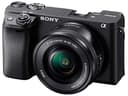
Sony a6400

Sony a6400

A durable all-rounder that has aged well thanks to genuinely sticky autofocus and a proper viewfinder. It is the pick if you want stills as much as video and don't need in-body stabilization — the eye AF still tracks a moving subject better than a lot of newer, cheaper bodies.

Best overall
$822.35 · View on Amazon

$999.9918% off

Price as of July 31, 2026. #ad How we’re funded

2
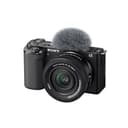
Sony ZV-E10

Sony ZV-E10

The interchangeable-lens vlogging camera most people should actually buy: a big APS-C sensor, a fully articulating screen, and Sony's E-mount so you can grow into better glass later. It skips a viewfinder and IBIS to hit its price, which is the right trade for a creator shooting off the screen.

Best for vlogging
$898.00 · View on Amazon

Price as of July 31, 2026. #ad How we’re funded

3
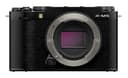
Fujifilm X-T30 II

Fujifilm X-T30 II

The camera to buy if the photos-should-look-like-film thing appeals to you. Fujifilm's color profiles are the real draw, and the dial-driven body is a joy for stills. It is more photographer's camera than vlogger's — the screen tilts but doesn't flip forward.

Best for photographers
$999.00 · View on Amazon

Price as of July 31, 2026. #ad How we’re funded

4
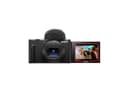
Sony ZV-1 II

Sony ZV-1 II

The most grab-and-go vlogging camera here: a wide 18-50mm equivalent zoom, a flip-out screen, and the best-in-class directional mic mean you can walk out the door and shoot talking-head video with no lens or mic to buy. The catch is the 1-inch sensor and no in-body stabilization.

Best pocket compact
$948.00 · View on Amazon

$1,049.9910% off

Price as of July 31, 2026. #ad How we’re funded

5
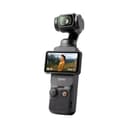
DJI Osmo Pocket 3

DJI Osmo Pocket 3

Not a traditional camera at all — a pocket gimbal with a 1-inch sensor bolted on — and that is exactly why it is the best walk-and-talk vlogging tool here. The 3-axis gimbal gives you glass-smooth motion no mirrorless body can match handheld, in something the size of a chunky pen.

Best for smooth video
$438.00 · View on Amazon

$499.0012% off

Price as of July 31, 2026. #ad How we’re funded

The picks in full

#1Best overall

Sony a6400

A durable all-rounder that has aged well thanks to genuinely sticky autofocus and a proper viewfinder. It is the pick if you want stills as much as video and don't need in-body stabilization — the eye AF still tracks a moving subject better than a lot of newer, cheaper bodies.

Strengths

  • Real-time Eye AF that still holds up years later
  • Built-in electronic viewfinder for shooting in bright sun
  • Weather-sealed against dust and moisture

Trade-offs

  • No in-body stabilization
  • Menus are the older, denser Sony layout
SensorAPS-C CMOS, 24.2 MP
MountSony E
Video4K30 (oversampled)
Viewfinder2.36M-dot EVF
Weight403 g with battery

Specifications read from the manufacturer listing, on July 18, 2026.

#2Best for vlogging

Sony ZV-E10

The interchangeable-lens vlogging camera most people should actually buy: a big APS-C sensor, a fully articulating screen, and Sony's E-mount so you can grow into better glass later. It skips a viewfinder and IBIS to hit its price, which is the right trade for a creator shooting off the screen.

Strengths

  • APS-C sensor is a real low-light step up from any 1-inch compact
  • Fully articulating screen and creator-focused buttons
  • E-mount opens the door to the fast primes in our lens guides

Trade-offs

  • No viewfinder and no in-body stabilization
  • Rolling shutter shows up on fast pans
SensorAPS-C CMOS, 24.2 MP
MountSony E
Video4K30 (with crop), FHD up to 120p
StabilizationDigital only, no IBIS
Weight343 g with battery

Specifications read from the manufacturer listing, on July 18, 2026.

#3Best for photographers

Fujifilm X-T30 II

The camera to buy if the photos-should-look-like-film thing appeals to you. Fujifilm's color profiles are the real draw, and the dial-driven body is a joy for stills. It is more photographer's camera than vlogger's — the screen tilts but doesn't flip forward.

Strengths

  • Fujifilm film-simulation color is genuinely distinctive
  • Tactile shutter-speed and exposure dials
  • Excellent 26 MP sensor for the price

Trade-offs

  • Tilt screen doesn't face forward for vlogging
  • Small body and grip; modest battery life
SensorAPS-C X-Trans CMOS 4, 26.1 MP
MountFujifilm X
Video4K30 (DCI/UHD)
Viewfinder2.36M-dot EVF
Weight383 g with battery

Specifications read from the manufacturer listing, on July 18, 2026.

#4Best pocket compact

Sony ZV-1 II

The most grab-and-go vlogging camera here: a wide 18-50mm equivalent zoom, a flip-out screen, and the best-in-class directional mic mean you can walk out the door and shoot talking-head video with no lens or mic to buy. The catch is the 1-inch sensor and no in-body stabilization.

Strengths

  • Wider 18-50mm equivalent lens fits your face in an arm's-length selfie shot
  • Built-in directional 3-capsule mic and included windscreen are genuinely usable
  • Product-showcase and background-blur buttons are made for talking-to-camera

Trade-offs

  • 1-inch sensor trails APS-C rivals in low light
  • No in-body stabilization, so walking footage needs the digital crop
Sensor1-inch stacked CMOS, 20.1 MP
LensFixed 18-50mm equivalent f/1.8-4 zoom
Video4K30, FHD up to 120p
StabilizationDigital (Active) only, no IBIS
Weight292 g with battery

Specifications read from the manufacturer listing, on July 18, 2026.

#5Best for smooth video

DJI Osmo Pocket 3

Not a traditional camera at all — a pocket gimbal with a 1-inch sensor bolted on — and that is exactly why it is the best walk-and-talk vlogging tool here. The 3-axis gimbal gives you glass-smooth motion no mirrorless body can match handheld, in something the size of a chunky pen.

Strengths

  • Mechanical 3-axis gimbal — smoother than any in-body system
  • Large 1-inch sensor for a pocket device; 4K120 slow-mo
  • Face tracking spins the camera to keep you centered

Trade-offs

  • Fixed lens and a tiny screen
  • Short battery life; wind noise needs the add-on mic or windscreen
Sensor1-inch CMOS
Stabilization3-axis mechanical gimbal
Video4K120, up to 4K60 normal
Form factorPocket handheld gimbal camera
Weight179 g

Specifications read from the manufacturer listing, on July 18, 2026.

How to spend under $1,000 wisely

Start with sensor size, because it’s what your money buys first. Four of these five have an APS-C sensor (the Osmo Pocket 3 and ZV-1 II use a smaller but still capable 1-inch sensor), which is the sweet spot at this budget: big enough for lovely photos and clean 4K, without the cost of full-frame. Don’t chase megapixels — every camera here has plenty — and remember that spending a little less on the body leaves room for the one upgrade that changes your images most: a lens.

Then match the body to the job. If you shoot photos and video and want a real viewfinder for bright sun, the Sony a6400 is the do-it-all pick. If you mainly talk to the lens, the ZV-E10 trades the viewfinder for a flip screen and creator features and lets you grow into better glass. If you love the craft of stills and want color that looks finished out of camera, the Fujifilm X-T30 II is a joy — it sits right at the $1,000 mark and earns it. Want a camera that’s always in your pocket? The ZV-1 II zoom compact or the gimbal-stabilized Osmo Pocket 3 both leave a phone far behind for a fraction of a big camera’s bulk.

One honest note on the two Sony bodies without in-body stabilization (the a6400 and ZV-E10): for handheld video you’ll want a stabilized lens or a gimbal, which is exactly where the Osmo Pocket 3 shines. And whatever you buy, budget a little for the things that punch above their price — a fast prime lens, a good microphone and a light all do more for your results than a pricier body would. Still deciding? Our what camera should I buy guide walks you through it.
Frequently asked questions

Can you get a good camera for under $1,000?

Yes, easily. Under $1,000 buys a camera with a large APS-C sensor, reliable autofocus and clean 4K - more than enough for excellent photos and video. Bodies like the Sony a6400 and Fujifilm X-T30 II are genuinely capable cameras that many enthusiasts use for years, not entry-level compromises. The main thing you give up versus pricier cameras is features like in-body stabilization and the newest autofocus, not core image quality.

What's the best camera under $1,000 for beginners?

The Sony a6400 is the best all-rounder - a viewfinder, excellent autofocus and strong photos and video - while the Fujifilm X-T30 II is the most fun for someone who wants to learn photography with hands-on dials. If you mostly want to film yourself, the ZV-E10 is the easier vlogging pick. All three are beginner-friendly; choose based on whether you lean photos, video or vlogging.

Should I buy a camera body or spend some of the budget on a lens?

For interchangeable-lens cameras, resist spending the entire budget on the body. A camera with a kit zoom plus a little left over for a fast prime lens will usually take better photos than a pricier body on its kit lens alone. The lens changes your images - sharpness, low-light performance and background blur - more than a small step up in camera does.

Do any cameras under $1,000 have in-body stabilization?

It's rare at this price. Among these picks, the interchangeable-lens Sony bodies (a6400 and ZV-E10) and the Fujifilm X-T30 II do not have in-body stabilization, so for smooth handheld video you'd use a stabilized lens or a gimbal. The DJI Osmo Pocket 3 sidesteps this entirely with a built-in mechanical gimbal, which is why it's the smooth-video pick. Step up in budget if in-body stabilization on an interchangeable-lens body is a must.

Is a compact camera or an interchangeable-lens camera better under $1,000?

It depends on your priorities. An interchangeable-lens camera like the a6400 or X-T30 II gives better image quality and room to grow with different lenses, but it's bigger and you'll buy lenses over time. A compact like the ZV-1 II or Osmo Pocket 3 is pocketable and needs nothing added, which is ideal for travel and grab-and-go video, at the cost of a smaller sensor and no lens swapping.

Sources

Keep reading