Wide Open. Gear

Alternatives to the Sony ZV-E10

What the ZV-E10 gets right, the two specs it gives up to hit its price, and the five bodies that fix one of them each.

By Stephen V.Last updated How we pick

The best alternative to a Sony ZV-E10 for most people is the Fujifilm X-M5 — because it answers the ZV-E10 on its own terms. Same class of APS-C sensor, same no-viewfinder screen-first body, similar weight, and then it shoots up to 6.2K video where the ZV-E10 tops out at 4K30 with a crop. The budget pick is the DJI Osmo Pocket 3, which is the cheapest thing here and the only one with a mechanical gimbal — a completely different shape of answer, and the right one if what you actually want is smooth walking footage rather than interchangeable lenses.

Before the list, it is worth being precise about what you would be replacing, because the ZV-E10 is genuinely good and most reasons to leave it are situational rather than faults. It puts a 24.2 MP APS-C sensor in a 343 g body — a real low-light step up from any 1-inch compact, and the main reason it is still our top pick on best cameras for YouTube. It has a fully articulating screen and creator-focused controls, so you can see yourself while recording and reach the things you need mid-take. And it is on the Sony E mount, which is the widest lens range of any mount here: first-party Sony glass plus Sigma and Tamron autofocus lenses, an entry-level prime through to a constant f/2.8 zoom. That last point is the one people underrate. Leaving the ZV-E10 usually means leaving E-mount, and if you already own lenses, that is the real cost of switching.

What it gives up to hit its price is specific and short: no viewfinder, no in-body stabilization, and 4K that is limited to 30p with a crop, with rolling shutter visible on fast pans. For a creator shooting off the screen in reasonable light, those are the right trades — which is why it has sold the way it has. They are also exactly the three things the bodies below fix, one each.

So read this page as five different exits: a newer sensor and much higher video resolution, a cheaper body with the same screen-first design, a proper viewfinder for shooting in sun, the in-family step up to uncropped 4K60, and giving up interchangeable lenses entirely for mechanical stabilization. If none of those describe your problem, the ZV-E10 is still a fair buy and our vlogging camera roundup explains where it sits against the compacts.

How this is funded: we earn a commission if you buy through our links, at no extra cost to you. It never changes which product we recommend, and we’ll tell you plainly when to skip one. Full disclosure.

Quick picks

Ranked on published specs and buyer fit. Select a row to jump to the full write-up. We have not tested these products — here is exactly what we do instead.

#ProductBest forPrice
1
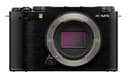
Fujifilm X-M5

Fujifilm X-M5

The cheapest way into Fujifilm's film-simulation color. The X-M5 puts the same 26-megapixel APS-C X-Trans sensor as the dial-driven X-T30 II into a 355 g body that shoots up to 6.2K video, and it undercuts every other X-series camera we recommend. What you give up is the viewfinder and any mechanical stabilization — this is a screen-and-menu camera, not a dials-and-eyecup one.

Best overall alternative
$899.00 · View on Amazon

Price as of November 20, 2026. #ad How we’re funded

2
Nikon Z30

Nikon Z30

Nikon's vlogging-first crop body: no viewfinder, a fully articulating screen, and a comfortable grip that punches above its weight. A strong value if you are already in Nikon glass or want a content camera that still handles like a real camera in the hand.

Best cheaper alternative
$596.95 · View on Amazon

$696.9514% off

Price as of November 20, 2026. #ad How we’re funded

3
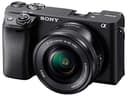
Sony a6400

Sony a6400

A durable all-rounder that has aged well thanks to genuinely sticky autofocus and a proper viewfinder. It is the pick if you want stills as much as video and don't need in-body stabilization — the eye AF still tracks a moving subject better than a lot of newer, cheaper bodies.

Best if you want a viewfinder
$802.74 · View on Amazon

$999.9920% off

Price as of November 20, 2026. #ad How we’re funded

4
Sony ZV-E10 II

Sony ZV-E10 II

The step-up ZV-E10: a newer 26 MP sensor and, crucially, uncropped 4K60 that the original could not do. If your budget stretches and you shoot fast-moving video, it earns the premium; if you are starting out, the original ZV-E10 still does the job for less.

Best in-family step up
$1,298.00 · View on Amazon

Price as of November 20, 2026. #ad How we’re funded

5
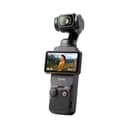
DJI Osmo Pocket 3

DJI Osmo Pocket 3

Not a traditional camera at all — a pocket gimbal with a 1-inch sensor bolted on — and that is exactly why it is the best walk-and-talk vlogging tool here. The 3-axis gimbal gives you glass-smooth motion no mirrorless body can match handheld, in something the size of a chunky pen.

Budget pick
$373.00 · View on Amazon

$439.0015% off

Price as of November 20, 2026. #ad How we’re funded

The picks in full

#1Best overall alternative

Fujifilm X-M5

The cheapest way into Fujifilm's film-simulation color. The X-M5 puts the same 26-megapixel APS-C X-Trans sensor as the dial-driven X-T30 II into a 355 g body that shoots up to 6.2K video, and it undercuts every other X-series camera we recommend. What you give up is the viewfinder and any mechanical stabilization — this is a screen-and-menu camera, not a dials-and-eyecup one.

Strengths

  • Same 26.1 MP APS-C X-Trans sensor class as the pricier X-series bodies
  • Up to 6.2K video from a body that weighs 355 g with battery and card
  • Fujifilm X mount, so it shares the lens lineup with every other X camera

Trade-offs

  • No viewfinder — you compose on the screen
  • No mechanical stabilization; digital stabilization is movie-mode only
SensorAPS-C X-Trans CMOS 4, 26.1 MP
MountFujifilm X
VideoUp to 6.2K30
ViewfinderNone — LCD only
Weight355 g with battery and card

Specifications read from the manufacturer listing, on August 17, 2026.

#2Best cheaper alternative

Nikon Z30

Nikon's vlogging-first crop body: no viewfinder, a fully articulating screen, and a comfortable grip that punches above its weight. A strong value if you are already in Nikon glass or want a content camera that still handles like a real camera in the hand.

Strengths

  • Deep, comfortable grip unusual at this size
  • Fully articulating screen and a dedicated video record button
  • Good 20.9 MP sensor for stills and 4K

Trade-offs

  • No viewfinder and no in-body stabilization
  • 4K30 only; Z DX lens lineup is still small
SensorAPS-C (DX) CMOS, 20.9 MP
MountNikon Z
Video4K30, FHD120
ViewfinderNone (rear screen only)
Weight405 g with battery

Specifications read from the manufacturer listing, on August 3, 2026.

#3Best if you want a viewfinder

Sony a6400

A durable all-rounder that has aged well thanks to genuinely sticky autofocus and a proper viewfinder. It is the pick if you want stills as much as video and don't need in-body stabilization — the eye AF still tracks a moving subject better than a lot of newer, cheaper bodies.

Strengths

  • Real-time Eye AF that still holds up years later
  • Built-in electronic viewfinder for shooting in bright sun
  • Weather-sealed against dust and moisture

Trade-offs

  • No in-body stabilization
  • Menus are the older, denser Sony layout
SensorAPS-C CMOS, 24.2 MP
MountSony E
Video4K30 (oversampled)
Viewfinder2.36M-dot EVF
Weight403 g with battery

Specifications read from the manufacturer listing, on July 18, 2026.

#4Best in-family step up

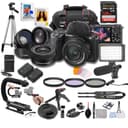
Sony ZV-E10 II

The step-up ZV-E10: a newer 26 MP sensor and, crucially, uncropped 4K60 that the original could not do. If your budget stretches and you shoot fast-moving video, it earns the premium; if you are starting out, the original ZV-E10 still does the job for less.

Strengths

  • Uncropped 4K up to 60p — a real upgrade over the original
  • Newer 26 MP sensor with improved autofocus
  • Bigger battery than the original ZV-E10

Trade-offs

  • Still no in-body stabilization or viewfinder
  • Often sold as a pricier lens-and-accessory bundle
SensorAPS-C CMOS, ~26 MP
MountSony E
Video4K up to 60p (uncropped)
StabilizationDigital only, no IBIS
Weight377 g with battery

Specifications read from the manufacturer listing, on July 18, 2026.

#5Budget pick

DJI Osmo Pocket 3

Not a traditional camera at all — a pocket gimbal with a 1-inch sensor bolted on — and that is exactly why it is the best walk-and-talk vlogging tool here. The 3-axis gimbal gives you glass-smooth motion no mirrorless body can match handheld, in something the size of a chunky pen.

Strengths

  • Mechanical 3-axis gimbal — smoother than any in-body system
  • Large 1-inch sensor for a pocket device; 4K120 slow-mo
  • Face tracking spins the camera to keep you centered

Trade-offs

  • Fixed lens and a tiny screen
  • Short battery life; wind noise needs the add-on mic or windscreen
Sensor1-inch CMOS
Stabilization3-axis mechanical gimbal
Video4K120, up to 4K60 normal
Form factorPocket handheld gimbal camera
Weight179 g

Specifications read from the manufacturer listing, on July 18, 2026.

If video resolution is the problem: the Fujifilm X-M5

This is the exit most people searching for a ZV-E10 alternative actually want, even if they would phrase it as wanting something “newer”. The ZV-E10’s 4K is 30p and it is cropped, which means a wider lens than you expect to frame your face at arm’s length, and fast pans show rolling shutter. The X-M5 records up to 6.2K from the same class of 26.1 MP APS-C sensor as the pricier dial-driven X-series bodies, in a body that weighs 355 g with battery and card — twelve grams more than the ZV-E10.

It is the closest like-for-like swap on this page in every other respect too. It also has no viewfinder, so you compose on the screen exactly as you do now. It is the cheapest route into Fujifilm’s film-simulation color, which is the real reason a lot of people choose X-mount: the look comes out of the camera rather than out of a grading session.

Two honest costs. It has no mechanical stabilization — its digital stabilization is movie-mode only, so it is no better off than the ZV-E10 for handheld walking shots, and if that was your complaint this is not your fix. And it is a mount change: Fujifilm X glass is excellent but it is a separate purchase from any E-mount lens you own. If you want to see how it stacks up against its own bigger sibling first, we compared them directly in Fujifilm X-M5 vs X-S20.

If price is the problem: the Nikon Z30

The Z30 is Nikon’s vlogging-first crop body and it reads as the ZV-E10’s direct counterpart: no viewfinder, a fully articulating screen, a dedicated record button, and a 20.9 MP APS-C sensor. It costs less than the ZV-E10 as both read today, which makes it the cheapest interchangeable-lens exit on this page.

Its one genuine advantage over the Sony has nothing to do with specifications: the grip. It is deep and comfortable in a way that is unusual at this size, and if you hold a camera out at arm’s length for a living, that is not a small thing. It also handles stills well for the money.

The costs are real. Like the ZV-E10 it has no viewfinder and no in-body stabilization, so two of the three things you might be leaving for are still missing. Its video tops out at 4K30, the same ceiling as the ZV-E10. And the Z DX lens lineup is still small— this is the single biggest difference between the two systems and the reason the Z30 is not the overall pick. On E-mount your next lens is a choice among dozens; on Z DX it is a choice among a handful. Our ZV-E10 lens guide shows what you would be giving up.

If the screen is the problem: the Sony a6400

If the thing driving you off the ZV-E10 is squinting at a screen in bright sun, the fix is a viewfinder, and the a6400 is the one to buy. It keeps the same mount and the same 24.2 MP APS-C sensor class, adds a 2.36M-dot electronic viewfinder, and is weather-sealed against dust and moisture, which nothing else on this page is. Its real-time Eye AF still tracks a moving subject better than a lot of newer, cheaper bodies, and its 4K30 is oversampled rather than cropped.

Because it is the same E mount, this is the only exit here that costs you nothing in lenses. If you own glass for your ZV-E10, it all works.

Two costs. It still has no in-body stabilization, so it does not fix handheld walking footage either. And its screen tilts up rather than flipping fully out to the side, which is a step backwards for talking to the camera with a microphone mounted on top — the thing the ZV-E10 was designed around. Its menus are also the older, denser Sony layout. We put it head-to-head with the ZV-E10 in Sony a6400 vs ZV-E10 if you want the detail.

If you want the same camera, only better: the ZV-E10 II

Worth saying plainly, because a lot of “alternative” searches are really upgrade searches. The ZV-E10 II is the same idea with the two video-spec complaints fixed: a newer 26 MP sensor and uncropped 4K up to 60p, which the original cannot do at all. It also has a bigger battery, which matters more over a day of shooting than any single specification on the sheet.

It is the most expensive pick on this page, and it is honest to say what it does not fix: there is still no in-body stabilization and still no viewfinder. If either of those is your actual reason for leaving, this is the wrong purchase and the a6400 or a stabilized body is the right one. It is also often sold as a pricier lens-and-accessory bundle, so check what is in the box against the plain body price. We laid the two generations side by side in ZV-E10 vs ZV-E10 II.

If stabilization is the problem: stop buying a camera

One pick here is not a mirrorless body at all, and it is on this page deliberately, because the ZV-E10’s most-complained-about gap is the one no body at this price actually closes. Digital stabilization crops and wobbles; in-body stabilization at this budget does not exist. The DJI Osmo Pocket 3 solves it mechanically instead — a 3-axis gimbal physically holds the camera level, which is smoother than any in-body system, in something that weighs 179 g and fits a coat pocket. It has a 1-inch sensor, shoots 4K120 slow motion, and its face tracking spins the camera to keep you centered while you walk.

It is also the cheapest thing on this page, which is why it is the budget pick. The trade is blunt and you should take it seriously: the lens is fixed, so there is no lens path at all, the screen is tiny, and the 1-inch sensor is a real step down in low light from a 24 MP APS-C sensor. Battery life is short, and wind noise needs the add-on microphone or a windscreen. If you bought the ZV-E10 specifically to grow into better glass, this is the wrong direction — but if you have owned it for a year and never changed the kit lens, it is worth an honest look.

What none of these fix

A body swap does not fix your lens, and on a creator camera the lens is doing more work than the sensor. If your footage looks flat and the background never blurs, the kit zoom is why — it is typically f/3.5-5.6, which is two to three stops darker than a cheap prime. A sub-$500 fast prime changes the picture more than any of the five bodies above will, and on E-mount it is a smaller cheque than a new camera.

A body swap also does not fix your audio or your light, and viewers notice both faster than they notice resolution. If you are reaching for a new camera because your videos do not look professional, our creator gear guide lists the order to spend in, and it does not start with the camera.

How we compared these

Against the ZV-E10’s own published strengths and its two published omissions, in this order: sensor size and class, because that is the ZV-E10’s main advantage over a compact; video resolution, frame rate and whether 4K is cropped; whether a viewfinder and mechanical stabilization are present, since those are the two things it leaves out; weight, because a creator camera is held at arm’s length; and the size of the lens range you would be moving into, which is the cost nobody prices in. We have not tested these cameras — here is exactly what we do instead — and every figure quoted is the manufacturer’s own published specification with the date it was read. There are no scores on this page, because a score would imply a measurement we did not take.
Frequently asked questions

What is a good alternative to the Sony ZV-E10?

The Fujifilm X-M5 for most people. It is the same kind of camera - APS-C sensor, no viewfinder, screen-first, around 355 g - and it records up to 6.2K video where the ZV-E10 is limited to 4K30 with a crop. If you want to stay on Sony E mount and keep your lenses, the a6400 adds a viewfinder and weather sealing instead.

Is there a cheaper alternative to the Sony ZV-E10?

Yes. The Nikon Z30 is the cheapest interchangeable-lens alternative here as prices read today, with the same no-viewfinder, articulating-screen design and a noticeably better grip. The DJI Osmo Pocket 3 is cheaper still, but it has a fixed lens and a 1-inch sensor, so it is a different kind of camera rather than a cheaper version of the same one.

Why do people look for a ZV-E10 alternative?

Three reasons, in roughly this order: its 4K is limited to 30p and is cropped, with rolling shutter on fast pans; it has no viewfinder, which is awkward in bright sun; and it has no in-body stabilization, so handheld walking footage needs a gimbal or digital stabilization that crops further. Price is a fourth reason, and the Nikon Z30 is the answer to that one.

Does the Sony ZV-E10 II fix the original's problems?

It fixes the video ones. A newer 26 MP sensor and uncropped 4K up to 60p are real upgrades over the original, and the battery is bigger. It does not add in-body stabilization and it does not add a viewfinder, so if either of those is your reason for looking, the ZV-E10 II is the wrong purchase.

Should I switch mounts or stay on Sony E?

Stay if you own lenses. E-mount has the widest range of any mount on this page - Sony plus Sigma and Tamron autofocus glass, from an entry-level prime to a constant f/2.8 zoom - and that is worth more over several years than any single body specification. Switch if the thing you want is specific to another system, such as Fujifilm's in-camera film simulations.

Will any of these fix shaky handheld footage?

Only the DJI Osmo Pocket 3, and it does it mechanically with a 3-axis gimbal rather than electronically. None of the four mirrorless bodies here has in-body stabilization. If smooth walking footage is the goal with an interchangeable-lens camera, the answer is a gimbal or a stabilized body a tier up, not one of these.

Sources

Keep reading