Wide Open. Gear

The Best DJI Cameras

DJI builds three completely different kinds of camera. Which one you want depends on whether it sits in your hand, on your helmet or in the air.

By Stephen V.Last updated How we pick

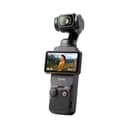
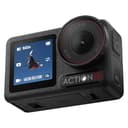
The DJI camera to buy for most people is the Osmo Pocket 3 — a 1-inch sensor on a real three-axis mechanical gimbal in a 179 g handheld, which is the only combination of those three things anyone sells. It is for the creator who walks and talks to camera and wants footage that looks like it came off a stabilizer, because it did. The budget pick is the Osmo Action 4, the cheapest DJI camera here with a live price: the same 1/1.3-inch sensor as the current Action 5 Pro, waterproof to 18 m without a case, and cheap enough to put on a helmet mount without flinching.

Prices come from our live price layer, which last ran on November 24, 2026, and the table prints each camera’s current number with that date under it. DJI discounts hard in November, so confirm the figure on the listing before you buy.

The reason this page exists is that “DJI camera” is not one product category, it is three, and the names do not tell you which is which. Osmo Pocket is a handheld gimbal camera you hold and point. Osmo Action is a waterproof mountable action camera. Mini, Flip and Air are drones, and they live under a completely different set of rules because they fly. Those three lines barely compete with each other; picking between them is a question about what you are doing, not about which is better.

So we have ranked them across all three lines in one list, because that is how people shop the brand, and we have put the line and the use case in the first line of every card. If you have already decided on a category, our action camera roundup and photography drone roundup compare DJI against GoPro and Insta360 instead of against itself.

One rule to know before you buy a drone, because it decides which one you want. In the United States, a drone that weighs under 249 g and is flown recreationally does not need to be registered with the FAA; at 250 g and above it does. Four of the DJI drones in our registry come in under that line and one — the Air 3S at 724 g — does not. That single number is why the sub-249 g Minis outsell everything else DJI flies.

How this is funded: we earn a commission if you buy through our links, at no extra cost to you. It never changes which product we recommend, and we’ll tell you plainly when to skip one. Full disclosure.

Quick picks

Ranked on published specs and buyer fit. Select a row to jump to the full write-up. We have not tested these products — here is exactly what we do instead.

#ProductBest forPrice
1
DJI Osmo Pocket 3

DJI Osmo Pocket 3

Not a traditional camera at all — a pocket gimbal with a 1-inch sensor bolted on — and that is exactly why it is the best walk-and-talk vlogging tool here. The 3-axis gimbal gives you glass-smooth motion no mirrorless body can match handheld, in something the size of a chunky pen.

Best overall
$373.00 · View on Amazon

$439.0015% off

Price as of November 24, 2026. #ad How we’re funded

2
DJI Osmo Action 5 Pro

DJI Osmo Action 5 Pro

The action camera for people who are tired of running out of battery and storage. DJI publishes a 240-minute runtime figure and builds in 64 GB, so a long day on the bike or in the water doesn't turn into a card-swapping errand. The 1/1.3-inch sensor is also physically larger than the GoPro's, which is why its night footage is the cleaner of the two. What you give up is GoPro's mount ecosystem and its higher 5.3K ceiling.

Best action camera
$319.00 · View on Amazon

$349.009% off

Price as of November 24, 2026. #ad How we’re funded

3
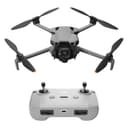
DJI Mini 5 Pro

DJI Mini 5 Pro

The first sub-249 g drone with a true 1-inch sensor, which is the single biggest jump in aerial image quality you can get without crossing the weight line that triggers US registration. You get 50 MP stills, 4K/60 HDR and omnidirectional obstacle sensing backed by a forward LiDAR that still sees in near-darkness. It costs about as much as a mid-range mirrorless body, and that is the only real catch.

Best drone
$759.00 · View on Amazon

Price as of November 24, 2026. #ad How we’re funded

4
DJI Flip

DJI Flip

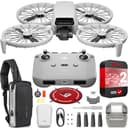
The safest way to learn to fly. Full-coverage propeller guards let you fly indoors and close to people without shredding a prop or a finger, and it still shares the Mini's 1/1.3-inch 48 MP sensor and a real 3-axis gimbal - so the footage is a long way above a toy. It comes in under 249 g too. The catch is bulk: the guard cage makes it chunkier folded than a Mini, and it is less sure-footed in gusty wind.

Best first drone
$449.00 · View on Amazon

Price as of November 24, 2026. #ad How we’re funded

5
DJI Air 3S

DJI Air 3S

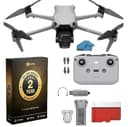
The pick when image quality matters more than pocketability. A 1-inch, 50 MP wide camera paired with a 70 mm medium-tele gives you two genuinely useful focal lengths, and the bigger airframe holds steadier in wind than any mini. The trade is weight: at 724 g it crosses the line into FAA registration and Remote ID, so it is a more committed buy than a sub-249 g drone.

Best for aerial photography
$1,229.00 · View on Amazon

Price as of November 24, 2026. #ad How we’re funded

6
DJI Osmo Action 4

DJI Osmo Action 4

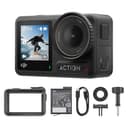
The previous-generation DJI, still sold in an Essential Combo and usually the cheapest way to get a large-sensor action camera. It shares the 1/1.3-inch sensor size and the 4K120 ceiling with the Action 5 Pro — what you lose is the longer runtime, the built-in storage and the bigger rear screen. For a first action camera that is a very easy trade.

Budget pick
$169.00 · View on Amazon

$239.0029% off

Price as of November 24, 2026. #ad How we’re funded

The picks in full

#1Best overall

DJI Osmo Pocket 3

Not a traditional camera at all — a pocket gimbal with a 1-inch sensor bolted on — and that is exactly why it is the best walk-and-talk vlogging tool here. The 3-axis gimbal gives you glass-smooth motion no mirrorless body can match handheld, in something the size of a chunky pen.

Strengths

  • Mechanical 3-axis gimbal — smoother than any in-body system
  • Large 1-inch sensor for a pocket device; 4K120 slow-mo
  • Face tracking spins the camera to keep you centered

Trade-offs

  • Fixed lens and a tiny screen
  • Short battery life; wind noise needs the add-on mic or windscreen
Sensor1-inch CMOS
Stabilization3-axis mechanical gimbal
Video4K120, up to 4K60 normal
Form factorPocket handheld gimbal camera
Weight179 g

Specifications read from the manufacturer listing, on July 18, 2026.

#2Best action camera

DJI Osmo Action 5 Pro

The action camera for people who are tired of running out of battery and storage. DJI publishes a 240-minute runtime figure and builds in 64 GB, so a long day on the bike or in the water doesn't turn into a card-swapping errand. The 1/1.3-inch sensor is also physically larger than the GoPro's, which is why its night footage is the cleaner of the two. What you give up is GoPro's mount ecosystem and its higher 5.3K ceiling.

Strengths

  • 1/1.3-inch sensor is larger than the HERO13's, and it shows after sunset
  • DJI's published 240-minute runtime is the longest here by a wide margin
  • 64 GB of built-in storage (47 GB usable) means a forgotten card isn't a dead day

Trade-offs

  • Tops out at 4K120 — no 5.3K mode like the GoPro
  • Fewer third-party mounts and accessories than GoPro's ecosystem
Sensor1/1.3-inch CMOS
Video4K up to 120fps; 1080p up to 240fps
StabilizationRockSteady 3.0+ with HorizonBalancing
Waterproof20 m without a case; 60 m with the case
BatteryUp to 240 min (DJI test: 1080p/24fps, screens off)
Storage64 GB built in (47 GB usable)
Weight146 g

Specifications read from the manufacturer listing, on October 9, 2026.

#3Best drone

DJI Mini 5 Pro

The first sub-249 g drone with a true 1-inch sensor, which is the single biggest jump in aerial image quality you can get without crossing the weight line that triggers US registration. You get 50 MP stills, 4K/60 HDR and omnidirectional obstacle sensing backed by a forward LiDAR that still sees in near-darkness. It costs about as much as a mid-range mirrorless body, and that is the only real catch.

Strengths

  • 1-inch, 50 MP sensor is a real step up in detail and low light over every smaller-sensor mini
  • Stays under 249 g, so it dodges the heavier US registration rules for recreational flying
  • Omnidirectional obstacle sensing with a forward LiDAR that works down to very low light

Trade-offs

  • Costs as much as a mid-range mirrorless camera
  • You will still want the pricier Fly More kit for spare batteries and a screen controller
Camera1-inch CMOS, 50 MP
Video4K/60 HDR, 4K/120 slow motion
WeightUnder 249 g
Obstacle sensingOmnidirectional + forward LiDAR
Max flightUp to ~36 min (standard battery)

Specifications read from the manufacturer listing, on July 20, 2026.

#4Best first drone

DJI Flip

The safest way to learn to fly. Full-coverage propeller guards let you fly indoors and close to people without shredding a prop or a finger, and it still shares the Mini's 1/1.3-inch 48 MP sensor and a real 3-axis gimbal - so the footage is a long way above a toy. It comes in under 249 g too. The catch is bulk: the guard cage makes it chunkier folded than a Mini, and it is less sure-footed in gusty wind.

Strengths

  • Full-coverage propeller guards make indoor and close-quarters flying far more forgiving
  • Same 1/1.3-inch 48 MP sensor and 3-axis gimbal as the pricier Minis
  • Palm takeoff and under 249 g - approachable and registration-light for hobby use

Trade-offs

  • The propeller cage makes it bulkier folded than a Mini
  • Lighter and less stable in gusty wind than the heavier Air series
Camera1/1.3-inch CMOS, 48 MP
Video4K up to 60fps HDR
Stabilization3-axis mechanical gimbal
WeightUnder 249 g
Max flightUp to ~31 min
IncludesFlip, DJI RC-N3 controller, one battery, spare propellers, gimbal protector; this listing adds a sling bag, landing pad and a 2-year CPS extended warranty

Specifications read from the manufacturer listing, on September 15, 2026.

#5Best for aerial photography

DJI Air 3S

The pick when image quality matters more than pocketability. A 1-inch, 50 MP wide camera paired with a 70 mm medium-tele gives you two genuinely useful focal lengths, and the bigger airframe holds steadier in wind than any mini. The trade is weight: at 724 g it crosses the line into FAA registration and Remote ID, so it is a more committed buy than a sub-249 g drone.

Strengths

  • Dual cameras - a 1-inch 50 MP wide and a 70 mm medium-tele - cover both sweeping and tighter, compressed framing
  • Larger, heavier airframe is noticeably more stable in wind than a sub-249 g mini
  • Up to 45-minute flight time and omnidirectional sensing with a forward LiDAR

Trade-offs

  • At 724 g it must be registered with the FAA and broadcast Remote ID to fly in the US
  • Too big to slip into a jacket pocket the way a Mini does
Wide camera1-inch CMOS, 50 MP (24mm equiv.)
Tele camera1/1.3-inch, 48 MP (70mm equiv.)
Video4K up to 60fps (120 for slow motion)
Weight724 g (needs FAA registration)
Max flightUp to 45 min
IncludesAir 3S, DJI RC-N3 controller, one battery, one set of propellers; this listing adds a 128GB microSD and a 2-year extended warranty

Specifications read from the manufacturer listing, on September 15, 2026.

#6Budget pick

DJI Osmo Action 4

The previous-generation DJI, still sold in an Essential Combo and usually the cheapest way to get a large-sensor action camera. It shares the 1/1.3-inch sensor size and the 4K120 ceiling with the Action 5 Pro — what you lose is the longer runtime, the built-in storage and the bigger rear screen. For a first action camera that is a very easy trade.

Strengths

  • Same 1/1.3-inch sensor class and 4K120 ceiling as the newer Action 5 Pro
  • Magnetic quick-release mount is still the fastest system to live with
  • Routinely the cheapest large-sensor action camera on the shelf

Trade-offs

  • Published runtime is 160 min against the Action 5 Pro's 240
  • No built-in storage, and a smaller 2.25-inch rear screen
Sensor1/1.3-inch CMOS
Video4K up to 120fps; 1080p up to 240fps
StabilizationRockSteady 3.0+, HorizonSteady
Waterproof18 m without a case; 60 m with the case
BatteryUp to 160 min (DJI test: 1080p/24fps, Wi-Fi off)
Weight145 g

Specifications read from the manufacturer listing, on October 9, 2026.

How we ranked these

1. Which line it belongs to, and who that line is for. A pocket gimbal camera and a helmet camera are not substitutes. We sort by use case first and put it in plain words on every card, because the most expensive mistake here is buying the wrong category rather than the wrong model.

2. Sensor size, which is the one specification that scales across all three lines. DJI publishes it for everything it makes, and it maps directly onto how the footage holds up once the light drops. Two cameras here have a 1-inch sensor, three have 1/1.3-inch, and one has a 1/2.3-inch. That ordering explains most of the price differences on this page.

3. The 249 g line, for anything that flies. Under it, no FAA registration for recreational flight. Over it, registration is required. We flag which side each drone falls on.

4. Battery and storage, read as published. DJI quotes battery figures from its own tests under stated conditions — the Action 5 Pro’s 240 minutes is 1080p at 24fps with the screens off, not a real shooting day. We quote the condition with the number every time, because the number alone is misleading.

5. Price, last. The spread here runs from roughly $155 to $1,229, and every step buys a specific capability.

We have not tested these cameras — here is exactly what we do instead — and every figure is DJI’s own published specification or the verified live listing, with the date we read it. No scores, because a score would imply a measurement we did not take.

The Osmo Pocket 3: what nothing else does

A mechanical gimbal and a 1-inch sensor in the same 179 g body is a genuinely unique combination. The gimbal matters because it is mechanical — three motors physically holding the lens level, rather than software cropping and warping the frame to fake it. You lose no resolution to stabilization, and the motion has a floating quality that electronic stabilization does not reproduce.

The 1-inch sensor is the other half. It is the same sensor class as the DJI Air 3S’s wide camera and the Mini 5 Pro’s, and it is several times the area of what an action camera carries. It shoots 4K120 for slow motion and 4K60 normally, and the rotating screen means you can frame yourself without guessing.

What it is not: waterproof, mountable on a helmet, or cheap. If the camera is going somewhere that might break it, buy an Action instead. We put the Pocket 3 head-to-head with the obvious compact alternative on our ZV-1 II vs Osmo Pocket 3 comparison, and our Osmo Pocket 3 alternatives page covers what to buy if you want one part of it rather than all of it.

The Action cameras: 5 Pro or 4?

These two share a 1/1.3-inch sensor, 4K up to 120fps, 1080p up to 240fps and RockSteady 3.0+ stabilization. They weigh 146 g and 145 g. On the specifications DJI publishes, the differences are narrower than the price gap suggests, which is the single most useful thing to know about them.

The Action 5 Pro adds three concrete things: 64 GB of built-in storage (47 GB usable), which means a forgotten memory card is not the end of the shoot; 20 m of waterproofing without a case against the Action 4’s 18 m; and a far longer rated battery — up to 240 minutes against 160, both from DJI’s own 1080p/24 tests.

The Action 4 is the budget pick precisely because it gives up so little. At the price it currently reads, it is the cheapest route into a 1/1.3-inch waterproof camera from anyone, and it is the one to mount somewhere you might lose it. Both appear on our GoPro alternatives page, ranked there against what GoPro specifically claims to do best.

The drones: three answers to three different questions

The Mini 5 Pro is the best image quality you can fly under 249 g. A 1-inch 50 MP sensor, 4K/60 HDR, 4K/120 slow motion, omnidirectional obstacle sensing plus forward LiDAR, and roughly 36 minutes on the standard battery. If you want aerial stills you would print, this is the one, and it is the top pick on our photography drone roundup.

The Flip is the one to learn on. A 1/1.3-inch 48 MP camera, 4K up to 60fps HDR, a three-axis mechanical gimbal and roughly 31 minutes of flight, in a sub-249 g aircraft whose propellers are enclosed by guards from the factory. The guards are the point: the most common way a first drone dies is a propeller meeting a branch. Note that the live listing we link bundles a sling bag, a landing pad and a two-year CPS extended warranty, which is why its price sits above a bare Mini.

The Air 3S is the one that is not a Mini. Two cameras — a 1-inch 50 MP wide at roughly 24mm equivalent and a 1/1.3-inch 48 MP telephoto at roughly 70mm — which means two framings from one flight without moving the aircraft. Up to 45 minutes aloft. At 724 g it needs FAA registration for recreational flight, and the listing we link includes a 128 GB microSD and a two-year extended warranty. This is the pick when the drone is a working camera rather than a travel toy.

Two more sub-249 g DJI drones sit in our registry below these: the Mini 3, which adds a true vertical shooting mode for social video, and the Mini 4K, which is the cheapest 4K drone DJI sells. Both are ranked against the three above on our drones under $1,000 roundup.

What DJI does not make

An interchangeable-lens camera. Every camera on this page has a fixed lens. If you want to change glass, that is a mirrorless body — our hybrid camera roundup is the page.

A 360 camera. DJI does not compete with the Insta360 X5 in our registry. If reframing a shot after the fact is what you want, that is Insta360’s ground.

A camera with a viewfinder or a hot shoe. None of these takes an external microphone in the conventional way, and that is worth knowing before you plan a talking-head shoot around one. DJI’s answer is its own wireless mic system, which we rank on our wireless microphone roundup.
Frequently asked questions

What is the best DJI camera?

The Osmo Pocket 3 for most people. It puts a 1-inch sensor on a three-axis mechanical gimbal in a 179 g handheld, shoots 4K120 and 4K60, and has a rotating screen for framing yourself. Nothing else on the market combines a sensor that size with a real mechanical gimbal at that weight. It is not waterproof and not mountable, so buy an Osmo Action instead if the camera is going somewhere risky.

What is the difference between the DJI Osmo Pocket and the Osmo Action?

The Pocket 3 is a handheld gimbal camera: you hold it, the lens is held level by three motors, and the sensor is 1-inch. The Osmo Action cameras are waterproof, mountable action cameras with 1/1.3-inch sensors and software stabilization, rated to 18-20 m without a case. The Pocket looks better and is more fragile; the Action survives things.

Which DJI drone do I need to register with the FAA?

The Air 3S, because it weighs 724 g. In the United States a drone flown recreationally that weighs under 249 g does not need FAA registration, and the DJI Mini 5 Pro, Flip, Mini 3 and Mini 4K are all built to come in under that line. Registration rules change and other requirements such as Remote ID can still apply, so check the FAA's own page before you fly.

Is the DJI Osmo Action 5 Pro worth it over the Action 4?

It depends on whether storage and battery are your problem. The two share a 1/1.3-inch sensor, 4K120 video, 1080p240 and RockSteady 3.0+, and weigh within a gram of each other. The 5 Pro adds 64 GB of built-in storage (47 GB usable), 20 m of waterproofing instead of 18 m, and a rated battery of up to 240 minutes against 160 - both figures from DJI's own 1080p/24fps tests with screens off. If you shoot short clips and carry cards, the Action 4 is the better value.

Which DJI camera is best for travel?

The Osmo Pocket 3 if you are filming yourself and the places you walk through, because 179 g and a mechanical gimbal is the lightest way to get stabilized footage that looks deliberate. The Mini 5 Pro if the pictures you want are from above and you need to stay under 249 g to avoid registering the aircraft. Our best cameras for travel roundup compares both against conventional compacts.

Do DJI cameras take an external microphone?

Not through a conventional hot shoe or 3.5mm jack in the way a mirrorless body does. DJI's answer is its own wireless microphone line, which pairs directly with several of its cameras. If clean audio from a separate mic is central to what you are shooting, check compatibility for the exact model before you buy, and see our wireless microphone roundup for how the DJI system compares with RODE and Hollyland.

Sources

Keep reading