Wide Open. Gear

The Best Sony Cameras

Sony's lineup is deep and easy to get lost in — here's the right Sony for each kind of shooter, from a first mirrorless to a full-frame hybrid, with honest cons on every pick.

By Stephen V.Last updated How we pick

Sony makes some of the most capable cameras you can buy, and it also makes one of the most confusing lineups — a wall of Alpha numbers and ZV models that all sound alike. The good news is that they share the same excellent autofocus DNA and the enormous E-mount lens system, so almost any Sony you pick will focus reliably and grow with you. What changes from body to body is the sensor size, whether there’s a viewfinder, and whether the camera is tuned for stills, video, or both.

So rather than crown one “best Sony,” we’ve matched a Sony to each kind of shooter: the do-it-all APS-C camera most people should buy, the interchangeable-lens vlogging body, the grab-and-go pocket compact, and the two full-frame bodies for when the work gets paid. Every pick has genuinely sticky Real-time Eye AF — the feature that made Sony’s reputation — so you spend less time fighting focus and more time shooting.

Each pick shows a live Amazon price and a buy button, so the recommendation is one you can act on. We haven’t physically tested every body here — we say so, and we explain what we do instead on our methodology page. Cross-shopping brands? Our beginner mirrorless guide puts these against Canon, Fujifilm and Nikon.

How this is funded:we earn a commission if you buy through our links, at no extra cost to you. It never changes which product we recommend, and we’ll tell you plainly when to skip one. Full disclosure.

Quick picks

Ranked on published specs and buyer fit. Select a row to jump to the full write-up. We have not tested these products — here is exactly what we do instead.

#ProductBest forPrice
1
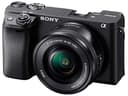
Sony a6400

Sony a6400

A durable all-rounder that has aged well thanks to genuinely sticky autofocus and a proper viewfinder. It is the pick if you want stills as much as video and don't need in-body stabilization — the eye AF still tracks a moving subject better than a lot of newer, cheaper bodies.

Best overall
$826.70 · View on Amazon

$999.9917% off

Price as of July 30, 2026. #ad How we’re funded

2
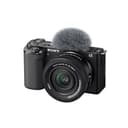
Sony ZV-E10

Sony ZV-E10

The interchangeable-lens vlogging camera most people should actually buy: a big APS-C sensor, a fully articulating screen, and Sony's E-mount so you can grow into better glass later. It skips a viewfinder and IBIS to hit its price, which is the right trade for a creator shooting off the screen.

Best for vlogging
$898.00 · View on Amazon

Price as of July 30, 2026. #ad How we’re funded

3
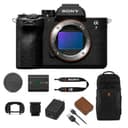
Sony a7 IV

Sony a7 IV

The default full-frame hybrid for good reason: 33 megapixels is plenty for stills and cropping, autofocus is excellent, and it shoots 4K60 in Super 35. It is more camera than most creators need — but if you are building a paid photo-and-video kit, it is the safe center of it.

Best full-frame
$1,998.00 · View on Amazon

$2,498.0020% off

Price as of July 30, 2026. #ad How we’re funded

4
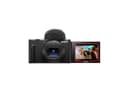
Sony ZV-1 II

Sony ZV-1 II

The most grab-and-go vlogging camera here: a wide 18-50mm equivalent zoom, a flip-out screen, and the best-in-class directional mic mean you can walk out the door and shoot talking-head video with no lens or mic to buy. The catch is the 1-inch sensor and no in-body stabilization.

Best pocket compact
$948.00 · View on Amazon

$1,049.9910% off

Price as of July 30, 2026. #ad How we’re funded

5
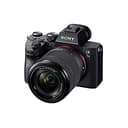
Sony a7 III

Sony a7 III

The camera that made full-frame mainstream, and still a smart buy if you find it discounted against the a7 IV. Lower resolution and an older screen, but the same excellent low-light sensor and stabilization — for a lot of shooters the savings are better spent on a lens.

Best full-frame value
$1,898.00 · View on Amazon

Price as of July 30, 2026. #ad How we’re funded

The picks in full

#1Best overall

Sony a6400

A durable all-rounder that has aged well thanks to genuinely sticky autofocus and a proper viewfinder. It is the pick if you want stills as much as video and don't need in-body stabilization — the eye AF still tracks a moving subject better than a lot of newer, cheaper bodies.

Strengths

  • Real-time Eye AF that still holds up years later
  • Built-in electronic viewfinder for shooting in bright sun
  • Weather-sealed against dust and moisture

Trade-offs

  • No in-body stabilization
  • Menus are the older, denser Sony layout
SensorAPS-C CMOS, 24.2 MP
MountSony E
Video4K30 (oversampled)
Viewfinder2.36M-dot EVF
Weight403 g with battery

Specifications read from the manufacturer listing, on July 18, 2026.

#2Best for vlogging

Sony ZV-E10

The interchangeable-lens vlogging camera most people should actually buy: a big APS-C sensor, a fully articulating screen, and Sony's E-mount so you can grow into better glass later. It skips a viewfinder and IBIS to hit its price, which is the right trade for a creator shooting off the screen.

Strengths

  • APS-C sensor is a real low-light step up from any 1-inch compact
  • Fully articulating screen and creator-focused buttons
  • E-mount opens the door to the fast primes in our lens guides

Trade-offs

  • No viewfinder and no in-body stabilization
  • Rolling shutter shows up on fast pans
SensorAPS-C CMOS, 24.2 MP
MountSony E
Video4K30 (with crop), FHD up to 120p
StabilizationDigital only, no IBIS
Weight343 g with battery

Specifications read from the manufacturer listing, on July 18, 2026.

#3Best full-frame

Sony a7 IV

The default full-frame hybrid for good reason: 33 megapixels is plenty for stills and cropping, autofocus is excellent, and it shoots 4K60 in Super 35. It is more camera than most creators need — but if you are building a paid photo-and-video kit, it is the safe center of it.

Strengths

  • 33 MP full-frame sensor gives real cropping room
  • In-body stabilization and dual card slots
  • Excellent autofocus with reliable eye tracking

Trade-offs

  • 4K60 comes with a Super 35 crop
  • Big step up in price and size from APS-C
SensorFull-frame CMOS, 33 MP
MountSony E
Video4K30 full-width, 4K60 in Super 35
Stabilization5-axis in-body (IBIS)
Weight658 g with battery

Specifications read from the manufacturer listing, on July 18, 2026.

#4Best pocket compact

Sony ZV-1 II

The most grab-and-go vlogging camera here: a wide 18-50mm equivalent zoom, a flip-out screen, and the best-in-class directional mic mean you can walk out the door and shoot talking-head video with no lens or mic to buy. The catch is the 1-inch sensor and no in-body stabilization.

Strengths

  • Wider 18-50mm equivalent lens fits your face in an arm's-length selfie shot
  • Built-in directional 3-capsule mic and included windscreen are genuinely usable
  • Product-showcase and background-blur buttons are made for talking-to-camera

Trade-offs

  • 1-inch sensor trails APS-C rivals in low light
  • No in-body stabilization, so walking footage needs the digital crop
Sensor1-inch stacked CMOS, 20.1 MP
LensFixed 18-50mm equivalent f/1.8-4 zoom
Video4K30, FHD up to 120p
StabilizationDigital (Active) only, no IBIS
Weight292 g with battery

Specifications read from the manufacturer listing, on July 18, 2026.

#5Best full-frame value

Sony a7 III

The camera that made full-frame mainstream, and still a smart buy if you find it discounted against the a7 IV. Lower resolution and an older screen, but the same excellent low-light sensor and stabilization — for a lot of shooters the savings are better spent on a lens.

Strengths

  • Superb low-light full-frame sensor
  • In-body stabilization and dual slots at a lower price
  • Battery life that still beats many newer bodies

Trade-offs

  • 24 MP and a lower-res, non-articulating screen
  • Older, single-joystick menu and a dimmer viewfinder
SensorFull-frame CMOS, 24.2 MP
MountSony E
Video4K30 (full-width readout)
Stabilization5-axis in-body (IBIS)
Weight650 g with battery

Specifications read from the manufacturer listing, on July 18, 2026.

How to pick the right Sony

Start with sensor size. Most people want APS-C— the a6400, ZV-E10 and the step-up a6700 all use it — because it delivers excellent photos and clean 4K in a smaller, cheaper body, and it takes the same E-mount lenses as the full-frame line. Full-frame (the a7 IV and a7 III) gathers more light and gives shallower background blur, but the bodies and lenses are bigger, heavier and far more expensive. Buy full-frame only if low-light performance or paid work genuinely calls for it; our full-frame vs APS-C guide walks through the trade in plain terms.

Then decide whether you need a viewfinder. The a6400 has one, which matters the moment you shoot stills outdoors where a rear screen washes out. The ZV bodies drop the viewfinder deliberately — they’re built to be shot off a flip-out screen while you talk to the lens, with creator features like a background-blur button and a better built-in mic. If you mostly film yourself, that trade is the right one; if you shoot as many photos as videos, get the viewfinder.

The last question is the lens, because it changes your images more than the body ever will. Sony’s E-mount has the widest, most affordable lens selection of any system, with strong third-party support from Sigma and Tamron — which is a real reason to buy Sony in the first place. Whatever body you choose, budget for one good fast prime early: our Sony APS-C lens guide and portrait lens guide are the best next step, and a microphone will do more for your video than any sensor upgrade.

A note on the models we left off

Sony’s lineup runs deep, and a few bodies just missed the cut here. The a6700is Sony’s flagship APS-C camera — it adds in-body stabilization and the AI autofocus from the full-frame line — and it’s the one to grow into if YouTube is a job rather than a hobby; it leads our cameras for YouTube guide. The newer ZV-E10 II adds uncropped 4K60 over the original ZV-E10, which we cover in our ZV-E10 vs ZV-E10 II comparison. We feature bodies here that show a live, verified price so every recommendation comes with a reachable buy button; where a model is between stock, we point you to the guide that covers it rather than list a stale number.
Frequently asked questions

Which Sony camera should most people buy?

The Sony a6400. It pairs a large APS-C sensor with a proper viewfinder and Sony's benchmark Real-time Eye AF, and it's weather-sealed, so it handles both stills and video well without the cost of full-frame. If you mostly film yourself instead, the ZV-E10 trades the viewfinder for a flip screen and creator features and is the better vlogging pick.

What's the best Sony camera for vlogging?

The ZV-E10 is the interchangeable-lens vlogging camera most people should buy: a big APS-C sensor, a fully articulating screen, creator buttons and E-mount so you can grow into better lenses. If you'd rather not deal with lenses at all, the pocket-sized ZV-1 II has a wide built-in zoom and a strong directional mic, so you can walk out the door and shoot with nothing to add.

Is the Sony a7 III still worth buying?

Yes, if you find it discounted against the a7 IV. It has the same excellent low-light full-frame sensor and in-body stabilization, and its battery life still beats many newer bodies. You give up resolution (24 versus 33 megapixels) and a modern articulating screen, but for a lot of shooters the savings are better spent on a lens.

Do all Sony cameras use the same lenses?

Sony's mirrorless cameras all use the E-mount, so lenses are broadly cross-compatible - but there's a catch. Full-frame E-mount lenses (often labelled FE) work on both full-frame and APS-C bodies, while APS-C E-mount lenses fit full-frame bodies only in a cropped mode. In practice, buy FE lenses if you think you'll go full-frame later, and APS-C lenses if you want smaller, cheaper glass for a crop body.

Which Sony has in-body stabilization?

Among these picks, the full-frame a7 IV and a7 III have 5-axis in-body stabilization (IBIS). The APS-C a6400 and the ZV bodies do not - they rely on stabilized lenses or digital stabilization for video. If IBIS on a crop body matters to you, Sony's a6700 is the APS-C model that has it, which is a big part of why it's the step-up choice.

Sources

Keep reading