Wide Open. Gear

The Best Prime Lenses

A fast prime is the single upgrade that transforms your photos most — here are the best ones to buy first, by mount and budget, with honest cons on every pick.

By Stephen V.Last updated How we pick

If you own a camera and a kit zoom and your photos feel a little flat, a prime lensis almost certainly the upgrade you want before a new body. A prime has one fixed focal length — it doesn’t zoom — and that constraint is exactly why it’s better: with no zoom mechanism to design around, primes are sharper, gather far more light, and open to wide apertures like f/1.8 and f/1.4 that melt a background into creamy blur. The difference between a kit zoom and a fast prime is the difference between a snapshot and a photograph.

The catch is that a lens only fits its own mount, so the right prime for you depends on your camera. Below we’ve picked the best primes to buy first across the systems most of our readers shoot — Sony E-mount, Canon RF and APS-C crop bodies — and split them by the job each does: the affordable “first prime” that teaches you to see, the classic nifty-fifty, and the portrait lenses that flatter a face. We judge them on real-world sharpness, aperture, autofocus and value, not lab charts.

Every pick shows a live Amazon price and a buy button. We haven’t physically tested each lens — we say so, and explain what we do instead on our methodology page. Not sure which focal length you need? Our lens buying guide and focal length explained guide are the place to start, and for portraits specifically see our portrait lens guide.

How this is funded:we earn a commission if you buy through our links, at no extra cost to you. It never changes which product we recommend, and we’ll tell you plainly when to skip one. Full disclosure.

Quick picks

Ranked on published specs and buyer fit. Select a row to jump to the full write-up. We have not tested these products — here is exactly what we do instead.

#ProductBest forPrice
1
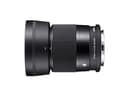
Sigma 30mm f/1.4 DC DN

Sigma 30mm f/1.4 DC DN

The default everyday prime for a Sony crop body like the ZV-E10 or a6400. A ~45mm equivalent field of view, a bright f/1.4 aperture for low light and blur, and a price that makes it a no-brainer first upgrade from the kit zoom.

Best first prime for APS-C
$330.99 · View on Amazon

Price as of July 31, 2026. #ad How we’re funded

2
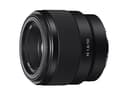
Sony FE 50mm f/1.8

Sony FE 50mm f/1.8

The cheapest way to get that blurred-background, low-light look on a Sony full-frame body. Optically it is a big jump over a kit zoom for the money — the honest caveat is the older, slower autofocus motor, which hunts and buzzes a little. For photos it is a bargain; for fast video AF, look higher up.

Best value full-frame prime
$198.00 · View on Amazon

$248.0020% off

Price as of July 31, 2026. #ad How we’re funded

3
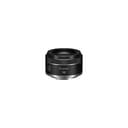
Canon RF 50mm f/1.8 STM

Canon RF 50mm f/1.8 STM

Canon's 'nifty fifty' for RF, and the first lens most R-series owners should add. Quiet STM autofocus, genuine f/1.8 background blur, and a featherweight body for very little money. On an R50 or R10 it becomes a lovely 80mm portrait lens.

Best prime for Canon RF
$219.00 · View on Amazon

$239.008% off

Price as of July 31, 2026. #ad How we’re funded

4
Sigma 56mm f/1.4 DC DN

Sigma 56mm f/1.4 DC DN

The portrait lens for APS-C shooters, full stop. On a Sony ZV-E10 or a6-series body it acts like an 84mm f/1.4 — the ideal headshot focal length — for a genuinely affordable price. Bitingly sharp with creamy background separation; if you own a crop-sensor body, buy this before almost anything else.

Best APS-C portrait prime
$469.99 · View on Amazon

$504.997% off

Price as of July 31, 2026. #ad How we’re funded

5
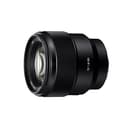
Sony FE 85mm f/1.8

Sony FE 85mm f/1.8

The best-value portrait lens in Sony's full-frame line, and the one to buy first. 85mm is the classic flattering focal length, f/1.8 melts the background, and the price is a fraction of the f/1.4 GM for image quality that is very hard to fault. On APS-C it becomes a 128mm tight-headshot lens.

Best full-frame portrait prime
$699.99 · View on Amazon

Price as of July 31, 2026. #ad How we’re funded

6
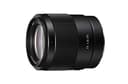
Sony FE 35mm f/1.8

Sony FE 35mm f/1.8

The most useful single prime for a hybrid creator. 35mm is wide enough for handheld vlogging and environmental shots, fast enough for low light, and the autofocus is quick and near-silent — unlike the cheaper 50mm f/1.8. On APS-C it becomes a natural ~52mm everyday lens.

Best all-rounder full-frame prime
$798.00 · View on Amazon

Price as of July 31, 2026. #ad How we’re funded

The picks in full

#1Best first prime for APS-C

Sigma 30mm f/1.4 DC DN

The default everyday prime for a Sony crop body like the ZV-E10 or a6400. A ~45mm equivalent field of view, a bright f/1.4 aperture for low light and blur, and a price that makes it a no-brainer first upgrade from the kit zoom.

Strengths

  • ~45mm equivalent — a natural, versatile field of view
  • Bright f/1.4 for low light and background blur
  • Excellent image quality for the money

Trade-offs

  • APS-C only
  • A little wide for tight headshot portraits
Mount / formatSony E, APS-C
Focal length30mm (45mm equivalent)
Max aperturef/1.4
Weight265 g

Specifications read from the manufacturer listing, on July 18, 2026.

#2Best value full-frame prime

Sony FE 50mm f/1.8

The cheapest way to get that blurred-background, low-light look on a Sony full-frame body. Optically it is a big jump over a kit zoom for the money — the honest caveat is the older, slower autofocus motor, which hunts and buzzes a little. For photos it is a bargain; for fast video AF, look higher up.

Strengths

  • Genuinely affordable route to f/1.8 background blur
  • Light and small; sharp stopped down a touch
  • The classic, versatile 50mm focal length

Trade-offs

  • Older DC autofocus motor is slow and audible
  • Not the pick if you rely on fast video autofocus
Mount / formatSony E, full-frame
Focal length50mm (75mm on APS-C)
Max aperturef/1.8
Weight186 g

Specifications read from the manufacturer listing, on July 18, 2026.

#3Best prime for Canon RF

Canon RF 50mm f/1.8 STM

Canon's 'nifty fifty' for RF, and the first lens most R-series owners should add. Quiet STM autofocus, genuine f/1.8 background blur, and a featherweight body for very little money. On an R50 or R10 it becomes a lovely 80mm portrait lens.

Strengths

  • Quiet, smooth STM autofocus that suits video
  • Real f/1.8 background blur for very little money
  • Tiny and light — becomes an 80mm portrait lens on APS-C

Trade-offs

  • Some corner softness and focus breathing wide open
  • Plastic mount and no weather sealing
Mount / formatCanon RF, full-frame
Focal length50mm (80mm on APS-C)
Max aperturef/1.8
Weight160 g

Specifications read from the manufacturer listing, on July 18, 2026.

#4Best APS-C portrait prime

Sigma 56mm f/1.4 DC DN

The portrait lens for APS-C shooters, full stop. On a Sony ZV-E10 or a6-series body it acts like an 84mm f/1.4 — the ideal headshot focal length — for a genuinely affordable price. Bitingly sharp with creamy background separation; if you own a crop-sensor body, buy this before almost anything else.

Strengths

  • Acts like an 84mm f/1.4 on APS-C — perfect for headshots
  • Exceptionally sharp with beautiful subject separation
  • Remarkable image quality for the price

Trade-offs

  • APS-C only — it will vignette hard on full-frame
  • No optical stabilization
Mount / formatSony E, APS-C
Focal length56mm (84mm equivalent)
Max aperturef/1.4
Weight280 g

Specifications read from the manufacturer listing, on July 18, 2026.

#5Best full-frame portrait prime

Sony FE 85mm f/1.8

The best-value portrait lens in Sony's full-frame line, and the one to buy first. 85mm is the classic flattering focal length, f/1.8 melts the background, and the price is a fraction of the f/1.4 GM for image quality that is very hard to fault. On APS-C it becomes a 128mm tight-headshot lens.

Strengths

  • Classic flattering 85mm focal length with lovely background blur
  • Sharp wide open, with fast, quiet autofocus
  • A fraction of the price of the f/1.4 GM

Trade-offs

  • On APS-C the 128mm equivalent is tight for indoor use
  • No optical stabilization (relies on in-body IS)
Mount / formatSony E, full-frame
Focal length85mm (128mm on APS-C)
Max aperturef/1.8
Weight371 g

Specifications read from the manufacturer listing, on July 18, 2026.

#6Best all-rounder full-frame prime

Sony FE 35mm f/1.8

The most useful single prime for a hybrid creator. 35mm is wide enough for handheld vlogging and environmental shots, fast enough for low light, and the autofocus is quick and near-silent — unlike the cheaper 50mm f/1.8. On APS-C it becomes a natural ~52mm everyday lens.

Strengths

  • Fast, quiet autofocus that suits video and stills
  • 35mm is wide enough for arm's-length vlogging
  • Compact and light for its speed

Trade-offs

  • Costs more than the 50mm f/1.8
  • Not as much subject compression as an 85mm for portraits
Mount / formatSony E, full-frame
Focal length35mm (52mm on APS-C)
Max aperturef/1.8
Weight280 g

Specifications read from the manufacturer listing, on July 18, 2026.

How to choose your first prime

First, match the mount. A lens must be made for your camera’s system — Sony E, Canon RF, Fujifilm X, Nikon Z and so on — and on top of that, some primes are built for smaller APS-C sensors while others cover full-frame. Our APS-C picks here (the Sigma 30mm and 56mm) are the affordable, compact choice for crop-sensor bodies; the Sony FE and Canon RF primes are full-frame lenses that also work on their brand’s crop bodies with a tighter effective field of view. If you’re unsure what your camera takes, our lens mounts explained guide sorts it out.

Then pick a focal length for what you shoot. A 35mm(or ~30mm on APS-C) is a natural, everyday length — great for street, travel, environmental portraits and video. A 50mmis the classic “nifty fifty”: cheap, sharp, and a brilliant first prime that gets you beautiful subject separation for very little money. An 85mm(or ~56mm on APS-C) is the portrait specialist — the longer length and wide aperture flatter faces and blur backgrounds into cream. Our focal length guide covers how each length changes your images if you want the full picture.

Finally, weigh aperture against budget. The f/1.4 primes here (the Sigma pair) gather more light and blur backgrounds more aggressively than the f/1.8 options, which helps in low light and for the most dramatic separation — but the f/1.8 lenses are lighter, cheaper and still a massive step up from any kit zoom. For most people the honest advice is to buy the affordable f/1.8 fifty first, learn what a prime does for your photos, and add a portrait prime later. And whatever you buy, a prime outlives your camera body — good glass keeps its value and moves to your next body, which is why spending on lenses is the smarter long-term play. Our camera vs lens upgrade guide makes that case in full.
Frequently asked questions

What is a prime lens and why should I buy one?

A prime lens has a single fixed focal length - it doesn't zoom. Because it isn't compromised by a zoom mechanism, a prime is typically sharper, lighter and much brighter than a kit zoom, opening to wide apertures like f/1.8 or f/1.4 that gather more light and blur the background beautifully. For most people, adding a fast prime to a kit-zoom camera is the single biggest jump in image quality they can make.

What is the best first prime lens to buy?

For most people, an affordable 50mm f/1.8 (a 'nifty fifty') on full-frame, or a compact fast prime like the Sigma 30mm f/1.4 on an APS-C body. They're cheap, sharp, and immediately give you the low-light performance and background blur a kit zoom can't. Start there, learn what a prime does for your photos, and add a portrait prime later if you want one.

Will these prime lenses fit my camera?

Only if the mount matches. A lens is made for a specific system - Sony E, Canon RF, Fujifilm X, Nikon Z and so on - and won't fit another without an adapter. On top of that, some primes here are designed for APS-C sensors and some for full-frame (full-frame lenses also work on that brand's crop bodies with a tighter field of view). Check your camera's mount before buying; our lens mounts guide explains how.

Is an f/1.4 prime worth it over an f/1.8?

Sometimes. An f/1.4 lens gathers a bit more light and blurs backgrounds a little more aggressively than an f/1.8, which helps in dim venues and for the most dramatic subject separation. But f/1.8 primes are lighter, cheaper and still a huge upgrade over any kit zoom. Unless you specifically need the extra stop for low light or maximum blur, an f/1.8 is the better value for most people.

Prime or zoom - which should I buy first?

If image quality and low-light performance matter most, a prime; if flexibility matters most, a zoom. Primes are sharper and brighter for the money and teach you to compose by moving your feet, while zooms cover a range without changing lenses. Many photographers keep a kit zoom for versatility and add one fast prime for the shots that matter - see our prime vs zoom guide for the full trade-off.

Sources

Keep reading