Wide Open. Gear

The Best Full-Frame Cameras

The full-frame bodies worth buying and who each one is really for — plus an honest answer to the bigger question of whether you need full-frame at all.

By Stephen V.Last updated How we pick

Full-frame is the sensor size professionals reach for, and it earns the reputation: a bigger sensor gathers more light, so it holds cleaner detail in the dark and gives you that shallow, creamy background blur that makes a subject leap off the frame. It also gives you more room to crop and, on these bodies, the kind of autofocus and build quality you lean on when the shoot is paid. If you already know you want full-frame, the picks below are the ones we’d actually spend the money on.

But full-frame is a deliberate upgrade, not a default — and the honest truth is that most people reading this would be better served by a smaller, cheaper APS-C body and a nice lens. So we judge these on the things that justify the jump: real low-light performance, autofocus that sticks to a moving eye, in-body stabilization for handheld work, and how each one balances stills against video. Every pick here has in-body stabilization, dual card slots and a mature lens system behind it, so the decision comes down to who you are and what you shoot.

All three show a live Amazon price and a buy button, so you can act on the recommendation without hunting for it. We haven’t physically tested these bodies — we say so, and we explain exactly what we do instead on our methodology page. If you’re still weighing full-frame against APS-C, read our full-frame vs APS-Cguide first — it might save you a lot of money.

How this is funded:we earn a commission if you buy through our links, at no extra cost to you. It never changes which product we recommend, and we’ll tell you plainly when to skip one. Full disclosure.

Quick picks

Ranked on published specs and buyer fit. Select a row to jump to the full write-up. We have not tested these products — here is exactly what we do instead.

#ProductBest forPrice
1
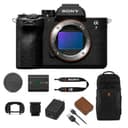
Sony a7 IV

Sony a7 IV

The default full-frame hybrid for good reason: 33 megapixels is plenty for stills and cropping, autofocus is excellent, and it shoots 4K60 in Super 35. It is more camera than most creators need — but if you are building a paid photo-and-video kit, it is the safe center of it.

Best overall
$1,998.00 · View on Amazon

$2,498.0020% off

Price as of July 30, 2026. #ad How we’re funded

2
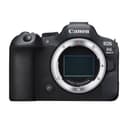
Canon EOS R6 Mark II

Canon EOS R6 Mark II

Canon's do-everything full-frame hybrid and the natural rival to the Sony a7 IV. Uncropped 4K60, superb autofocus and in-body stabilization, tuned more for speed and video than for megapixels. If you are on Canon glass and want one body for paid work, this is it.

Best for video
$2,099.00 · View on Amazon

$2,298.019% off

Price as of July 30, 2026. #ad How we’re funded

3
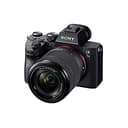
Sony a7 III

Sony a7 III

The camera that made full-frame mainstream, and still a smart buy if you find it discounted against the a7 IV. Lower resolution and an older screen, but the same excellent low-light sensor and stabilization — for a lot of shooters the savings are better spent on a lens.

Best value
$1,898.00 · View on Amazon

Price as of July 30, 2026. #ad How we’re funded

The picks in full

#1Best overall

Sony a7 IV

The default full-frame hybrid for good reason: 33 megapixels is plenty for stills and cropping, autofocus is excellent, and it shoots 4K60 in Super 35. It is more camera than most creators need — but if you are building a paid photo-and-video kit, it is the safe center of it.

Strengths

  • 33 MP full-frame sensor gives real cropping room
  • In-body stabilization and dual card slots
  • Excellent autofocus with reliable eye tracking

Trade-offs

  • 4K60 comes with a Super 35 crop
  • Big step up in price and size from APS-C
SensorFull-frame CMOS, 33 MP
MountSony E
Video4K30 full-width, 4K60 in Super 35
Stabilization5-axis in-body (IBIS)
Weight658 g with battery

Specifications read from the manufacturer listing, on July 18, 2026.

#2Best for video

Canon EOS R6 Mark II

Canon's do-everything full-frame hybrid and the natural rival to the Sony a7 IV. Uncropped 4K60, superb autofocus and in-body stabilization, tuned more for speed and video than for megapixels. If you are on Canon glass and want one body for paid work, this is it.

Strengths

  • Uncropped 4K60 with excellent rolling-shutter control
  • Class-leading autofocus and subject detection
  • In-body stabilization and dual card slots

Trade-offs

  • 24 MP is modest for heavy cropping or large prints
  • Can overheat in the longest 4K60 clips
SensorFull-frame CMOS, 24.2 MP
MountCanon RF
Video4K60 uncropped, 6K RAW over HDMI
Stabilization5-axis in-body (IBIS)
Weight670 g with battery

Specifications read from the manufacturer listing, on July 18, 2026.

#3Best value

Sony a7 III

The camera that made full-frame mainstream, and still a smart buy if you find it discounted against the a7 IV. Lower resolution and an older screen, but the same excellent low-light sensor and stabilization — for a lot of shooters the savings are better spent on a lens.

Strengths

  • Superb low-light full-frame sensor
  • In-body stabilization and dual slots at a lower price
  • Battery life that still beats many newer bodies

Trade-offs

  • 24 MP and a lower-res, non-articulating screen
  • Older, single-joystick menu and a dimmer viewfinder
SensorFull-frame CMOS, 24.2 MP
MountSony E
Video4K30 (full-width readout)
Stabilization5-axis in-body (IBIS)
Weight650 g with battery

Specifications read from the manufacturer listing, on July 18, 2026.

How to choose a full-frame camera

Start with the split between resolution and speed. The Sony a7 IV’s 33 megapixels give you real cropping room and detail for large prints, which suits a photographer who shoots portraits, weddings and travel and edits heavily. The Canon R6 Mark II and Sony a7 III sit at 24 megapixels, which is plenty for almost everything and actually helps in low light — fewer, larger pixels gather more light per photosite. If you print billboards or crop aggressively, lean toward more resolution; otherwise 24 megapixels is the smarter, cleaner default.

Then weigh video. This is where the Canon R6 Mark II pulls ahead: it shoots uncropped 4K60, so you keep your full field of view at the higher frame rate, where the Sony a7 IV drops to a Super 35 crop for 4K60. If you film as much as you photograph, that difference is the whole decision. For stills-first shooters who film occasionally, both Sony bodies are more than capable and the crop rarely comes up.

Finally, think about the system, because the body you buy commits you to a lens mount for years. Sony’s E-mount has the deepest, most affordable lens catalog of any full-frame system, with huge third-party support from Sigma and Tamron — a real advantage as you build a kit. Canon’s RF mount has superb first-party glass but tighter third-party options. Whichever you choose, remember that a good lens changes your images far more than the body does: our portrait lens guide and video lens guide are where the real image-quality upgrades live.

Do you actually need full-frame?

Most people don’t, and we’d be doing you a disservice not to say it. A modern APS-C body like the Fujifilm X-S20 or Sony a6700 gives you excellent photos, clean 4K and a viewfinder in a smaller, lighter, far cheaper package — and the money you save on the body and its smaller lenses buys better glass, which matters more. Full-frame makes sense when low-light performance and shallow depth of field are genuinely part of your paid work, or when you already own full-frame lenses. If that’s not you, spend less and shoot more: start with our hybrid camera guide or the beginner mirrorless picks instead. And whatever body you land on, the biggest upgrades to your results are almost never the sensor: a fast prime, a good microphone for video, and time spent learning the light beat a bigger sensor every time.
Frequently asked questions

Is full-frame really better than APS-C?

In specific ways, yes: a full-frame sensor gathers more light, so it holds cleaner detail at high ISO, and it gives shallower background blur at the same aperture and framing. But it costs more, the bodies and lenses are bigger and heavier, and for good-light photography a modern APS-C camera is genuinely hard to tell apart. Full-frame is a deliberate upgrade for low-light and paid work, not a default everyone needs.

Which full-frame camera is best for beginners?

The Sony a7 III is the friendliest entry point here. It's the oldest of the three, so it's the most affordable, and it still has the same excellent low-light sensor and in-body stabilization as pricier bodies. That said, most beginners are better served by a cheaper APS-C camera and a nice lens - full-frame's advantages mostly show up once you're shooting in difficult light or for money.

Sony a7 IV or Canon R6 Mark II?

Buy the a7 IV if you shoot mostly stills and want more resolution - its 33 megapixels give you cropping room and detail, and Sony's lens ecosystem is the deepest around. Buy the R6 Mark II if video is a big part of what you do, because it shoots uncropped 4K60 where the a7 IV crops to Super 35 for that frame rate. Both have superb autofocus and stabilization; the split is resolution versus uncropped high-frame-rate video.

Do these full-frame cameras have in-body stabilization?

Yes, all three - the Sony a7 IV, Canon R6 Mark II and Sony a7 III have 5-axis in-body stabilization (IBIS). That smooths handheld video and lets you shoot stills at slower shutter speeds in dim light without blur. It's one of the real reasons to step up to bodies at this level rather than an entry model.

How many megapixels do I need on a full-frame camera?

For most people, 24 megapixels is plenty and actually cleaner in low light because the pixels are larger. Step up to the a7 IV's 33 megapixels if you crop heavily, make very large prints, or shoot detailed product and landscape work. Chasing the highest number is usually a trap - see our megapixels guide for why resolution matters less than people think.

Sources

Keep reading