Wide Open. Gear

The Best Drones for Photography

The drones that shoot the best aerial stills and video, from a sub-250g first drone to a pro dual-camera aircraft - with live prices and honest trade-offs.

By Stephen V.Last updated How we pick

A drone is the one piece of camera gear that gives you a shot you simply can’t get any other way — the pull-back reveal, the top-down pattern, the coastline from a height no tripod reaches. The good news is that the hard part — keeping the aircraft steady and the footage smooth — is now solved even on the cheap models. What separates the drones below is image quality, how much they weigh, and how forgiving they are while you learn.

Weight matters more than you’d expect, because of a single number: 249 grams. Stay under it and, as a recreational flyer in the US, you skip aircraft registration; cross it and you take on registration and Remote ID. That’s why so many of the best photography drones are deliberately engineered to sit just below the line. We flag the weight on every pick and explain the rule below so you can decide how much drone you actually need.

We haven’t flown every one of these ourselves, and we say so. What we did was read the manufacturer’s published specs, do the buyer-relevant math — sensor size against image quality, weight against the registration line, flight time against how far you can actually range — and rank for the person spending the money.

How this is funded:we earn a commission if you buy through our links, at no extra cost to you. It never changes which product we recommend, and we’ll tell you plainly when to skip one. Full disclosure.

Quick picks

Ranked on published specs and buyer fit. Select a row to jump to the full write-up. We have not tested these products — here is exactly what we do instead.

#ProductBest forPrice
1
DJI Mini 5 Pro

DJI Mini 5 Pro

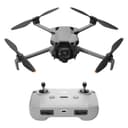
The first sub-249 g drone with a true 1-inch sensor, which is the single biggest jump in aerial image quality you can get without crossing the weight line that triggers US registration. You get 50 MP stills, 4K/60 HDR and omnidirectional obstacle sensing backed by a forward LiDAR that still sees in near-darkness. It costs about as much as a mid-range mirrorless body, and that is the only real catch.

Best overall
$683.00 · View on Amazon

$759.0010% off

Price as of July 28, 2026. #ad How we’re funded

2
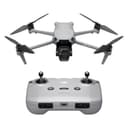
DJI Air 3S

DJI Air 3S

The pick when image quality matters more than pocketability. A 1-inch, 50 MP wide camera paired with a 70 mm medium-tele gives you two genuinely useful focal lengths, and the bigger airframe holds steadier in wind than any mini. The trade is weight: at 724 g it crosses the line into FAA registration and Remote ID, so it is a more committed buy than a sub-249 g drone.

Best image quality
$1,099.00 · View on Amazon

Price as of July 28, 2026. #ad How we’re funded

3
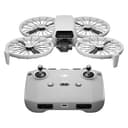
DJI Flip

DJI Flip

The safest way to learn to fly. Full-coverage propeller guards let you fly indoors and close to people without shredding a prop or a finger, and it still shares the Mini's 1/1.3-inch 48 MP sensor and a real 3-axis gimbal - so the footage is a long way above a toy. It comes in under 249 g too. The catch is bulk: the guard cage makes it chunkier folded than a Mini, and it is less sure-footed in gusty wind.

Best for beginners
$349.00 · View on Amazon

$439.0021% off

Price as of July 28, 2026. #ad How we’re funded

4
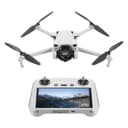
DJI Mini 3

DJI Mini 3

The step up from the Mini 4K: a larger sensor, true vertical shooting for social, and longer battery life, still under 249 g. If you post to Reels or TikTok from the air, the native vertical mode alone can justify the jump.

Best for social video
$548.00 · View on Amazon

Price as of July 28, 2026. #ad How we’re funded

5
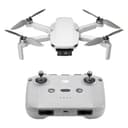
DJI Mini 4K

DJI Mini 4K

The easiest way into aerial video, and it stays under the 249 g line that keeps registration simple for most hobby fliers in the US. A 3-axis gimbal and stable 4K make it far more capable than the price suggests — the honest entry point before you spend real money on a drone.

Best budget pick
$229.00 · View on Amazon

$299.0023% off

Price as of July 28, 2026. #ad How we’re funded

The picks in full

#1Best overall

DJI Mini 5 Pro

The first sub-249 g drone with a true 1-inch sensor, which is the single biggest jump in aerial image quality you can get without crossing the weight line that triggers US registration. You get 50 MP stills, 4K/60 HDR and omnidirectional obstacle sensing backed by a forward LiDAR that still sees in near-darkness. It costs about as much as a mid-range mirrorless body, and that is the only real catch.

Strengths

  • 1-inch, 50 MP sensor is a real step up in detail and low light over every smaller-sensor mini
  • Stays under 249 g, so it dodges the heavier US registration rules for recreational flying
  • Omnidirectional obstacle sensing with a forward LiDAR that works down to very low light

Trade-offs

  • Costs as much as a mid-range mirrorless camera
  • You will still want the pricier Fly More kit for spare batteries and a screen controller
Camera1-inch CMOS, 50 MP
Video4K/60 HDR, 4K/120 slow motion
WeightUnder 249 g
Obstacle sensingOmnidirectional + forward LiDAR
Max flightUp to ~36 min (standard battery)

Specifications read from the manufacturer listing, on July 20, 2026.

#2Best image quality

DJI Air 3S

The pick when image quality matters more than pocketability. A 1-inch, 50 MP wide camera paired with a 70 mm medium-tele gives you two genuinely useful focal lengths, and the bigger airframe holds steadier in wind than any mini. The trade is weight: at 724 g it crosses the line into FAA registration and Remote ID, so it is a more committed buy than a sub-249 g drone.

Strengths

  • Dual cameras - a 1-inch 50 MP wide and a 70 mm medium-tele - cover both sweeping and tighter, compressed framing
  • Larger, heavier airframe is noticeably more stable in wind than a sub-249 g mini
  • Up to 45-minute flight time and omnidirectional sensing with a forward LiDAR

Trade-offs

  • At 724 g it must be registered with the FAA and broadcast Remote ID to fly in the US
  • Too big to slip into a jacket pocket the way a Mini does
Wide camera1-inch CMOS, 50 MP (24mm equiv.)
Tele camera1/1.3-inch, 48 MP (70mm equiv.)
Video4K up to 60fps (120 for slow motion)
Weight724 g (needs FAA registration)
Max flightUp to 45 min

Specifications read from the manufacturer listing, on July 20, 2026.

#3Best for beginners

DJI Flip

The safest way to learn to fly. Full-coverage propeller guards let you fly indoors and close to people without shredding a prop or a finger, and it still shares the Mini's 1/1.3-inch 48 MP sensor and a real 3-axis gimbal - so the footage is a long way above a toy. It comes in under 249 g too. The catch is bulk: the guard cage makes it chunkier folded than a Mini, and it is less sure-footed in gusty wind.

Strengths

  • Full-coverage propeller guards make indoor and close-quarters flying far more forgiving
  • Same 1/1.3-inch 48 MP sensor and 3-axis gimbal as the pricier Minis
  • Palm takeoff and under 249 g - approachable and registration-light for hobby use

Trade-offs

  • The propeller cage makes it bulkier folded than a Mini
  • Lighter and less stable in gusty wind than the heavier Air series
Camera1/1.3-inch CMOS, 48 MP
Video4K up to 60fps HDR
Stabilization3-axis mechanical gimbal
WeightUnder 249 g
Max flightUp to ~31 min

Specifications read from the manufacturer listing, on July 20, 2026.

#4Best for social video

DJI Mini 3

The step up from the Mini 4K: a larger sensor, true vertical shooting for social, and longer battery life, still under 249 g. If you post to Reels or TikTok from the air, the native vertical mode alone can justify the jump.

Strengths

  • Larger sensor and better low-light than the Mini 4K
  • True vertical (portrait) shooting for social
  • Longer battery life, still under 249 g

Trade-offs

  • No obstacle sensors on the base model
  • Costs meaningfully more than the Mini 4K
Camera1/1.3-inch sensor, 4K HDR
Stabilization3-axis mechanical gimbal
WeightUnder 249 g
FeatureTrue vertical shooting mode

Specifications read from the manufacturer listing, on July 18, 2026.

#5Best budget pick

DJI Mini 4K

The easiest way into aerial video, and it stays under the 249 g line that keeps registration simple for most hobby fliers in the US. A 3-axis gimbal and stable 4K make it far more capable than the price suggests — the honest entry point before you spend real money on a drone.

Strengths

  • Under 249 g, so it dodges the heavier registration rules for hobby use
  • 3-axis mechanical gimbal for genuinely smooth 4K
  • Long transmission range and beginner-friendly flight modes

Trade-offs

  • Smaller sensor than the pricier Mini 3/4 Pro
  • No obstacle avoidance
Camera1/2.3-inch sensor, 4K UHD
Stabilization3-axis mechanical gimbal
WeightUnder 249 g
Max flightUp to ~31 min per battery

Specifications read from the manufacturer listing, on July 18, 2026.

How we picked

Aerial photography rewards a slightly different set of priorities than a camera on the ground, so that’s how we ranked these:

  • Sensor size, then resolution.A bigger sensor is the biggest lever on how good the images look, especially in the low, golden light most people want to shoot in. A 1-inch sensor pulls clearly ahead of the smaller chips in dynamic range and low-light cleanliness — the same logic we use for cameras on the ground.
  • Weight against the 249 g line.Staying under 249 g removes a real barrier for casual flyers, so a drone that delivers big-sensor quality while staying under the line earns a lot of credit.
  • Stabilization.A true 3-axis mechanical gimbal is non-negotiable for clean stills and cinematic video; we don’t recommend electronic-only stabilization for photography.
  • Obstacle sensing and ease of flight. Sensors that stop you flying into a tree, and features like palm takeoff and subject tracking, matter most for the people buying their first drone.
  • Flight time and range, because a longer battery is more keepers per trip and less anxiety on the way back.

What we did notdo is run a flight-test lab or claim hands-on results we don’t have. Every spec here is the manufacturer’s published figure; the verdicts and the ranking are ours. You can read exactly how we work on our methodology page.

The 249-gram line, explained

In the US, a drone flown recreationally that weighs less than 250 gramsdoes not need to be registered with the FAA. Cross 250 grams and you must register the aircraft (a small fee) and it must broadcast Remote ID. Sub-250 g drones are the reason the “Mini” class exists, and it’s why four of our five picks come in just under the line.

To be clear, “no registration” is not “no rules.” Every recreational flyer still has to pass the free TRUST test, keep the drone within visual line of sight, and stay clear of controlled airspace and no-fly zones. Rules change, and yours may differ outside the US, so always check the current requirements with the FAAbefore you fly. A heavier drone like the Air 3S is still very much worth it for the image quality — you just take on a little paperwork.

How much drone do you actually need

If it’s your first drone, spend the least you can to learn on. The Mini 4K gets a real 3-axis gimbal and stable 4K into the air for the price of a decent lens, and the Flipadds full propeller guards so a beginner’s mistakes cost nothing. Crashing a cheaper drone while you learn hurts a lot less than crashing an expensive one.

If you care about the photos, the sensor is where your money goes. The Mini 5 Pro is the sweet spot: 1-inch image quality with no registration to deal with. Step up to the Air 3Sonly if you want the second, tighter focal length and the steadier flight of a bigger airframe — and you’re happy to register it.

Whatever you pick, budget for a fast microSD card and a bag. Drones fill a card quickly at 4K, and a slow card can stutter a recording; our SD card guide covers the speed classes that keep up (the same math applies to microSD). A protective sleeve inside your everyday bag, or a dedicated case from our camera bag guide, keeps the gimbal safe in transit.

Why every pick here is a DJI

We’d happily list a non-DJI drone if one earned a place, but at the consumer end the honest picture is that DJI dominates on image quality, stabilization and value, and it’s consistently the easiest brand to actually buy. The main alternative worth knowing is Autel’s EVO line, which makes genuinely capable camera drones; we left it off because US pricing and stock have been less dependable, not because the cameras are poor. If you find a current EVO at a fair price, it’s a reasonable option — we just can’t point most buyers to it with confidence today. And DJI’s own lineup keeps moving: the Mini 5 Pro is the current 1-inch flagship of the sub-250 g class, with the older Mini 4 Pro still sold in bundle kits if you spot one discounted.
Frequently asked questions

Do I need to register a drone with the FAA?

If you fly recreationally and your drone weighs less than 250 grams, you don't need to register the aircraft in the US - which is why the Mini 5 Pro, Flip, Mini 3 and Mini 4K are all built to come in under that line. A drone of 250 grams or more, like the Air 3S, must be registered and broadcast Remote ID. Either way you still have to pass the free TRUST test and follow the recreational flying rules, so check the current FAA guidance before your first flight.

What does a bigger sensor actually get me on a drone?

The same thing it gets you on a camera: cleaner images in low light, more dynamic range to recover a bright sky or a shadowed foreground, and more detail to crop into. A 1-inch sensor (Mini 5 Pro, Air 3S wide camera) is a clear step up from the smaller 1/1.3-inch and 1/2.3-inch chips in the cheaper models. If you mostly post to social in good daylight, a smaller sensor is fine; if you print or shoot at sunrise and sunset, pay for the bigger one.

Which of these is best for photography versus video?

For stills, sensor size wins - the Mini 5 Pro and the Air 3S both shoot 50-megapixel photos from a 1-inch sensor, and the Air 3S adds a 70mm tele for tighter compositions. For social video, the Mini 3's true vertical shooting frames Reels and TikToks natively without a crop. All five shoot stabilized 4K, so there's no bad choice for casual clips.

Is a drone hard to fly if I've never flown one?

Far less than it used to be. Every drone here holds its own position when you let go of the sticks, returns home on a low battery, and offers guided one-tap moves. For a nervous first-timer the Flip is the friendliest, because its full propeller guards mean a bump into a wall or a branch usually ends with the drone bouncing off rather than breaking. Start low and slow in an open space and you'll be comfortable within a couple of batteries.

What else do I need to buy with a drone?

A fast microSD card (4K fills a card quickly and a slow card can stutter a recording - see our SD card guide for the right speed class), at least one spare battery so a trip isn't over in 30 minutes, and a padded case or sleeve to protect the gimbal in transit. The 'Fly More' bundles most of these DJI drones offer are usually cheaper than buying the extra batteries and charger separately.

Sources

Keep reading