Wide Open. Gear

The Best Lenses for Wedding Photography

A wedding happens once, in bad light, with no second takes. These are the lenses ranked for that job - coverage first, aperture second, and the weight you carry for ten hours third.

By Stephen V.Last updated How we pick

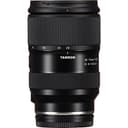
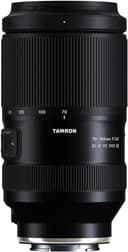
The lens that covers the largest share of a wedding day is a constant f/2.8 standard zoom, and the Tamron 28-75mm f/2.8 Di III VXD G2 is the one we would buy — 540 g, a 0.18 m close-focus distance that handles the rings without a second lens, and a constant aperture from the room-wide establishing shot to the half-length portrait. Pair it with the Tamron 70-180mm f/2.8 Di III VC VXD G2 on a second body and you have the two-lens kit most working wedding photographers actually shoot, at 1,395 g for the pair instead of the two-and-a-half kilos the first-party equivalents weigh.

Where primes earn their place is the parts of the day the zooms cannot reach: a dark ceremony, a first dance lit by one string of bulbs, a portrait that needs real background separation. The Sony FE 85mm f/1.8 is the portrait lens, the Sony FE 35mm f/1.8 is the one that follows the day around, the Canon RF 50mm f/1.8 STM is the cheapest way onto this page at all, and the Sigma 56mm f/1.4 DC DN is the pick if your second body is APS-C.

This page ranks differently from our portrait lens roundup, and deliberately. A portrait session is a controlled event: you pick the light, you pick the distance, and a prime is the right answer. A wedding is not controlled. The bride comes down the aisle once, at whatever pace she chooses, in whatever light the venue has, and you are standing where the officiant told you to stand. That is why coverage outranks optical perfection here and why both of our top two picks are zooms.

We do not own these lenses and we have not shot a wedding with them. Every figure below is the manufacturer’s own published number, read from their specification pages on the date stamped on this page. Where a maker declines to publish a figure — Tamron quotes no stop rating for the Vibration Compensation in the 70-180mm — we say so rather than filling the gap.

How this is funded:we earn a commission if you buy through our links, at no extra cost to you. It never changes which product we recommend, and we’ll tell you plainly when to skip one. Full disclosure.

Quick picks

Ranked on published specs and buyer fit. Select a row to jump to the full write-up. We have not tested these products — here is exactly what we do instead.

#ProductBest forPrice
1
Tamron 28-75mm f/2.8 Di III VXD G2

Tamron 28-75mm f/2.8 Di III VXD G2

The standard zoom that covers most of a wedding day on one lens. A constant f/2.8 from 28mm to 75mm handles the room-wide establishing shot and the half-length portrait without a lens change, and at 540 g it is markedly lighter than the first-party 24-70mm f/2.8 zooms it competes with. The 0.18 m close focus at the wide end is unusual for this class and genuinely useful for rings and detail shots. What you give up is 28mm instead of 24mm at the wide end, and there is no stabilization in the lens at all.

Best overall
$799.00 · View on Amazon

Price as of October 30, 2026. #ad How we’re funded

2
Tamron 70-180mm f/2.8 Di III VC VXD G2

Tamron 70-180mm f/2.8 Di III VC VXD G2

The telephoto half of a two-lens event kit, and the lightest way to get a stabilized f/2.8 tele zoom on Sony E. At 855 g it is several hundred grams under the 70-200mm f/2.8 lenses it competes with, which is the difference between carrying two bodies comfortably and not. Tamron added Vibration Compensation to this G2 version, which the original 70-180mm lacked. The trade is 180mm instead of 200mm at the long end, and no tripod collar in the box.

Best for ceremonies and speeches
$1,099.00 · View on Amazon

Price as of October 30, 2026. #ad How we’re funded

3
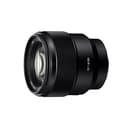
Sony FE 85mm f/1.8

Sony FE 85mm f/1.8

The best-value portrait lens in Sony's full-frame line, and the one to buy first. 85mm is the classic flattering focal length, f/1.8 melts the background, and the price is a fraction of the f/1.4 GM for image quality that is very hard to fault. On APS-C it becomes a 128mm tight-headshot lens.

Best portrait prime
$509.00 · View on Amazon

Price as of October 30, 2026. #ad How we’re funded

4
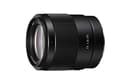
Sony FE 35mm f/1.8

Sony FE 35mm f/1.8

The most useful single prime for a hybrid creator. 35mm is wide enough for handheld vlogging and environmental shots, fast enough for low light, and the autofocus is quick and near-silent — unlike the cheaper 50mm f/1.8. On APS-C it becomes a natural ~52mm everyday lens.

Best for documentary coverage
$798.00 · View on Amazon

Price as of October 30, 2026. #ad How we’re funded

5
Canon RF 50mm f/1.8 STM

Canon RF 50mm f/1.8 STM

Canon's 'nifty fifty' for RF, and the first lens most R-series owners should add. Quiet STM autofocus, genuine f/1.8 background blur, and a featherweight body for very little money. On an R50 or R10 it becomes a lovely 80mm portrait lens.

Best value prime
$199.00 · View on Amazon

$239.0017% off

Price as of October 30, 2026. #ad How we’re funded

6
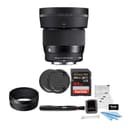
Sigma 56mm f/1.4 DC DN

Sigma 56mm f/1.4 DC DN

The portrait lens for APS-C shooters, full stop. On a Sony ZV-E10 or a6-series body it acts like an 84mm f/1.4 — the ideal headshot focal length — for a genuinely affordable price. Bitingly sharp with creamy background separation; if you own a crop-sensor body, buy this before almost anything else.

Best for an APS-C second body
$469.99 · View on Amazon

Price as of October 30, 2026. #ad How we’re funded

The picks in full

#1Best overall

Tamron 28-75mm f/2.8 Di III VXD G2

The standard zoom that covers most of a wedding day on one lens. A constant f/2.8 from 28mm to 75mm handles the room-wide establishing shot and the half-length portrait without a lens change, and at 540 g it is markedly lighter than the first-party 24-70mm f/2.8 zooms it competes with. The 0.18 m close focus at the wide end is unusual for this class and genuinely useful for rings and detail shots. What you give up is 28mm instead of 24mm at the wide end, and there is no stabilization in the lens at all.

Strengths

  • Constant f/2.8 across 28-75mm covers ceremony, groups and portraits without a lens swap
  • 540 g on Sony E — light enough to hang off one body for a long day
  • 0.18 m minimum object distance at 28mm gives a 1:2.7 magnification for ring and detail shots
  • 67mm filter thread, shared with the matching 70-180mm G2

Trade-offs

  • No stabilization of any kind, so you depend entirely on the body's IBIS
  • 28mm is noticeably tighter than the 24mm of first-party 24-70mm zooms in small venues
  • Sony E and Nikon Z only — there is no Canon RF version
Mount / formatSony E and Nikon Z, full-frame
Focal length28-75mm
Max aperturef/2.8 constant (minimum f/22)
Filter thread67mm
Closest focus0.18 m at 28mm (1:2.7); 0.38 m at 75mm
Weight540 g (Sony E); 550 g (Nikon Z)

Specifications read from the manufacturer listing, on October 30, 2026.

#2Best for ceremonies and speeches

Tamron 70-180mm f/2.8 Di III VC VXD G2

The telephoto half of a two-lens event kit, and the lightest way to get a stabilized f/2.8 tele zoom on Sony E. At 855 g it is several hundred grams under the 70-200mm f/2.8 lenses it competes with, which is the difference between carrying two bodies comfortably and not. Tamron added Vibration Compensation to this G2 version, which the original 70-180mm lacked. The trade is 180mm instead of 200mm at the long end, and no tripod collar in the box.

Strengths

  • Constant f/2.8 to 180mm with Vibration Compensation, which the original A056 did not have
  • 855 g on Sony E — materially lighter than a first-party 70-200mm f/2.8
  • Same 67mm filter thread as the 28-75mm G2, so one set of filters covers both
  • 0.3 m minimum object distance at 70mm for a 1:2.6 close-up, which few tele zooms manage

Trade-offs

  • 180mm is 20mm short of the 200mm standard, which shows when you are stuck at the back
  • Tamron publishes no stop rating for the VC, so the stabilization figure is unknown
  • No tripod collar included, and Sony E and Nikon Z are the only mounts
Mount / formatSony E and Nikon Z, full-frame
Focal length70-180mm
Max aperturef/2.8 constant (minimum f/22)
StabilizationVibration Compensation (VC) — no stop rating published
Filter thread67mm
Closest focus0.3 m at 70mm (1:2.6); 0.85 m at 180mm
Weight855 g (Sony E); 865 g (Nikon Z)

Specifications read from the manufacturer listing, on October 30, 2026.

#3Best portrait prime

Sony FE 85mm f/1.8

The best-value portrait lens in Sony's full-frame line, and the one to buy first. 85mm is the classic flattering focal length, f/1.8 melts the background, and the price is a fraction of the f/1.4 GM for image quality that is very hard to fault. On APS-C it becomes a 128mm tight-headshot lens.

Strengths

  • Classic flattering 85mm focal length with lovely background blur
  • Sharp wide open, with fast, quiet autofocus
  • A fraction of the price of the f/1.4 GM

Trade-offs

  • On APS-C the 128mm equivalent is tight for indoor use
  • No optical stabilization (relies on in-body IS)
Mount / formatSony E, full-frame
Focal length85mm (128mm on APS-C)
Max aperturef/1.8
Weight371 g

Specifications read from the manufacturer listing, on July 18, 2026.

#4Best for documentary coverage

Sony FE 35mm f/1.8

The most useful single prime for a hybrid creator. 35mm is wide enough for handheld vlogging and environmental shots, fast enough for low light, and the autofocus is quick and near-silent — unlike the cheaper 50mm f/1.8. On APS-C it becomes a natural ~52mm everyday lens.

Strengths

  • Fast, quiet autofocus that suits video and stills
  • 35mm is wide enough for arm's-length vlogging
  • Compact and light for its speed

Trade-offs

  • Costs more than the 50mm f/1.8
  • Not as much subject compression as an 85mm for portraits
Mount / formatSony E, full-frame
Focal length35mm (52mm on APS-C)
Max aperturef/1.8
Weight280 g

Specifications read from the manufacturer listing, on July 18, 2026.

#5Best value prime

Canon RF 50mm f/1.8 STM

Canon's 'nifty fifty' for RF, and the first lens most R-series owners should add. Quiet STM autofocus, genuine f/1.8 background blur, and a featherweight body for very little money. On an R50 or R10 it becomes a lovely 80mm portrait lens.

Strengths

  • Quiet, smooth STM autofocus that suits video
  • Real f/1.8 background blur for very little money
  • Tiny and light — becomes an 80mm portrait lens on APS-C

Trade-offs

  • Some corner softness and focus breathing wide open
  • Plastic mount and no weather sealing
Mount / formatCanon RF, full-frame
Focal length50mm (80mm on APS-C)
Max aperturef/1.8
Weight160 g

Specifications read from the manufacturer listing, on July 18, 2026.

#6Best for an APS-C second body

Sigma 56mm f/1.4 DC DN

The portrait lens for APS-C shooters, full stop. On a Sony ZV-E10 or a6-series body it acts like an 84mm f/1.4 — the ideal headshot focal length — for a genuinely affordable price. Bitingly sharp with creamy background separation; if you own a crop-sensor body, buy this before almost anything else.

Strengths

  • Acts like an 84mm f/1.4 on APS-C — perfect for headshots
  • Exceptionally sharp with beautiful subject separation
  • Remarkable image quality for the price

Trade-offs

  • APS-C only — it will vignette hard on full-frame
  • No optical stabilization
Mount / formatSony E, APS-C
Focal length56mm (84mm equivalent)
Max aperturef/1.4
Weight280 g

Specifications read from the manufacturer listing, on September 29, 2026.

How we ranked these: five criteria, in this order

Wedding lens arguments usually start with aperture and sharpness. Neither is the first question, because neither is what loses you a photograph on a wedding day.

1. Coverage you do not have to walk to. You cannot reposition during a ceremony, and nobody will repeat the vows for you. The frame you can get from where you are standing is the only frame there is. A 28-75mm zoom gives you five usable framings from one spot; an 85mm prime gives you one. This single fact is why the zooms top the list, and why photographers who shoot primes exclusively usually carry two bodies with two primes mounted.

2. A constant aperture, not just a wide one. A lens that opens to f/2.8 at 28mm and f/4.5 at 75mm changes your exposure every time you zoom, which means re-balancing ISO mid-ceremony. A constant f/2.8 means one exposure decision holds across the whole range. That is worth more on a wedding day than the extra stop and a half an f/1.8 prime gives you, because it removes a decision at the moment you have least attention to spare.

3. Low-light headroom for the two hours that need it. The ceremony and the first dance are where kit fails. f/2.8 at a modern sensor’s ISO 6400 is workable in most churches; f/1.8 or f/1.4 buys you one and a half to two more stops, which is the difference between ISO 6400 and ISO 1600. That is the real argument for carrying a prime alongside the zooms, and the reason the 85mm and 56mm are on this page at all. Our low-light guide covers the settings side, and aperture explained covers what each stop is actually worth.

4. Weight, over ten hours, on two bodies. A wedding is a working day on your feet with a camera in each hand. The Tamron pair weighs 1,395 g together. The first-party 24-70mm and 70-200mm f/2.8 lenses most people compare them to weigh roughly twice that between them. By hour eight that is not a specification, it is whether your framing is still steady. This is also why we rate the shared 67mm filter thread on the two Tamrons: one polarizer, one variable ND, one set of caps.

5. Close focus, because of the details table.Every wedding gallery contains rings, invitations, shoes and a cake. A lens that will not focus closer than 0.4 m forces you to carry a macro lens for twenty frames. The 28-75mm G2’s 0.18 m minimum object distance and 1:2.7 magnification cover most of that list, and the 70-180mm G2’s 0.3 m and 1:2.6 covers the rest. It is the least discussed spec on a wedding lens and one of the most useful.

The two-lens day, and why it is two and not five

A wedding photographer’s working kit converges on the same shape almost everywhere: two camera bodies, a standard f/2.8 zoom on one, a telephoto f/2.8 zoom on the other, and one or two fast primes in the bag for the dark parts. The reason is not tradition, it is risk. Two bodies means a dead camera is an inconvenience rather than a disaster, and two lenses mounted means you never change glass with your back to the action.

Our wedding gear checklist makes the redundancy argument in full. On the lens side the practical split is this:

The 28-75mm lives on the body in your right hand. Preparation, details, the processional, group photos, the reception, the dancing. If you only ever bought one lens for weddings, it is this one — roughly 70% of a typical gallery comes off a standard zoom.

The 70-180mm lives on the second body. The ceremony from the back, the vows without standing in them, the speeches, and the long compressed portraits that look nothing like a 35mm frame. 180mm instead of the traditional 200mm is a real limitation in a large church, and it is the honest trade for 855 g instead of 1,480 g.

The primes come out twice. Once in the ceremony if the light is genuinely bad, and once for the first dance. The rest of the day they sit in the bag, which is exactly the right amount of use for a lens that does one thing extremely well.

By focal length: what each one is for

24-35mm: the room, and the story.Wide enough to include the venue, the guests and the weather. It is the focal length that makes a photograph look like it happened somewhere rather than in front of a blurred wall. Keep faces away from the frame edge — wide lenses stretch whatever sits in the corner, which is unflattering on people and very obvious in group shots. The Sony FE 35mm f/1.8 at 280 g is the documentary pick here; on an APS-C body the Sigma 30mm f/1.4 from our prime lens roundup frames similarly.

50mm: the all-day compromise. Natural perspective, cheap, tiny, and bright. The Canon RF 50mm f/1.8 STM is the cheapest lens on this page by a wide margin and the reason a Canon RF shooter can get a genuinely fast lens into a wedding bag for very little. On a full-frame RF body it is a 50mm; on an R8 or R6 II it is the obvious first prime.

85mm: the portrait focal length.Compresses features flatteringly, blurs the background without you doing anything clever, and lets you stand far enough back that the couple relaxes. The Sony FE 85mm f/1.8 is 371 g and is the single lens most responsible for the look people mean when they say “wedding photography.” Our portrait guide covers posing and light; our blurry background guide covers why 85mm at f/1.8 does what 35mm at f/1.8 cannot.

135-180mm: the ceremony, the speeches, the quiet frames. Long enough to photograph a crying parent from across the room without anybody noticing. The compression at this end is the reason the 70-180mm G2 is worth its weight even on a day when you never leave one room.

By camera system

Sony E.This is where the picks above are strongest. Both Tamron zooms are made for E-mount, the 85mm f/1.8 and 35mm f/1.8 are Sony’s own, and the whole kit lands well under what a first-party equivalent costs. If your second body is an APS-C Sony, the Sigma 56mm f/1.4 frames like an 84mm lens on it, which is the portrait focal length again for far less money — and the full-frame FE lenses all mount on it too, as our Sony APS-C lens guide explains.

Nikon Z.Both Tamron G2 zooms are made in Z mount — 550 g for the 28-75mm and 865 g for the 70-180mm, Nikon’s versions being marginally heavier and longer than the Sony ones. That makes the same two-lens day available on Z at the same kind of saving. The primes on this page are not available in Z mount; Nikon’s own 85mm f/1.8 S is the usual answer there, and we have not read its published specification, so we do not rank it.

Canon RF.Neither Tamron G2 zoom exists in RF mount, which is a genuine gap rather than an oversight on our part — Canon has licensed very few third-party autofocus designs for RF. A Canon wedding kit is built from Canon’s own RF zooms, and the RF 50mm f/1.8 STM above is the affordable fast prime that fits alongside them. If you shoot an APS-C RF body as a second camera, our Canon R50 lens guide covers the RF-S options and the crop arithmetic.

Fujifilm X. No pick here is X-mount. The Sigma 56mm f/1.4 is made for X as well as E, and it is the same lens and the same 84mm-equivalent framing, so the reasoning on its card carries across.

What a fast lens does not fix

A room with no light in it. f/2.8 and a high ISO will get you a usable file in most venues; neither will make a candle-lit reception look like golden hour. The answer is a light, and the answer to a wedding light is a small one you can bounce off a ceiling. Our flash basics guide covers bouncing, and lights for interviews covers the continuous panels if you shoot wedding video too.

Autofocus in the dark. Every one of these lenses focuses on contrast, and a dim church aisle has very little. Continuous AF with face and eye detection, a focus area that is not the whole frame, and back-button focus so you can hold focus and recompose are what actually keep the keeper rate up. Our autofocus modes guide and back-button focus cover the setup.

A single card slot.The lens is not the single point of failure on a wedding day — the card is. Shoot to two cards simultaneously if your body allows it, and read how to back up your photos before, not after, your first paid wedding. Our SD card roundup covers which speed ratings matter for burst shooting.

Where we would spend the money

If you are shooting your first wedding and you own one body and a kit zoom, the honest order is: rent, then buy. Rent the f/2.8 standard zoom for the day — it is a fraction of the purchase price and you will learn more about whether you want this lens in one wedding than in a month of reading. Buy a fast prime outright, because it is cheap, it is useful at every other kind of shoot, and it covers you if the ceremony is darker than you expected.

If you are shooting your fifth wedding, buy the standard zoom first and the second body before the second lens. A photographer with one lens and two cameras can finish a wedding. A photographer with two lenses and one camera cannot, if the camera dies. That ordering is the whole argument of the gear checklist and it is the one piece of advice on this page that is not about optics at all.

And if you are deciding between better glass and a better body, read should you upgrade your camera or lens. For weddings specifically the answer leans toward the lens until you own one f/2.8 zoom and one fast prime, and toward the body — dual card slots, better high-ISO files, a second one of everything — after that.
Frequently asked questions

What lenses do I need to shoot a wedding?

At minimum, one fast standard zoom. A constant f/2.8 lens around 28-75mm covers roughly 70% of a typical wedding gallery — preparation, details, the processional, groups and the reception. Add a 70-180mm or 70-200mm f/2.8 on a second body for the ceremony and speeches, and one fast prime (50mm or 85mm at f/1.8 or faster) for the darkest hour of the day. Most working photographers shoot exactly that kit.

Is 24-70mm or 28-75mm better for weddings?

24mm is wider and genuinely useful in small venues and for group shots against a wall. 28mm is the trade third-party makers take to build a lighter, cheaper lens — the Tamron 28-75mm G2 is 540 g where first-party 24-70mm f/2.8 lenses are typically closer to 900 g. If you often shoot cramped rooms, the 4mm matters. If you shoot ten-hour days, the 360 g matters more.

Do I need f/2.8 lenses for wedding photography?

For the ceremony and the reception, yes — or something faster. The two hours that make or break a wedding kit are the darkest two hours of the day, and a variable-aperture kit zoom that drops to f/5.6 or f/6.3 at the long end is roughly two stops short. A constant f/2.8 also keeps your exposure stable across the zoom range, which removes a decision you do not want to be making mid-ceremony.

Should I use primes or zooms for a wedding?

Zooms for the day, primes for the dark parts. You cannot reposition during a ceremony, so the frame you can get from where you stand is the only frame there is, and a zoom gives you several. Primes buy you one and a half to two extra stops and better subject separation, which is worth carrying for the ceremony and the first dance. Photographers who shoot primes only almost always carry two bodies with two primes mounted.

What is the best lens for a dark wedding ceremony?

The fastest lens you own at a focal length you can work with from your assigned position. An 85mm f/1.8 is the usual answer — it gathers about two and a half times the light of an f/2.8 zoom and compresses flatteringly from the back of a room. If you are stuck close to the couple, a 50mm or 35mm f/1.8 is the practical choice. Pair it with continuous AF and eye detection, because dim aisles have very little contrast to focus on.

Do wedding lenses need image stabilization?

It helps and it is not decisive. Stabilization steadies your hands, not the people moving in front of you, and a wedding is full of moving people — so your shutter speed is usually the limiting factor rather than your shake. Of the picks here, the Tamron 70-180mm G2 has Vibration Compensation (Tamron publishes no stop rating), the 28-75mm G2 has none at all, and most modern bodies have in-body stabilization that covers the gap.

How much should I spend on wedding lenses?

Rent before you buy for your first paid wedding: an f/2.8 zoom rental for one day costs a small fraction of the purchase price, and one wedding tells you more than a month of research. Buy a fast prime outright regardless, because it is inexpensive and useful at every other kind of shoot. After your first few weddings, buy the standard zoom before the telephoto, and the second camera body before the second lens.

Can I shoot a wedding with an APS-C camera?

Yes, and many people do, usually as the second body. Remember the crop: a 56mm lens frames like an 84mm portrait lens on Sony or Fujifilm APS-C, which is why the Sigma 56mm f/1.4 is on this page. The real APS-C compromise at a wedding is high-ISO noise in the ceremony and reception, which is exactly where a smaller sensor is weakest — so lean harder on a fast prime than a full-frame shooter would.

What focal length do most wedding photos use?

Standard zoom range — roughly 35mm to 70mm — accounts for the bulk of a typical gallery, with the telephoto end used heavily for the ceremony and speeches and the wide end for venues and groups. That distribution is the reason a constant f/2.8 standard zoom is the first wedding lens to buy and a super-telephoto is not one at all.

Sources

Keep reading