Wide Open. Gear

The Best Zoom Lenses

One lens instead of three - the standard, wide, telephoto and all-in-one zooms worth owning, ranked on whether the aperture holds as you zoom.

By Stephen V.Last updated How we pick

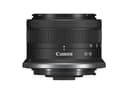
For most full-frame shooters the best zoom to own is the Tamron 28-75mm f/2.8 Di III VXD G2 — a constant f/2.8 standard zoom that covers the wide establishing shot and the half-length portrait without a lens change, at 540 g on Sony E. It is the lens that stays on the camera. On a crop body the equivalent answer is the Sony E 16-55mm f/2.8 G. The budget pick is the Canon RF-S10-18mm at 150 grams, which is the cheapest zoom here and the one that fixes the thing a kit lens cannot do, which is go genuinely wide.

There is one question that sorts every zoom lens ever made, and it is not range. It is whether the maximum aperture holds as you zoom in. A constant f/2.8 zoom gives you the same exposure and the same background blur at 28mm and at 75mm, which is why it costs what it costs. A variable f/3.5-6.3 superzoom is two stops darker at the long end than at the short end — so your shutter speed drops or your ISO climbs exactly when you zoom in on something far away, and in video the picture visibly dims as you push the ring.

Everything else is a consequence of that. Constant-aperture zooms are heavier, more expensive and cover shorter ranges. Variable-aperture zooms are light, cheap and cover enormous ranges — the Canon RF-S18-150mm replaces a kit zoom and a telephoto in one 310 g barrel, and it is the right lens for a daylight holiday. Neither is better. They are answers to different questions, and the picks below are grouped so you can find your own.

Two practical notes before the table. Only one lens here has no stabilization at all worth relying on, and several have none — on a body without IBIS that matters, so check our stabilization explainer if you are not sure what your camera has. And watch the filter threads: the Tamron 28-75mm, the Tamron 17-28mm and the Canon RF 100-400mm all take 67mm filters, which means one polarizer and one variable ND covers three lenses.

How this is funded:we earn a commission if you buy through our links, at no extra cost to you. It never changes which product we recommend, and we’ll tell you plainly when to skip one. Full disclosure.

Quick picks

Ranked on published specs and buyer fit. Select a row to jump to the full write-up. We have not tested these products — here is exactly what we do instead.

#ProductBest forPrice
1
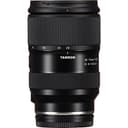
Tamron 28-75mm f/2.8 Di III VXD G2

Tamron 28-75mm f/2.8 Di III VXD G2

The standard zoom that covers most of a wedding day on one lens. A constant f/2.8 from 28mm to 75mm handles the room-wide establishing shot and the half-length portrait without a lens change, and at 540 g it is markedly lighter than the first-party 24-70mm f/2.8 zooms it competes with. The 0.18 m close focus at the wide end is unusual for this class and genuinely useful for rings and detail shots. What you give up is 28mm instead of 24mm at the wide end, and there is no stabilization in the lens at all.

Best overall
$699.00 · View on Amazon

Price as of November 13, 2026. #ad How we’re funded

2
Sony E 16-55mm f/2.8 G

Sony E 16-55mm f/2.8 G

The one zoom to rule an APS-C kit. A constant f/2.8 across a 24-82mm equivalent range means it covers vlogging, portraits and everyday shooting without swapping lenses, and it is genuinely sharp corner to corner. Pricey, but it replaces two or three primes for run-and-gun video work.

Best for APS-C
$1,498.00 · View on Amazon

$1,699.9912% off

Price as of November 13, 2026. #ad How we’re funded

3
Canon RF-S18-150mm f/3.5-6.3 IS STM

Canon RF-S18-150mm f/3.5-6.3 IS STM

The one-lens answer for a Canon APS-C body. 18-150mm covers a 29-240mm equivalent range, which is wide enough for a room and long enough for a kid on a soccer field, and the whole thing weighs 310 g. The 0.17 m closest focus at the wide end also makes it a surprisingly capable close-up lens. The price is aperture: f/6.3 at the long end is dark, so this is a daylight and well-lit-indoors lens, not a low-light one.

Best all-in-one
$569.00 · View on Amazon

Price as of November 13, 2026. #ad How we’re funded

4
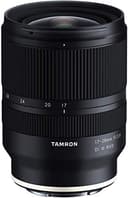
Tamron 17-28mm f/2.8 Di III RXD

Tamron 17-28mm f/2.8 Di III RXD

The sensible way into full-frame wide-angle on Sony. You give up the last 3mm of width against a 14-24mm and you get a lens that costs far less, weighs 420 g, and takes ordinary 67mm screw-in filters — which matters more for landscape work than the extra millimeters do, because a polarizer and an ND are how you control a sky and a waterfall.

Best ultra-wide
$499.99 · View on Amazon

Price as of November 13, 2026. #ad How we’re funded

5
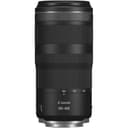
Canon RF 100-400mm f/5.6-8 IS USM

Canon RF 100-400mm f/5.6-8 IS USM

The cheapest honest route to 400mm on any current mirrorless mount, and at about 635 g it is lighter than some standard zooms — which matters more than the specification sheet suggests, because a 635 g telephoto is one you actually bring. The price of that is f/8 at the long end, so this is a lens for open daylight, not for dawn in the woods.

Best telephoto
$749.00 · View on Amazon

Price as of November 13, 2026. #ad How we’re funded

6
Canon RF-S10-18mm f/4.5-6.3 IS STM

Canon RF-S10-18mm f/4.5-6.3 IS STM

150 grams of ultra-wide, and the lens that fixes the one thing an APS-C kit zoom cannot do. At 10mm it frames like a 16mm lens on full-frame, which is wide enough to hold a camera at arm's length and still get your head and the room in — the reason this is the default vlogging lens for the R50 and R10. It is also the cheapest and lightest way to shoot interiors and landscapes on RF-S. f/4.5-6.3 is slow, but an ultra-wide is usually stopped down anyway.

Budget pick
$279.00 · View on Amazon

$369.0024% off

Price as of November 13, 2026. #ad How we’re funded

The picks in full

#1Best overall

Tamron 28-75mm f/2.8 Di III VXD G2

The standard zoom that covers most of a wedding day on one lens. A constant f/2.8 from 28mm to 75mm handles the room-wide establishing shot and the half-length portrait without a lens change, and at 540 g it is markedly lighter than the first-party 24-70mm f/2.8 zooms it competes with. The 0.18 m close focus at the wide end is unusual for this class and genuinely useful for rings and detail shots. What you give up is 28mm instead of 24mm at the wide end, and there is no stabilization in the lens at all.

Strengths

  • Constant f/2.8 across 28-75mm covers ceremony, groups and portraits without a lens swap
  • 540 g on Sony E — light enough to hang off one body for a long day
  • 0.18 m minimum object distance at 28mm gives a 1:2.7 magnification for ring and detail shots
  • 67mm filter thread, shared with the matching 70-180mm G2

Trade-offs

  • No stabilization of any kind, so you depend entirely on the body's IBIS
  • 28mm is noticeably tighter than the 24mm of first-party 24-70mm zooms in small venues
  • Sony E and Nikon Z only — there is no Canon RF version
Mount / formatSony E and Nikon Z, full-frame
Focal length28-75mm
Max aperturef/2.8 constant (minimum f/22)
Filter thread67mm
Closest focus0.18 m at 28mm (1:2.7); 0.38 m at 75mm
Weight540 g (Sony E); 550 g (Nikon Z)

Specifications read from the manufacturer listing, on October 30, 2026.

#2Best for APS-C

Sony E 16-55mm f/2.8 G

The one zoom to rule an APS-C kit. A constant f/2.8 across a 24-82mm equivalent range means it covers vlogging, portraits and everyday shooting without swapping lenses, and it is genuinely sharp corner to corner. Pricey, but it replaces two or three primes for run-and-gun video work.

Strengths

  • Constant f/2.8 across a versatile 24-82mm equivalent range
  • Sharp across the frame; G-series build quality
  • Fast, quiet autofocus for video

Trade-offs

  • Expensive — more than most crop bodies
  • No optical stabilization; heavier than a prime
Mount / formatSony E, APS-C
Focal length16-55mm (24-82mm equivalent)
Max apertureConstant f/2.8
Weight494 g

Specifications read from the manufacturer listing, on August 17, 2026.

#3Best all-in-one

Canon RF-S18-150mm f/3.5-6.3 IS STM

The one-lens answer for a Canon APS-C body. 18-150mm covers a 29-240mm equivalent range, which is wide enough for a room and long enough for a kid on a soccer field, and the whole thing weighs 310 g. The 0.17 m closest focus at the wide end also makes it a surprisingly capable close-up lens. The price is aperture: f/6.3 at the long end is dark, so this is a daylight and well-lit-indoors lens, not a low-light one.

Strengths

  • 29-240mm equivalent range from one 310 g lens — it replaces a kit zoom and a telephoto
  • 4.5 stops of optical stabilization alone, and Canon rates up to 7 with Coordinated Control IS
  • 0.17 m closest focus and 0.44x magnification at 50mm, which is close to macro territory
  • Retracting design makes it genuinely compact in a bag

Trade-offs

  • f/3.5-6.3 is a slow variable aperture — indoor and evening shots push the ISO hard
  • A superzoom is optically a compromise at both ends versus a prime or an f/2.8 zoom
  • RF-S is APS-C only; it will not cover a full-frame RF body without a crop
Mount / formatCanon RF-S, APS-C
Focal length18-150mm (29-240mm equivalent)
Max aperturef/3.5-6.3 (minimum f/22)
StabilizationUp to 4.5 stops; up to 7 with Coordinated Control IS
Filter thread55mm
Closest focus0.17 m in AF at 18-35mm (0.44x at 50mm)
Weight310 g

Specifications read from the manufacturer listing, on October 30, 2026.

#4Best ultra-wide

Tamron 17-28mm f/2.8 Di III RXD

The sensible way into full-frame wide-angle on Sony. You give up the last 3mm of width against a 14-24mm and you get a lens that costs far less, weighs 420 g, and takes ordinary 67mm screw-in filters — which matters more for landscape work than the extra millimeters do, because a polarizer and an ND are how you control a sky and a waterfall.

Strengths

  • Constant f/2.8 across the range — unusual at this price and useful after dark
  • 67mm front filter thread, so standard circular polarizers and NDs screw straight on
  • 420 g, light enough to carry all day on a hike

Trade-offs

  • 17mm is not as dramatic as a 14mm or 15mm for tight interiors and big skies
  • Sony E only — no Canon RF or Nikon Z version
  • No optical stabilization; you rely on your body's IBIS or a tripod
Mount / formatSony E, full-frame
Focal length17-28mm
Max apertureConstant f/2.8 (minimum f/22)
Filter thread67mm
Closest focus0.19 m at 17mm, 0.26 m at 28mm
Weight420 g

Specifications read from the manufacturer listing, on October 16, 2026.

#5Best telephoto

Canon RF 100-400mm f/5.6-8 IS USM

The cheapest honest route to 400mm on any current mirrorless mount, and at about 635 g it is lighter than some standard zooms — which matters more than the specification sheet suggests, because a 635 g telephoto is one you actually bring. The price of that is f/8 at the long end, so this is a lens for open daylight, not for dawn in the woods.

Strengths

  • About 635 g — far lighter than every other full-frame telephoto here
  • Optical IS rated 5.5 stops at 400mm, and up to 6 stops on a body with its own stabilization
  • Takes common 67mm filters, and accepts Canon's RF 1.4x and 2x extenders for more reach

Trade-offs

  • f/8 at 400mm is the slowest aperture on this page — it needs good light or high ISO
  • Canon RF only, and Canon's own store lists it as no longer available, so stock is now retailer-dependent
  • No tripod collar, which is awkward on a gimbal head
Mount / formatCanon RF, full-frame
Focal length100-400mm
Max aperturef/5.6-8
Filter thread67mm
StabilizationOptical IS rated 5.5 stops, up to 6 stops with a stabilized body (CIPA)
WeightAbout 635 g

Specifications read from the manufacturer listing, on October 23, 2026.

#6Budget pick

Canon RF-S10-18mm f/4.5-6.3 IS STM

150 grams of ultra-wide, and the lens that fixes the one thing an APS-C kit zoom cannot do. At 10mm it frames like a 16mm lens on full-frame, which is wide enough to hold a camera at arm's length and still get your head and the room in — the reason this is the default vlogging lens for the R50 and R10. It is also the cheapest and lightest way to shoot interiors and landscapes on RF-S. f/4.5-6.3 is slow, but an ultra-wide is usually stopped down anyway.

Strengths

  • 16-29mm equivalent field of view — genuinely ultra-wide, not just wide
  • 150 g and 44.9 mm long, so it barely registers in a bag or on a gimbal
  • 4 stops of stabilization alone, up to 6 with Coordinated Control IS
  • 49mm filter thread keeps variable-ND and polarizer costs low

Trade-offs

  • f/4.5-6.3 is slow, so handheld interiors in dim light still need a high ISO
  • Ultra-wide distortion stretches faces near the frame edge — keep yourself centered
  • At 10mm a deep hood or a thick filter can creep into the corners of the frame
Mount / formatCanon RF-S, APS-C
Focal length10-18mm (16-29mm equivalent)
Max aperturef/4.5-6.3 (minimum f/22-32)
StabilizationUp to 4 stops; up to 6 with Coordinated Control IS
Filter thread49mm
Closest focus0.14 m in AF (0.23x at 18mm)
Weight150 g

Specifications read from the manufacturer listing, on October 30, 2026.

The three zooms that cover everything

The classic professional kit is three constant f/2.8 zooms: a wide (roughly 16-28mm), a standard (24-75mm) and a telephoto (70-200mm). Between them they cover every focal length anyone normally uses, with no gap and no aperture change. On Sony E you can build that whole set from this page and our sports lens guide — the Tamron 17-28mm, the Tamron 28-75mm G2 and the Tamron 70-180mm G2 — and all three share the same 67mm filter thread.

Almost nobody needs all three on day one. Buy the standard zoom first, because it is where most photographs happen. Add the wide if you shoot interiors, landscapes or anything architectural; add the telephoto if you shoot sport, wildlife or stage work. If you buy in that order, every purchase is used before the next one arrives.

When a superzoom is the right answer

A superzoom like the RF-S18-150mm gets looked down on, and for one job it is unbeatable: a day out in good light where you do not want to carry a bag. A 29-240mm equivalent range means the wide group shot and the distant detail come from the same lens, you never miss a frame to a lens change, and dust never reaches your sensor. The 0.17 m close focus means it also handles flowers and food, which a normal telephoto cannot.

The cost is light. At 150mm it is f/6.3, which is about three stops darker than an f/2.8 zoom. Indoors or after sunset that is the difference between ISO 800 and ISO 6400. If most of your shooting happens in daylight, take the deal; if most of it happens indoors, do not.

Zoom or prime?

A prime is sharper, faster and lighter at any single focal length, which is why our prime lens guide exists and why a 35mm or 50mm f/1.8 is still the best first upgrade from a kit zoom for most people. A zoom is more useful when you cannot move your feet — at a wedding, at a match, from a viewpoint, in a crowd. Most working kits are a couple of zooms plus one fast prime for low light, and the prime versus zoom explainer walks through how to decide which half of that to buy first.

How we ranked these

In this order: does the aperture hold across the range; what does the lens weigh, because a lens you leave at home is worth nothing; how wide or long does it actually go in equivalent terms on the body you own; and does it take common screw-in filters. We have not tested these lenses — here is what we do instead — and every figure quoted is the manufacturer’s own published specification with the date it was read. Where a maker publishes no stabilization rating, we say nothing rather than estimate one.

Frequently asked questions

What does a constant f/2.8 zoom actually give you?

The same maximum aperture at every focal length. On a variable f/3.5-6.3 zoom, zooming from wide to long costs you about two stops of light, so your shutter speed halves twice or your ISO quadruples. A constant f/2.8 zoom keeps exposure and background blur identical across the range, which matters most for video, for indoor events and for portraits at the long end.

Is one superzoom better than two lenses?

For daylight travel, often yes - you never miss a shot to a lens change and the bag stays small. For low light, no. A superzoom is typically f/6.3 at the long end, where a two-lens kit can be f/2.8. Decide on where you shoot, not on the range number.

Do zoom lenses need stabilization?

It depends on the body. If your camera has in-body stabilization, an unstabilized zoom is fine for stills and acceptable for handheld video. If it does not - and most APS-C bodies we recommend do not - then optical stabilization in the lens is doing all the work, and a telephoto without it will be hard to hold steady at the long end.

Can I use an APS-C zoom on a full-frame camera?

Physically yes on both Sony E and Canon RF, but the lens only projects an image big enough for a crop sensor, so the camera switches to a crop mode and you lose most of your resolution. Buy APS-C glass for an APS-C body; buy full-frame glass if you expect to upgrade.

Which filter size should I buy for a zoom kit?

Check the threads before you buy filters, then buy for the largest one and use step-up rings for the rest. On this page the Tamron 28-75mm G2, Tamron 17-28mm and Canon RF 100-400mm are all 67mm, the Canon RF 15-30mm is also 67mm, and the RF-S10-18mm is 49mm - so a single 67mm polarizer covers most of a kit.

Sources

Keep reading