Wide Open. Gear

The Best Microphones for Voice Over

Voice over is recorded in spare bedrooms, not booths. The microphones that forgive an untreated room, and the one spec that decides which kind you need.

By Stephen V.Last updated How we pick

If you are recording voice over at home, buy the Shure MV7+ — a dynamic capsule with a cardioid pattern, USB-C and XLR outputs, onboard processing and a real-time denoiser. The reason is not that it sounds better than a studio condenser; it is that it hears less of your room, and your room is almost certainly the problem. Nine out of ten home voice-over recordings are not ruined by the microphone, they are ruined by a bare wall, a hard floor and a laptop fan. A dynamic mic is the one piece of hardware that meaningfully mitigates all three. If the MV7+ is more than you want to spend, the original Shure MV7 is the same forgiving design one generation back — Shure has discontinued it, so it is a while-stocks-last buy. If you genuinely have a quiet, soft-furnished room, the RODE NT-USB+ will give you more detail than either.

Voice over has one requirement that separates it from podcasting, streaming and video: nothing is allowed to be in the recording except your voice. A podcast can tolerate a little room; a stream can tolerate a keyboard. A commercial read, an audiobook chapter or a YouTube narration track gets listened to in headphones, in isolation, with nothing else to distract from the reverb tail behind each word. That makes room rejection the top-ranked specification and everything else secondary.

Which is why this page ranks the way it does. The two dynamic mics come first not because they are the most expensive but because they are the ones that work in the room you actually have. The condensers follow, and they are the better microphones — in a space that deserves them. Decide which room you are in before you decide which microphone you want.

How this is funded:we earn a commission if you buy through our links, at no extra cost to you. It never changes which product we recommend, and we’ll tell you plainly when to skip one. Full disclosure.

Quick picks

Ranked on published specs and buyer fit. Select a row to jump to the full write-up. We have not tested these products — here is exactly what we do instead.

#ProductBest forPrice
1
Shure MV7+

Shure MV7+

The mic that fixes bad rooms, in its current form. The same forgiving dynamic capsule that made the original MV7 the default podcast mic, now with USB-C, onboard digital processing and a real-time denoiser. Shure has discontinued the original MV7, so this is the MV7 you buy new today.

Best overall
$319.00 · View on Amazon

Price as of October 27, 2026. #ad How we’re funded

2
Shure MV7

Shure MV7

The mic that fixes bad rooms. A dynamic mic modeled on the legendary SM7B, it rejects room echo and background noise the way condensers can't, so it forgives an untreated home office. USB and XLR outputs mean it grows with you. For podcasting and voice in a real-world room, it is the smart pick.

Best value
$299.00 · View on Amazon

Price as of October 27, 2026. #ad How we’re funded

3

RODE NT-USB+

A studio-grade USB condenser that skips the complexity. Plug it into a computer, hear yourself through the built-in headphone jack with zero latency, and record clean, detailed voice with no interface to buy. Condensers pick up room sound, so it wants a quiet, treated space — get that right and it sounds superb.

Best for a treated room
4
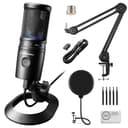
Audio-Technica AT2020USB-X

Audio-Technica AT2020USB-X

The quiet, no-nonsense USB condenser for people who just want clean sound. The AT2020 is a studio staple, and the USB-X version adds a headphone jack, on-mic mute and mix control without the hype or the RGB. It sounds excellent in a treated room and gets out of your way.

Best no-frills condenser
$185.90 · View on Amazon

Price as of October 27, 2026. #ad How we’re funded

The picks in full

#1Best overall

Shure MV7+

The mic that fixes bad rooms, in its current form. The same forgiving dynamic capsule that made the original MV7 the default podcast mic, now with USB-C, onboard digital processing and a real-time denoiser. Shure has discontinued the original MV7, so this is the MV7 you buy new today.

Strengths

  • Dynamic capsule rejects room echo and background noise
  • USB-C, real-time denoiser and onboard DSP
  • Customizable LED touch panel; still offers XLR

Trade-offs

  • Costs more than most USB condensers
  • Wants close, on-axis placement to sound its best
TypeDynamic (USB-C + XLR)
PatternCardioid
ProcessingOnboard DSP, real-time denoiser
ConnectionUSB-C and XLR

Specifications read from the manufacturer listing, on July 18, 2026.

#2Best value

Shure MV7

The mic that fixes bad rooms. A dynamic mic modeled on the legendary SM7B, it rejects room echo and background noise the way condensers can't, so it forgives an untreated home office. USB and XLR outputs mean it grows with you. For podcasting and voice in a real-world room, it is the smart pick.

Strengths

  • Dynamic capsule rejects room echo and background noise
  • Both USB and XLR — start simple, upgrade later
  • Built-in headphone monitoring

Trade-offs

  • Wants close, on-axis placement to sound its best
  • Costs more than most USB condensers
TypeDynamic (USB + XLR)
PatternCardioid
MonitoringBuilt-in headphone output
ConnectionUSB and XLR

Specifications read from the manufacturer listing, on July 18, 2026.

#3Best for a treated room

RODE NT-USB+

A studio-grade USB condenser that skips the complexity. Plug it into a computer, hear yourself through the built-in headphone jack with zero latency, and record clean, detailed voice with no interface to buy. Condensers pick up room sound, so it wants a quiet, treated space — get that right and it sounds superb.

Strengths

  • Studio-quality detail from a plug-and-play USB mic
  • Built-in headphone jack for zero-latency monitoring
  • On-mic controls and included pop filter

Trade-offs

  • Condenser — reveals room echo and background noise
  • Needs a stand or boom arm for best placement
TypeUSB condenser
PatternCardioid
MonitoringBuilt-in headphone output
ConnectionUSB-C

Specifications read from the manufacturer listing, on July 18, 2026.

#4Best no-frills condenser

Audio-Technica AT2020USB-X

The quiet, no-nonsense USB condenser for people who just want clean sound. The AT2020 is a studio staple, and the USB-X version adds a headphone jack, on-mic mute and mix control without the hype or the RGB. It sounds excellent in a treated room and gets out of your way.

Strengths

  • Trusted studio capsule with a clean, natural sound
  • Headphone jack, mute and monitor mix on the mic
  • Understated design — no lights, no gimmicks

Trade-offs

  • Condenser needs a quiet, treated space
  • No stand upgrade in the box; wants a boom arm
TypeUSB condenser
PatternCardioid
MonitoringHeadphone output with mix control
ConnectionUSB-C

Specifications read from the manufacturer listing, on July 18, 2026.

Dynamic or condenser: the only question that matters

A condenser microphone is more sensitive. That is marketed as a virtue and for voice over it is frequently a liability. Sensitivity is indiscriminate — it picks up the detail in your voice and also the refrigerator, the road, the room’s reverb and the air conditioning. A dynamic capsule is less sensitive, which means you work closer to it and the room arrives quieter relative to your voice.

The practical test is not a spec sheet, it is a clap. Stand where you record and clap once. If you hear a short ring after the clap, you have a reflective room, and a dynamic mic is the correct purchase. If the clap dies instantly — carpet, curtains, a bed, a full bookshelf, clothes in an open wardrobe — a condenser will reward you with detail a dynamic cannot match.

Both Shure picks here are dynamic and cardioid, meaning they listen forward and reject what is behind them. Both the RODE NT-USB+ and the Audio-Technica AT2020USB-X are cardioid condensers, which is the right pattern for a single voice, but they will still tell you the truth about your walls. If you want the full picture on how patterns shape what a mic hears, see microphone polar patterns, explained, and dynamic vs condenser microphones for the longer version of this section.

USB now, XLR later — and why that matters here

Both Shure mics carry USB and XLR outputs. For voice over that dual output is worth paying for, because voice-over kits tend to grow in one specific direction: you start plugged into a laptop, and if the work continues you end up wanting an interface, a preamp and the ability to route a headphone mix. A USB-only microphone means that upgrade is a new microphone. An XLR-capable one means it is a new box, and the microphone — the part your voice is characterised by — stays.

The MV7+ adds onboard DSP and a real-time denoiser to that, which is genuinely useful for a home setup: the processing happens in the microphone rather than in your editing software, so what you hear in your headphones is what gets recorded. The XLR vs USB explainer covers when the interface actually becomes worth buying.

Monitoring is not optional for voice over

Every microphone on this page has a headphone output on the mic itself, and for voice over that is a requirement rather than a convenience. You cannot hear a plosive, a mouth click, a sibilant “s” or the moment you drifted off-axis unless you are monitoring yourself as you read. Catching it live costs you one retake; catching it in the edit costs you the session.

Zero-latency monitoring specifically — where the mic routes your voice to the headphones directly rather than via the computer — is what makes that usable. Any delay, even a few milliseconds, makes reading aloud unexpectedly difficult. All four picks handle this on the microphone; a mic without a headphone jack puts you back at the mercy of your operating system’s audio buffer.

Technique does more than the next $200 of microphone

Get closer, then turn the gain down. Four to six inches from a dynamic mic, slightly off to one side rather than straight down the barrel. Proximity increases your voice relative to the room by the inverse square of the distance, which is the single most powerful room-treatment tool you own and it is free.

Speak across the capsule, not into it. Angle the mic so your breath passes the front rather than hitting it. That one change removes most plosives without a pop filter — though use the pop filter too; the NT-USB+ includes one.

Record a quiet room, not a silent one. Switch off the air conditioning, the fan and anything with a compressor in it, and record thirty seconds of room tone at the start of every session. You will need it to patch edits, and you cannot recreate it later.

Treat the wall you face, not the one behind you. The reflection that reaches the microphone is the one bouncing off the surface in front of your mouth. A duvet, a thick curtain or a full bookshelf on that wall does more than foam tiles in the corners. A clothes rail of hanging coats is the classic free voice booth, and it works.

What each pick is for

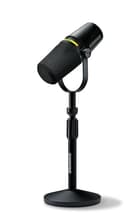
Shure MV7+ — the default. Buy it if you are recording in a normal room and want the problem solved with one purchase. Dynamic, cardioid, USB-C and XLR, onboard denoiser, headphone monitoring. It wants close, on-axis placement to sound its best, so follow the technique notes above.

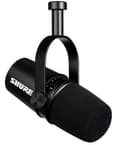
Shure MV7 — the same forgiving design, one generation earlier, without USB-C or the onboard DSP. Shure has discontinued it in favor of the MV7+, so availability is finite; if it is in stock at a meaningful discount it is the value pick on this page.

RODE NT-USB+ — the detail pick, for a quiet room. A studio-grade USB condenser with zero-latency monitoring and an included pop filter. In a treated space it sounds superb; in a hard room it will faithfully reproduce the hard room.

Audio-Technica AT2020USB-X — the cheapest honest way into condenser voice over. The AT2020 capsule is a studio staple, and this version adds a headphone jack with mix control and on-mic mute. No lights, no gimmicks, and it wants a boom arm because no stand upgrade comes in the box.

If the voice work is going over video rather than standing alone, the picks change — see our YouTube microphone roundup and how to record audio for video, which covers recording voice separately from the camera.
Frequently asked questions

What is the best microphone for voice over?

The Shure MV7+ for most people recording at home. It is a dynamic cardioid mic with USB-C and XLR outputs, onboard processing and a real-time denoiser, and its lower sensitivity means it hears less of an untreated room — which is the actual problem with most home voice-over recordings.

Should I use a dynamic or condenser microphone for voice over?

Dynamic if your room is reflective, condenser if it is soft and quiet. Stand where you record and clap once: if you hear a ring afterwards, buy dynamic. If the clap dies instantly, a condenser will give you more detail than a dynamic can.

Do I need an audio interface for voice over?

Not to start. A USB microphone with a headphone jack is a complete voice-over chain. An interface becomes worth buying when you want to run an XLR mic, add outboard processing or record more than one input — which is why a mic with both USB and XLR outputs protects that upgrade.

How close should I be to the microphone for voice over?

Four to six inches, angled slightly off-axis so your breath passes the front of the capsule rather than hitting it. Getting closer raises your voice relative to the room faster than any treatment you can buy, and it lets you turn the gain down, which lowers the noise floor too.

How do I record voice over in an untreated room?

Use a dynamic microphone, work close to it, and treat the wall you are facing rather than the one behind you — a duvet, thick curtain, full bookshelf or a rail of hanging clothes absorbs the reflection that actually reaches the mic. Switch off anything with a fan or a compressor before you record.

Is a USB microphone good enough for professional voice over?

For most commercial work published online, yes. The limiting factors in home voice over are the room, the placement and the performance, not the converter in the microphone. Studio delivery specs for broadcast or audiobook work are where an XLR chain starts to matter — which is why an XLR-capable USB mic is the safer buy.

Why do I need headphone monitoring for voice over?

Because you cannot hear plosives, mouth clicks or the moment you drifted off-axis unless you are listening to yourself as you read. Catching a problem live costs one retake; finding it in the edit can cost the whole session. Zero-latency monitoring on the mic itself is what makes reading aloud while listening practical.

Sources

Keep reading