How we ranked these
1. What it plugs into. This is the first filter and the one that prevents a return. Three of these mics output 3.5mm to a camera. Three also work over USB into a computer. One connects only to a USB-C phone. One needs no cable to the subject at all. We put the connection at the top of every card.
2. Whether it needs its own power. The VideoMic GO II, the VideoMicro II and the smartLav+ draw what they need from the camera or phone and have no battery to charge or forget. The VideoMic NTG and the Wireless GO have internal rechargeable batteries — more capability, one more thing to manage.
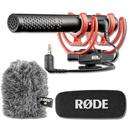
3. What you can change on the mic itself. The NTG has variable gain, a three-position high-pass filter, a -20 dB pad, an HF boost, a safety channel and a peak light, all on the body. The GO II has none of those on the mic — you set high-pass, HF boost and pad in RODE Central over USB and they stick. If you change settings between shots, that difference matters more than any specification on the box.
4. Price, last. The spread here is roughly $53 to $300, and at every step up you are buying a specific capability rather than better sound in the abstract.
We have not tested these microphones — here is exactly what we do instead — and every figure quoted is RODE’s own published specification or the verified live listing, with the date we read it. No scores, because a score would imply a measurement we did not take.
Decoding the names, once
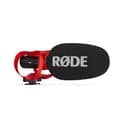
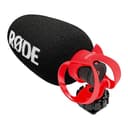
VideoMic is RODE’s on-camera shotgun family. A shotgun is directional: it hears what it points at and rejects a good deal of what is beside it. The GO II is the mid-point, the NTG is the broadcast version with controls, and the VideoMicro II is the stripped-down 39 g one.
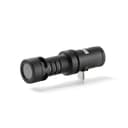
VideoMic Me looks like the same family and is not. These plug directly into a phone, and the suffix decides which phone: the Me-C+ is USB-C and MFi certified, which is iPhone 15 and 16 and modern Android; the Me-L is Lightning, for iPhone 14 and older. Neither connects to a camera. Our Android phone mic roundup goes further into which of these fits what.
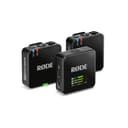
Wireless GO shares three letters with the VideoMic GO II and is a completely different product: a two-transmitter clip-on radio system with 32-bit float recording onboard, so the audio is captured in the transmitter as well as sent over the air. The onboard recording is the feature worth paying for — it is your backup when the radio drops.
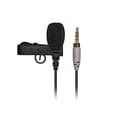
smartLav+ and NT-USB+ are the two single-purpose mics. The smartLav+ is a wired omnidirectional lavalier on a TRRS plug. The NT-USB+ is a USB-C cardioid condenser for a quiet room, and it is the one RODE in our registry that carries no live price today, so it is not a pick on this page — it appears on our voice-over roundup where the card shows a check-price link instead of a number.
Which one, by what you are filming
A camera, talking to the lens, one person. VideoMic GO II. It mounts in the hot shoe, runs off the camera, and the HELIX isolation mount keeps handling noise out. If your rig is tiny — a compact or a gimbal — the VideoMicro II at 39 g is the same idea with less of everything.
A desk, streaming or podcasting. VideoMic NTG on a boom arm. It is the only mic here with a headphone output for monitoring while it runs over USB, which is the feature that makes a shotgun usable as a desk mic, plus 30-plus hours per charge and a ten-year warranty. It is the top pick on our streaming shotgun roundup. One thing to know before you buy: the live US listing for this mic is a bundle that includes a WS11 windshield, which is why its price sits where it does.
Two people, or a subject further than a metre from the camera. Wireless GO. Two transmitters, 32-bit float captured onboard, and it connects to a camera over 3.5mm or to a computer over USB-C. This is the one to buy for interviews, and it is a core pick on our interview mic roundup.
Filming on the phone itself. VideoMic Me-C+ for USB-C, and check your phone’s port before ordering. It has its own 3.5mm headphone output, which is rare on a phone mic and means you can actually hear what you are recording.
One presenter, cheapest honest option. smartLav+. It is wired, which is the limitation and also the reason nothing can drop out. The VideoMic Me-L is a few dollars cheaper still, but it only fits Lightning iPhones, so we do not name it as the budget pick — it is not a general recommendation.
What RODE does not make, and where that matters
A dynamic broadcast USB mic. Everything above is a condenser or a lavalier. If your room is hard, bright and untreated, a dynamic capsule rejects it far better, and that is a Shure MV7+ or an Audio-Technica AT2020USB-X rather than a RODE. Our Shure MV7 alternatives page lays out that comparison from the other direction.
Switchable pickup patterns. No mic here lets you change from cardioid to omni or stereo. If you want to record two people across one desk mic, that is a Blue Yeti feature, not a RODE one. Our polar patterns explainer covers why that matters.
A wireless system with a charging case. The Wireless GO ships with two transmitters and a receiver, and that is it. DJI’s Mic 3 bundles a charging case that doubles as storage, which is a genuine convenience on a long shoot day. We compare the two directly on our DJI Mic alternatives page.