Start with where the mic goes, not with the price
There are four places a microphone can live, and each one has a different winner under $100.
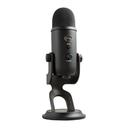
On your desk, wired to a computer. This is podcasting, voiceover, streaming and calls. A USB condenser like the Yeti is the answer because it needs nothing else — no interface, no cable to buy, no drivers. Its headphone jack also lets you hear yourself, which is the single best way to notice a problem while you still can.
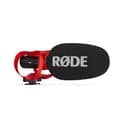
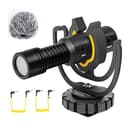
On top of a camera. This is a shotgun mic, and the VideoMic GO II is the default: it runs off the camera with no battery, outputs over 3.5mm or USB, and is directional enough to push the room back. The VideoMicro II is the smaller, cheaper version of the same idea and the Deity V-Mic D4 Mini is the cheapest of the three.
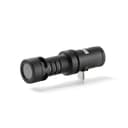
Plugged into a phone. This needs the right connector, not the best capsule. The VideoMic Me-C+ plugs into a USB-C iPhone or iPad and is MFi certified, so the stock Camera app sees it with no adapter and no app. Our shotgun mic for iPhone and mic for an Android phone pages go deeper on which plug fits which handset, because getting that wrong is the most common cheap-microphone mistake there is.
Clipped to a person. Wireless under $100 used to be a bad joke and is now genuinely fine. The Hollyland Lark M2 gets you two transmitters and a receiver inside the budget, which means two-person dialogue or a presenter who walks around. What you give up at this price is 32-bit float recording, so levels have to be right on the day.
What the $100 ceiling actually costs you
Controls. The VideoMic GO II has no gain dial, no pad and no safety channel — its settings live in a desktop app over USB. A sudden loud moment can clip with nothing to catch it, which is exactly what the much pricier VideoMic NTG exists to solve.
Room rejection. Condensers hear everything. If you record in a hard, empty room, no mic at this price will fix that — soft furniture and proximity will.
A safety net. No pick here records a backup copy or captures 32-bit float. Set your levels, watch your meters, and record a test take.
None of those is a reason to spend more before you need to. A $70 mic used well sounds far better than a $300 mic used badly, and the gap between a phone’s built-in mic and anything on this page is bigger than the gap between this page and a professional kit.
How this page differs from our budget mic guide
If you are specifically cross-shopping against a Blue Yeti, which sits right at the top of this band, our Blue Yeti alternatives page covers what spending more actually changes.
Our budget microphones roundup answers a different question: what is the cheapest mic that still sounds good for each recording method. This page has a hard $100 ceiling and picks the best option inside it, which changes the order — the Yeti leads here and the tiny VideoMicro II leads there. If your budget is genuinely tight rather than capped, read that one.
How we ranked these
Recording method first, then how forgiving the mic is of a real room, then whether it needs anything else bought to work, then size and power. We have not tested these microphones — here is what we do instead. Specifications are each manufacturer’s published figures with the date they were read, and prices come only from the live price layer.