Wide Open. Gear

The Best Fujifilm Cameras

Fujifilm's film-simulation color and dial-driven bodies have a following for good reason — here's the right X-series camera for a creator, a photographer and an everyday shooter.

By Stephen V.Last updated How we pick

People fall for Fujifilm for two reasons, and both are real. The first is color: Fujifilm’s film-simulation profiles give you images that look finished straight out of the camera, with a look you’d otherwise spend time chasing in editing. The second is handling: the dial-driven bodies put shutter speed, aperture and exposure under your fingers the old-fashioned way, which makes shooting feel deliberate and fun in a way spec sheets never capture. Under the retro styling sits a genuinely modern 26- to 40-megapixel APS-C sensor and reliable autofocus.

The X-series lineup is smaller and easier to navigate than most, so rather than one winner we’ve matched a Fujifilm to three kinds of buyer: the stabilized all-rounder for creators who shoot photo and video, the affordable photographer’s camera, and the premium fixed-lens compact you take everywhere. All three share the same lovely color science, so the choice is really about the body around it — do you want a flip screen and stabilization, tactile dials on a budget, or one perfect prime built in?

Each pick shows a live Amazon price and a buy button, so you can act on the recommendation without hunting for it. We haven’t physically tested these bodies — we say so, and explain what we do instead on our methodology page. Cross-shopping other brands? Our beginner mirrorless guide weighs Fujifilm against Sony, Canon and Nikon.

How this is funded:we earn a commission if you buy through our links, at no extra cost to you. It never changes which product we recommend, and we’ll tell you plainly when to skip one. Full disclosure.

Quick picks

Ranked on published specs and buyer fit. Select a row to jump to the full write-up. We have not tested these products — here is exactly what we do instead.

#ProductBest forPrice
1
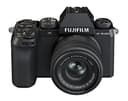
Fujifilm X-S20

Fujifilm X-S20

Fujifilm's content-creator body: in-body stabilization, a fully articulating screen, big battery life and a dedicated Vlog mode, plus the film-simulation colors. It is one of the few sub-flagship cameras that is genuinely strong for both stills and run-and-gun video.

Best overall
$1,599.00 · View on Amazon

Price as of July 30, 2026. #ad How we’re funded

2
Fujifilm X-T30 II

Fujifilm X-T30 II

The camera to buy if the photos-should-look-like-film thing appeals to you. Fujifilm's color profiles are the real draw, and the dial-driven body is a joy for stills. It is more photographer's camera than vlogger's — the screen tilts but doesn't flip forward.

Best value
$999.00 · View on Amazon

Price as of July 30, 2026. #ad How we’re funded

3
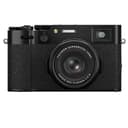
Fujifilm X100VI

Fujifilm X100VI

The camera everyone wants and few can find in stock. A fixed 35mm-equivalent lens, a gorgeous hybrid viewfinder, in-body stabilization and 40 megapixels make it a superb everyday and street camera — just know it is a deliberate, one-focal-length tool, not a do-everything body, and it sells above list.

Best compact
$2,019.00 · View on Amazon

$2,298.9912% off

Price as of July 30, 2026. #ad How we’re funded

The picks in full

#1Best overall

Fujifilm X-S20

Fujifilm's content-creator body: in-body stabilization, a fully articulating screen, big battery life and a dedicated Vlog mode, plus the film-simulation colors. It is one of the few sub-flagship cameras that is genuinely strong for both stills and run-and-gun video.

Strengths

  • In-body stabilization and a fully articulating screen
  • Standout battery life for a mirrorless body
  • 6.2K30 and 4K60 with Fujifilm color science

Trade-offs

  • Priced against APS-C flagships and entry full-frame
  • Single card slot
SensorAPS-C X-Trans CMOS 4, ~26 MP
MountFujifilm X
Video6.2K30, 4K60
Stabilization5-axis in-body (IBIS)
Weight491 g with battery

Specifications read from the manufacturer listing, on July 18, 2026.

#2Best value

Fujifilm X-T30 II

The camera to buy if the photos-should-look-like-film thing appeals to you. Fujifilm's color profiles are the real draw, and the dial-driven body is a joy for stills. It is more photographer's camera than vlogger's — the screen tilts but doesn't flip forward.

Strengths

  • Fujifilm film-simulation color is genuinely distinctive
  • Tactile shutter-speed and exposure dials
  • Excellent 26 MP sensor for the price

Trade-offs

  • Tilt screen doesn't face forward for vlogging
  • Small body and grip; modest battery life
SensorAPS-C X-Trans CMOS 4, 26.1 MP
MountFujifilm X
Video4K30 (DCI/UHD)
Viewfinder2.36M-dot EVF
Weight383 g with battery

Specifications read from the manufacturer listing, on July 18, 2026.

#3Best compact

Fujifilm X100VI

The camera everyone wants and few can find in stock. A fixed 35mm-equivalent lens, a gorgeous hybrid viewfinder, in-body stabilization and 40 megapixels make it a superb everyday and street camera — just know it is a deliberate, one-focal-length tool, not a do-everything body, and it sells above list.

Strengths

  • 40 MP sensor with in-body stabilization
  • Unique optical/electronic hybrid viewfinder
  • Pocketable, beautifully built, film-simulation color

Trade-offs

  • Fixed 35mm-equivalent lens only — no zoom, no swapping
  • Chronically out of stock and sold above list price
SensorAPS-C X-Trans CMOS 5 HR, 40 MP
LensFixed 23mm f/2 (35mm equivalent)
Video6.2K30, 4K60
Stabilization5-axis in-body (IBIS)
Weight521 g with battery

Specifications read from the manufacturer listing, on July 18, 2026.

How to choose a Fujifilm camera

Start with whether you shoot video as well as stills. The X-S20is the creator’s pick because it adds the two things video shooters miss on the cheaper bodies: in-body stabilization for handheld footage, and a fully articulating screen that flips forward. It also has standout battery life and a dedicated Vlog mode. If you film regularly, it’s the one to buy, and it leads our hybrid camera guide for exactly that reason.

If you’re a stills-first photographer on a budget, the X-T30 IIgives you the same 26-megapixel sensor and film-simulation color in a smaller, cheaper, dial-driven body. The trade is that its screen tilts but doesn’t face forward for vlogging, and there’s no in-body stabilization. For someone who mainly shoots photos and loves physical controls, it’s the sweet spot — we compare it directly with Sony’s benchmark in our X-T30 II vs a6400 piece.

The X100VIis a different kind of camera entirely: a fixed 35mm-equivalent lens, a gorgeous hybrid optical/electronic viewfinder, in-body stabilization and a 40-megapixel sensor in a pocketable body. It’s a deliberate, one-focal-length tool that street and everyday shooters adore — but it’s not a do-everything camera, and it’s chronically hard to find at list price. Buy it because you want to travel light and shoot one lens well, not because you want flexibility.

The Fujifilm lens question

Two of these three take interchangeable X-mount lenses (the X100VI is fixed), and the mount is a real strength: Fujifilm makes a deep line of compact, high-quality primes and zooms, and there’s good third-party support. The kit zoom is fine to start, but the fastest way to unlock that Fujifilm look is a bright prime that blurs the background and gathers light — the same principles we cover in our portrait lens guide and lens buying guide apply directly. And as with any camera, a good microphone will do more for your video than a sensor upgrade ever could. Still deciding between systems entirely? Start with what camera should I buy.
Frequently asked questions

Which Fujifilm camera should I buy first?

For most people, the X-S20. It's the most versatile X-series body - in-body stabilization, a flip-forward screen, big battery life and the film-simulation color - so it handles photos and video without a glaring weakness. If you shoot mostly stills and want to spend less, the X-T30 II gives you the same sensor and color in a smaller dial-driven body; if you want a pocket camera with one fixed lens, the X100VI is the one people fall in love with.

What makes Fujifilm colors special?

Fujifilm builds film-simulation profiles into its cameras - looks modelled on classic film stocks - so JPEGs come out with pleasing, finished color and contrast straight from the camera. It means less time editing to get a consistent look, and many Fujifilm shooters happily shoot JPEG because of it. You still get a RAW file too if you want full editing latitude.

Is the Fujifilm X100VI worth the money?

If you want a premium, pocketable camera with one excellent fixed lens, yes - the 40-megapixel sensor, hybrid viewfinder and in-body stabilization are genuinely special, and it's a joy to carry every day. But it's a deliberate one-focal-length tool, not a do-everything body, and it routinely sells above list price because demand outstrips supply. Buy it for what it is, not as your only camera.

Do Fujifilm cameras have in-body stabilization?

Some do and some don't. Among these picks, the X-S20 and X100VI have in-body stabilization (IBIS), which smooths handheld video and helps in low light. The cheaper X-T30 II does not, so for handheld video you'd rely on a stabilized lens or a gimbal. If IBIS matters to you, that's a real reason to choose the X-S20.

Are Fujifilm cameras good for video?

The X-S20 is genuinely strong for video - it shoots 6.2K and 4K60 with Fujifilm color, has in-body stabilization and a fully articulating screen, and it's a capable hybrid. The X-T30 II shoots good 4K but lacks stabilization and a forward-facing screen, so it leans stills. The X100VI can shoot video but its fixed lens and form factor make it a stills-first camera that happens to film.

Sources

Keep reading