How to choose an APS-C camera
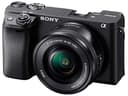
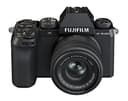
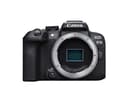
Start with what you shoot most, because that decides almost everything else. If you want a viewfinder and reliable autofocus for stills as much as video, the Sony a6400is the safe center of the field—its Real-time Eye AF still holds a moving subject better than a lot of newer, cheaper bodies, and it’s weather-sealed. If you film as much as you photograph and want in-body stabilization and a screen that flips to face you, the Fujifilm X-S20is the most complete creator body here. If you shoot fast action—sports, kids, pets—the Canon R10’s quick burst and deep grip pull ahead.
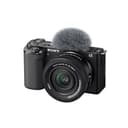
Then weigh handling and the shooting experience, which matters more than any single spec once the sensors are this close. The Fujifilm X-T30 II and Nikon Z fcare built around physical dials and film-inspired looks that make you want to pick them up—a perfectly good reason to buy a camera—while the Sony ZV-E10strips out the viewfinder to focus on talking-to-camera video off a flip screen. There’s no wrong answer here; there’s the one that suits your hands and your subjects.
Finally, think about the lens system, because the body you buy commits you to a mount for years. Sony’s E-mount has the deepest, cheapest third-party lens catalog of any APS-C system, with huge support from Sigma and Tamron; Fujifilm’s X-mount has superb, characterful native glass; Canon’s RF-S and Nikon’s Z DX line-ups are newer and thinner, though full-frame RF and Z lenses fit too. Whichever you pick, remember that a good lens changes your images far more than the body does—our portrait lens guideis where the real upgrades live. If you’re still torn between two bodies, our head-to-head comparisons like the Canon R10 vs Sony a6400 break the decision down model by model.
Do you need full-frame instead?
Most people don’t, and we’d be doing you a disservice not to say it. Full-frame gathers more light and gives shallower background blur, which matters for paid low-light work—but the bodies and lenses are bigger, heavier and much more expensive, and for good-light photography a modern APS-C camera is genuinely hard to tell apart. If you think you might want the bigger sensor later, read our best full-frame cameras guide and the Sony a7 IV vs Fujifilm X-S20comparison first—they lay out exactly what the jump gets you. For the overwhelming majority of shooters, though, the answer is to buy one of the cameras above, spend the savings on a fast prime, and go shoot.