Microphone Polar Patterns, Explained
Cardioid, omnidirectional, figure-8, supercardioid - what each pickup pattern actually hears, which one your room needs, and when switchable patterns are worth paying for.
A microphone’s polar pattern is the map of which directions it is sensitive to. It is not a sound-quality setting and it does not change what your voice sounds like when you speak straight into the front of the capsule. What it changes is how much of everything else gets in — the room, the keyboard, the fan, the person sitting opposite you. Choosing a pattern is really choosing what you want the microphone to ignore.
That reframing is the useful part, because it turns a technical-sounding spec into a question about your room. If you record one voice in a spare bedroom, you want a pattern that rejects as much as possible. If you clip a mic to someone who turns their head while they talk, you want a pattern that does not care which way they are facing. Those are opposite requirements, and no single pattern serves both.
The four patterns, and what each one hears
Cardioid is heart-shaped: most sensitive at the front, mildly sensitive at the sides, and close to deaf directly behind. It is the default on virtually every podcast, voice-over and streaming microphone because it matches the most common situation there is — one person in front, one noisy room behind. If you only ever use one pattern, this is it.
Supercardioid (and its tighter cousin hypercardioid) narrows the front lobe further, so it rejects more of the room than a cardioid does. The catch is a small rear lobe: it hears a little of what is directly behind it. On a camera-mounted shotgun aimed at a subject, that is an excellent trade, which is why shotgun mics use it. On a desk with a hard wall two feet behind the mic, it can actually perform worse than a plain cardioid.
Omnidirectional is equally sensitive in every direction. That sounds like a flaw and it is also a feature: an omni mic does not change character when the speaker turns their head, and it has no proximity bass boost to manage. That is exactly why nearly every lavalier mic is omnidirectional — a clip-on mic has to survive being six inches from a chin that moves. Omni is also what you want when the room is the recording.
Bidirectional, also called figure-8, hears the front and the back equally and rejects both sides hard. There is one classic use: two people facing each other across a single microphone. It is the most situational of the four, and the reason it appears on multi-pattern desk mics at all.
Stereo is not strictly a polar pattern but appears on the same selector switch. It is two capsules capturing left and right, for music, ambience and ASMR — not for a voice, because a voice recorded in stereo moves around a listener’s headphones in a way that is distracting rather than immersive.
A quick comparison
| Pattern | Picks up | Rejects | Use it for |
|---|---|---|---|
| Cardioid | Front, some sides | Directly behind | One voice at a desk |
| Supercardioid | A narrow front lobe, plus a small rear lobe | Sides, strongly | Shotgun mics aimed at a subject |
| Omnidirectional | Everything, equally | Nothing | Lavalier mics, room sound |
| Bidirectional (figure-8) | Front and back | Both sides, strongly | Two people, one mic, face to face |
| Stereo | Left and right separately | Nothing | Music, ambience — not voice |
Off-axis sound: the part nobody mentions
A polar pattern is not a wall. Sound arriving from the side of a cardioid mic is not silenced, it is reduced and altered — high frequencies fall away faster than low ones, so off-axis sound arrives dull and muffled rather than absent. This has two consequences that matter in practice.
First, if you drift off-axis while talking, you do not just get quieter, you get duller, and that is harder to fix in an edit than a volume change. Second, pointing a cardioid mic’s null at a noise source genuinely helps, but the noise that still gets through will sound boxy. Both are arguments for the same thing: work close, stay on-axis, and monitor yourself in headphones so you notice when you have moved.
Proximity effect, and why directional mics sound “radio”
Every directional pattern has a side effect: the closer you get, the more bass it adds. That warm, intimate, broadcast-sounding voice you hear on professionally produced podcasts is largely a cardioid dynamic mic two to four inches from someone’s mouth, with the resulting bass boost dialed back.
Omnidirectional patterns have essentially none of this, which is why a lavalier sounds thinner and more natural than a desk mic at the same distance. Neither is wrong — but if you were hoping a clip-on mic would give you the radio voice, the pattern is the reason it does not.
So which pattern should you buy?
For a single voice in an untreated room, a fixed cardioid is the right answer and a switchable mic is a feature you are paying for and will not use. Switchable patterns earn their money when you genuinely record more than one way — a guest in the room some weeks, a solo read in others. And for a subject in front of a camera, the choice is between a supercardioid shotgun and an omnidirectional lavalier, which is a different decision entirely.
The three microphones below cover those three cases from the registry, with live prices.
How this is funded:we earn a commission if you buy through our links, at no extra cost to you. It never changes which product we recommend, and we’ll tell you plainly when to skip one. Full disclosure.
Quick picks
Ranked on published specs and buyer fit. Select a row to jump to the full write-up. We have not tested these products — here is exactly what we do instead.
| # | Product | Best for | Price |
|---|---|---|---|
| 1 | 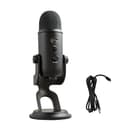 Blue Yeti USB Microphone The USB mic everyone knows, and still a fair pick for its price and its four pickup patterns. The catch is that it is a sensitive condenser that hears everything — keyboard, room, the street. In a quiet space it sounds great; in a noisy one, a dynamic mic like the Shure MV7 will treat you better. | Best for switching patterns | |
| 2 | 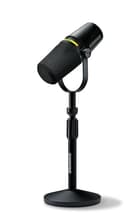 Shure MV7+ The mic that fixes bad rooms, in its current form. The same forgiving dynamic capsule that made the original MV7 the default podcast mic, now with USB-C, onboard digital processing and a real-time denoiser. Shure has discontinued the original MV7, so this is the MV7 you buy new today. | Best fixed cardioid | $319.00 · View on Amazon Price as of October 27, 2026. #ad How we’re funded |
| 3 | 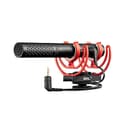 RODE VideoMic NTG The shotgun that is also a USB microphone, which is exactly what a streamer wants. It carries the acoustic design of RODE's NTG5 broadcast shotgun, then adds a USB output so it can go straight into a computer, a variable gain dial, a high-pass filter, a -20dB pad, a high-frequency boost and a safety channel. The 3.5mm jack auto-senses whether it is plugged into a camera or a phone, and doubles as a headphone output when you are on USB. | Best supercardioid | $229.90 · View on Amazon Price as of October 27, 2026. #ad How we’re funded |
Where each pick sits
Blue Yeti — four patterns (cardioid, omni, bidirectional and stereo) selected on the mic, with on-mic gain, mute and headphone monitoring. It is a sensitive condenser, so it hears everything its pattern allows through, which is both why it is a useful teaching tool and why it wants a quiet room.
Shure MV7+ — fixed cardioid, dynamic capsule, USB-C and XLR, with onboard DSP and a real-time denoiser. The argument for it is that one well-implemented cardioid in a dynamic capsule rejects a bad room better than four switchable patterns in a sensitive one.
RODE VideoMic NTG — supercardioid, built as an on-camera shotgun but also a full USB mic with its 3.5mm jack doubling as headphone monitoring. It is the pattern you want aimed at a subject from a camera or a boom arm, with a variable gain dial, high-pass filter, -20dB pad and a safety channel on the body.
How to choose in one minute
One voice, at a desk, in a normal room. Cardioid. Stop reading, buy a cardioid mic, point the front at your mouth and put the back toward whatever is noisiest.
Two people, in person, one microphone. Figure-8, if you have it — or far better, two cardioid mics, one each. Our USB microphone roundup covers both routes.
A subject on camera, a few feet away. Supercardioid on a shotgun mic, or an omnidirectional lavalier clipped to them. Those are the two real answers and our lavalier vs shotgun explainer compares them properly.
A room, a band, an ambience track. Omni or stereo. You want the space, not isolation from it.
And a closing reminder, because it undoes most of what people expect from a pattern: distance beats pattern. A cardioid mic two feet from your face in a hard room will sound worse than an omnidirectional lav clipped six inches from your mouth, every time. Pick the pattern that suits your setup, then get the microphone as close to the sound as the shot allows. That is the whole craft.
Frequently asked questions
What is a microphone polar pattern?
It is the map of which directions a microphone is sensitive to. A polar pattern does not change how a mic sounds when you speak straight into it — it changes how much of everything else gets in. Choosing a pattern is really choosing what you want the microphone to ignore.
What is the best polar pattern for voice?
Cardioid, for almost every single-person recording. It listens forward, is mildly sensitive at the sides and rejects what is directly behind it, which is where your room, your screen fan and your window usually are. Every dedicated podcast and voice-over mic ships cardioid as its default for this reason.
What is the difference between cardioid and supercardioid?
A supercardioid is narrower at the front, so it rejects more of the room — but it has a small rear lobe, meaning it hears a little of what is directly behind it. On a camera pointed at a subject that trade is excellent. On a desk with a wall behind the mic it can be worse than a plain cardioid.
When should I use an omnidirectional microphone?
When you want the room, or when the mic will move relative to the speaker. Omni patterns are equally sensitive in every direction, which makes them forgiving about placement — the reason most lavalier mics are omni — and useless for rejecting a noisy room.
What is a figure-8 polar pattern used for?
Two people facing each other across one microphone, and that is mostly it. A bidirectional pattern hears the front and the back equally while rejecting both sides hard, so an in-person two-host interview at one mic works well. It is the most situational of the four.
Are switchable polar patterns worth paying for?
Only if you will actually use more than one. If you record one voice at a desk, a good fixed cardioid mic beats a multi-pattern mic at the same price, because the budget went into the pattern you use instead of three you do not. Multi-pattern mics earn their money for two-person interviews and room recordings.
Does the polar pattern change how close I should be to the mic?
Yes. Directional patterns — cardioid and supercardioid — get noticeably bassier as you move in, an effect called proximity, and they lose high frequencies fast as you move off-axis. Omni patterns are far more stable with distance and angle, which is exactly why they are used for clip-on mics.
Sources
- Shure — Official microphone specifications — Shure's official mic spec pages (accessed July 18, 2026)
- RODE — Official microphone specifications — RODE's official mic spec pages (accessed July 18, 2026)
Keep reading
Dynamic vs Condenser Microphones
The other half of the decision — how sensitive the capsule is.
Read the explainerHow to Choose a Microphone
The whole decision in order, from what you shoot to what you buy.
Read the guideBest USB Microphones
Desk mics ranked, including the ones with switchable patterns.
See USB micsLavalier vs Shotgun Mic
Two different answers to the same room-noise problem.
Read the explainer