Wide Open. Gear

The Best ND Filters

The one accessory that lets you shoot wide open in daylight and blur moving water at noon. Variable and fixed neutral density filters, ranked on range, color and what each one costs you in image quality.

By Stephen V.Last updated How we pick

If you shoot video and want one filter, buy a 1-5 stop variable ND with no cross pattern — the K&F Concept Nano-X ND2-ND32 is the cheapest filter here sold on exactly that promise. If you want long exposures in daylight, a variable ND is the wrong tool entirely and the Hoya PROND EX 1000— a fixed 10-stop, ND 3.0 filter — is the right one. For one filter that has to do both, the Tiffen Variable ND covers 2-8 stops in ColorCore glass made in the USA. On a tight budget the K&F Concept B-Series ND2-ND400 buys 1-9 stops for about a third of the price, with the artifacts that implies. The Freewell Threaded Hybrid VND/CPL adds an independently aimed polarizer, and the NiSi Swift True Color ND-Vario is the pick when a color cast would cost you grading time.

An ND filter is sunglasses for your lens, and it is the only accessory that solves a problem you cannot solve in the camera. Outdoors at f/1.8 your shutter runs out of speed before the exposure is right; for video you are locked to roughly 1/50 s by the 180-degree shutter rule, and in daylight that is three to six stops too much light. Stopping down to f/16 fixes the exposure and destroys the shallow depth of field you bought the lens for. An ND filter removes the light instead, and nothing else does.

We do not own these filters and we have not run them on a bench. What follows is a ranking built from each manufacturer’s own published figures where the manufacturer serves us one — Hoya, Tiffen and Freewell all do — and from the live retail listing where it does not: K&F Concept’s own site returns a 403 to our fetcher and NiSi’s does not resolve at all, so those two entries quote the listing and say nothing the listing does not say. Where a figure is not published, we write that instead of estimating it.

How this is funded:we earn a commission if you buy through our links, at no extra cost to you. It never changes which product we recommend, and we’ll tell you plainly when to skip one. Full disclosure.

Quick picks

Ranked on published specs and buyer fit. Select a row to jump to the full write-up. We have not tested these products — here is exactly what we do instead.

#ProductBest forPrice
1
K&F Concept Nano-X Variable ND2-ND32 (FN712)

K&F Concept Nano-X Variable ND2-ND32 (FN712)

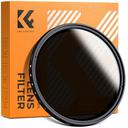
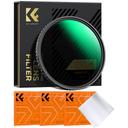
The variable ND we would put on a video camera first, because it covers the range you actually use and is sold on the one promise that matters: no X-shaped cross pattern inside its 1-5 stop span. That is the whole reason to pay more than the cheapest VND on the shelf. One to five stops is a shutter-angle filter, not a long-exposure filter — it is there so you can hold 1/50 s at f/2.8 outdoors, and it will not give you a thirty-second exposure.

Best overall for video
$69.99 · View on Amazon

Price as of November 13, 2026. #ad How we’re funded

2
Hoya PROND EX 1000 (ND 3.0)

Hoya PROND EX 1000 (ND 3.0)

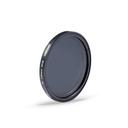
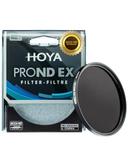
The filter that does the thing no variable ND can do: ten stops in one piece of glass, which is what turns a waterfall into silk and a crowd into a blur at midday. Hoya publishes the figures plainly — ND 3.0, 10 f-stops, sizes from 49mm to 82mm — and the listing adds an aluminum frame that stacks. Buy this one if the reason you want an ND filter is long exposures rather than video.

Best for long exposures
$103.05 · View on Amazon

Price as of November 13, 2026. #ad How we’re funded

3
Tiffen Variable ND Filter

Tiffen Variable ND Filter

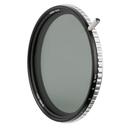
The wide-range variable ND from a company that makes its glass in the United States and says so on the spec page. Two to eight stops is a genuinely useful span — enough for video at the bottom and enough for a half-second of blurred water at the top — and Tiffen is unusually straight about the limits, stating outright that the marks on the ring are reference points rather than calibrated stop values. A 9mm ring and a wider front optic are there to keep it off the corners of a wide lens.

Best wide-range variable ND
$69.98 · View on Amazon

Price as of November 13, 2026. #ad How we’re funded

4
K&F Concept Variable ND2-ND400 (FN101)

K&F Concept Variable ND2-ND400 (FN101)

The cheapest way to find out whether you will actually use an ND filter, and an honest one as long as you understand what you are buying. Nine stops of range on a single rotation is a lot to ask of two polarizers, and the giveaway is in K&F's own range: the pricier Nano-X model is advertised as having no X cross, which tells you what this B-series one does near the top of its travel. Stay in the first two thirds of the ring and it is a bargain.

Best budget
$38.99 · View on Amazon

Price as of November 13, 2026. #ad How we’re funded

5
Freewell Threaded Hybrid Variable ND/CPL 3-7 Stop

Freewell Threaded Hybrid Variable ND/CPL 3-7 Stop

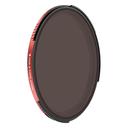
Two filters in one housing, with two rings so you can aim the polarizer independently of the density. That is a real advantage outdoors, where the sky and the water you are filming both want polarizing and the exposure wants holding down — and it saves screwing a CPL in front of a VND, which is how vignetting starts. At 5.45mm in use it is the thinnest filter here, and Freewell backs it with a lifetime warranty on manufacturing defects.

Best with a built-in polarizer
$99.99 · View on Amazon

Price as of November 13, 2026. #ad How we’re funded

6
NiSi Swift True Color ND-Vario (1-5 Stops)

NiSi Swift True Color ND-Vario (1-5 Stops)

The filter to buy if color is the thing that has annoyed you about variable NDs. NiSi's True Color glass is sold specifically against the magenta-and-green shift cheap VNDs introduce, and the Swift version is designed to stack with NiSi's own system so a 1-5 stop filter becomes 5-9 stops with an add-on. You pay roughly two and a half times the K&F for the same 1-5 stop span, so this is a color-fidelity purchase, not a range purchase.

Best color accuracy
$189.00 · View on Amazon

Price as of November 13, 2026. #ad How we’re funded

The picks in full

#1Best overall for video

K&F Concept Nano-X Variable ND2-ND32 (FN712)

The variable ND we would put on a video camera first, because it covers the range you actually use and is sold on the one promise that matters: no X-shaped cross pattern inside its 1-5 stop span. That is the whole reason to pay more than the cheapest VND on the shelf. One to five stops is a shutter-angle filter, not a long-exposure filter — it is there so you can hold 1/50 s at f/2.8 outdoors, and it will not give you a thirty-second exposure.

Strengths

  • Rated by K&F for no X-shaped cross pattern across its full 1-5 stop range, which is where cheap VNDs fall apart
  • 28 multi-layer coatings and a waterproof coating, per the listing — easier to wipe a fingerprint off than uncoated glass
  • One ring replaces a drawer full of fixed NDs for video work

Trade-offs

  • 1-5 stops is a video range — it cannot produce the long daytime exposures a 10-stop fixed ND does
  • 67mm thread only on this listing; filters are bought per diameter, so plan around your largest lens and step-up rings
  • K&F's own site returns 403 to us, so these figures come from the Amazon listing rather than a manufacturer spec sheet
TypeVariable ND, ND2-ND32 (1-5 stops)
Filter thread67mm (screw-in)
Coatings28 multi-layer coatings, waterproof (Nano-X series)
Cross patternListed as no X cross within the 1-5 stop range
Series / codeNano-X FN712

Specifications read from the manufacturer listing, on November 6, 2026.

#2Best for long exposures

Hoya PROND EX 1000 (ND 3.0)

The filter that does the thing no variable ND can do: ten stops in one piece of glass, which is what turns a waterfall into silk and a crowd into a blur at midday. Hoya publishes the figures plainly — ND 3.0, 10 f-stops, sizes from 49mm to 82mm — and the listing adds an aluminum frame that stacks. Buy this one if the reason you want an ND filter is long exposures rather than video.

Strengths

  • A true 10-stop fixed density (ND 3.0), published by Hoya rather than estimated
  • Fixed glass has no cross pattern and no density drift, which is the trade-off every VND makes
  • Aluminum frame listed as stackable, so it can sit in front of a polarizer

Trade-offs

  • Ten stops makes the viewfinder effectively black — you compose and focus first, then fit the filter
  • One fixed density: there is no dialing it back for video
  • Hoya publishes no coating, frame-thickness or color-cast figure for this line, so we cannot quote one
TypeFixed neutral density, ND 3.0 (10 f-stops)
Filter thread77mm shown; Hoya lists the line from 49mm to 82mm
FrameAluminum, stackable (per the listing)
InfraredListing states infrared block
Best forExposures of seconds to minutes in daylight

Specifications read from the manufacturer listing, on November 6, 2026.

#3Best wide-range variable ND

Tiffen Variable ND Filter

The wide-range variable ND from a company that makes its glass in the United States and says so on the spec page. Two to eight stops is a genuinely useful span — enough for video at the bottom and enough for a half-second of blurred water at the top — and Tiffen is unusually straight about the limits, stating outright that the marks on the ring are reference points rather than calibrated stop values. A 9mm ring and a wider front optic are there to keep it off the corners of a wide lens.

Strengths

  • 2-8 stops (ND 0.6-2.4) from one ring — the widest span here that is not a 9-stop budget filter
  • ColorCore optical glass, made in the USA, with a 10-year warranty, all published by Tiffen
  • Wider outer optic and a 9mm ring, which Tiffen says reduces vignetting on wide-angle lenses

Trade-offs

  • Tiffen states the ring marks are not calibrated to specific densities, so you set exposure by the meter, not the scale
  • Eight stops of variable range means cross-polarization artifacts are possible toward MAX, as on any wide-span VND
  • No polarizer control, and the 9mm ring is thicker than the slim budget options
TypeVariable ND, ND 0.6-2.4 (2-8 stops)
Filter thread67mm shown; Tiffen lists 52, 58, 62, 67, 72, 77, 82 and 95mm
GlassColorCore optical glass, made in the USA
Ring9mm thin profile with a wider outer optic
Warranty10 years

Specifications read from the manufacturer listing, on November 6, 2026.

#4Best budget

K&F Concept Variable ND2-ND400 (FN101)

The cheapest way to find out whether you will actually use an ND filter, and an honest one as long as you understand what you are buying. Nine stops of range on a single rotation is a lot to ask of two polarizers, and the giveaway is in K&F's own range: the pricier Nano-X model is advertised as having no X cross, which tells you what this B-series one does near the top of its travel. Stay in the first two thirds of the ring and it is a bargain.

Strengths

  • By far the cheapest filter here, with a 1-9 stop span no single-rotation rival on this page matches
  • Ultra-slim frame, which matters on a wide-angle lens where a thick ring vignettes
  • Includes a microfiber cleaning cloth

Trade-offs

  • Expect the X-shaped cross pattern near maximum density — that is the known cost of a 9-stop variable ND
  • Color cast and corner falloff grow as you wind it toward MAX; K&F publishes no figure for either
  • 67mm thread only on this listing, and K&F's own site returns 403 to us, so figures come from the Amazon listing
TypeVariable ND, ND2-ND400 (1-9 stops)
Filter thread67mm (screw-in)
FrameUltra-slim, per the listing
In the boxFilter and microfiber cleaning cloth
Series / codeB-Series FN101

Specifications read from the manufacturer listing, on November 6, 2026.

#5Best with a built-in polarizer

Freewell Threaded Hybrid Variable ND/CPL 3-7 Stop

Two filters in one housing, with two rings so you can aim the polarizer independently of the density. That is a real advantage outdoors, where the sky and the water you are filming both want polarizing and the exposure wants holding down — and it saves screwing a CPL in front of a VND, which is how vignetting starts. At 5.45mm in use it is the thinnest filter here, and Freewell backs it with a lifetime warranty on manufacturing defects.

Strengths

  • Independent rings: the outer sets 3-7 stops, the red inner ring aims the polarizer
  • 5.45mm thick in use, which is the thinnest on this page — least likely to vignette on a wide lens
  • Ships with a lens cap, a protective case and a cloth, and carries a lifetime limited warranty

Trade-offs

  • It starts at 3 stops, so it cannot be wound back to near-clear the way a 1-stop-minimum VND can
  • The polarizer is part of the filter rather than an accessory, so you can aim the effect but never remove it
  • Sold in 67, 77 and 82mm only — no small-thread versions for compact primes
TypeHybrid variable ND + CPL, 3-7 stops (ND8-ND128)
ControlsOuter ring sets ND stops; red inner ring sets polarization
Thickness5.45 mm in use (7.95 mm stored)
Filter thread67mm shown; Freewell lists 67, 77 and 82mm
GlassOptical glass with anti-reflective coatings

Specifications read from the manufacturer listing, on November 6, 2026.

#6Best color accuracy

NiSi Swift True Color ND-Vario (1-5 Stops)

The filter to buy if color is the thing that has annoyed you about variable NDs. NiSi's True Color glass is sold specifically against the magenta-and-green shift cheap VNDs introduce, and the Swift version is designed to stack with NiSi's own system so a 1-5 stop filter becomes 5-9 stops with an add-on. You pay roughly two and a half times the K&F for the same 1-5 stop span, so this is a color-fidelity purchase, not a range purchase.

Strengths

  • True Color glass is the line's stated answer to the color shift other variable NDs introduce
  • Waterproof nano coating on optical glass, with a filter case and lens cap in the box
  • Part of the NiSi Swift system, so the range extends by stacking rather than by replacing the filter

Trade-offs

  • Several times the price of filters with the same 1-5 stop range
  • Extending past 5 stops means buying more NiSi Swift parts, not just this filter
  • NiSi's own specification site does not resolve for us, so these figures are read from the Amazon listing
TypeVariable ND, ND2-ND32 (1-5 stops)
Filter thread67mm (screw-in)
GlassOptical glass with waterproof nano coating
SystemCompatible with NiSi Swift system filters for a wider range
In the boxFilter, filter case and lens cap

Specifications read from the manufacturer listing, on November 6, 2026.

How we ranked these: four criteria, in this order

Filters are the one gear category where the cheap option and the expensive option look identical and behave very differently, because what you are paying for is the absence of problems rather than the presence of features. These are the four things that decide it.

1. The right kind of ND for your job. This is the decision that sends most people home with the wrong filter. A variableND is two polarizers that rotate against each other, so you dial density continuously — perfect for video, where the light changes between shots and you cannot keep unscrewing glass. A fixed ND is a single piece of darkened glass at one density, and it is the only way to get the eight to ten stops a daytime long exposure needs. No variable ND on this page reaches 10 stops cleanly, and no fixed ND lets you adjust. Buy for the job, not for the flexibility.

2. Stop range, and specifically where the range starts. A 1-5 stop variable covers almost all video work and nothing else. A 2-8 stop variable adds short blur-the-water exposures at the top. A 3-7 stop filter like the Freewell cannot be wound back toward clear, which matters if you also shoot indoors with it fitted. And 1-9 stops on one rotation is physically asking a lot — the span is real, the quality at the top of it is not.

3. What goes wrong at maximum density. Every variable ND degrades as you wind it toward MAX, in two ways with two names. The X-shaped cross is a dark band across the frame that appears when the two polarizers approach perpendicular; it is most visible on wide-angle lenses and it is unfixable in post. The second is color cast— the magenta-and-green shift that makes footage a nuisance to grade. Manufacturers are blunt about this when it is their selling point: K&F advertises the Nano-X as having no X cross across its 1-5 stop range, and NiSi sells True Color glass specifically against the cast. Treat the presence of that claim as the spec, and its absence as a warning.

4. Thread size and ring thickness.Filters are bought per diameter, not per camera, and nothing about this is convenient. Check the number printed after the ø symbol on your lens barrel — our lens markings guide decodes the rest of it. Thickness matters too: a thick ring on a wide-angle lens puts the frame’s own corners in shadow. The Freewell is 5.45 mm in use, Tiffen publishes a 9 mm ring with a wider front optic specifically to fight that, and the K&F B-Series is sold as ultra-slim.

Buy one filter for your biggest lens, then step up

The most useful money-saving habit in filters: buy the filter in the largest thread size you own and adapt it down with step-up rings, which cost a few dollars each. A 67mm filter fits a 49mm lens with a 49-67mm step-up ring and loses nothing optically, because the filter is simply larger than it needs to be. The reverse — a step-down ring — vignettes, because you are putting a smaller hole in front of a bigger lens.

That is why 67mm is the diameter we have shown on five of these six listings. It is the most common thread on current APS-C standard zooms and fast primes, it is where the price curve is still reasonable, and it steps up to cover nearly everything smaller. If your longest or widest lens takes 82mm — many full-frame f/2.8 zooms do — buy 82mm and step up to it from everything else. Every filter here is sold in a range of sizes; the listing you click is one of them.

One warning about step-up rings and lens caps: once a step-up ring is fitted, your original lens cap no longer clips on. Buy a cap for the filter’s diameter at the same time, and keep the filter in the case the better options include.

What each stop actually buys you

A stop is a halving of light, and because the numbers compound fast it helps to see what each band is for.

1-3 stops: video in shade and overcast light. Enough to hold 1/50 s at f/2.8 under cloud or in the open shade of a building. This is the band you live in for interviews and indoor-to-outdoor walking shots, and it is the reason a filter that starts at 3 stops can be awkward as your only one.

3-6 stops: video in direct sun, and shallow depth of field in daylight stills. The heart of the range. Bright sun at f/1.8 needs most of it. Our video settings guide covers why the shutter is the fixed point in that equation and the aperture is not, and aperture explained covers what you are protecting by not stopping down to f/16.

6-8 stops: short daytime long exposures.A half second to two seconds — enough to turn a stream into motion and give a waterfall its soft texture without going fully abstract. This is the top of the Tiffen’s range and the realistic ceiling for a variable ND.

10 stops: the real long-exposure band. Thirty seconds at midday. Water becomes glass, cloud becomes streaks, and people walking through the frame disappear entirely. Only a fixed ND does this cleanly, which is the whole reason the Hoya PROND EX 1000 is on a page otherwise dominated by variables. Our long exposure photography guide covers the technique, and how to photograph waterfalls is the single most common reason people buy their first 10-stop filter.

ND or polarizer? They are not interchangeable

A circular polarizer also darkens the image — by roughly one to two stops, depending on angle — which leads people to use one as a weak ND. It works, but it is the wrong instrument, because a polarizer’s actual job is to cut reflections off glass, water and wet leaves and to deepen a blue sky, and that effect changes with how you are pointed. You cannot have polarization without the sky shifting, and you cannot avoid it on a variable ND, which is built out of polarizers in the first place.

That is what makes the Freewell hybrid genuinely useful rather than gimmicky: it gives you a second ring to aim the polarization deliberately instead of accepting whatever orientation the density setting happens to land on. The cost is that the polarizer can never be removed from the light path. If you want polarizing and ND as separate, removable decisions, the honest answer is a fixed ND plus a screw-in CPL — two filters, more vignetting risk, full control. Our camera filters explainer walks through every filter type and which ones a modern sensor has made obsolete.

Where we would spend the money

If you shoot video: buy the 1-5 stop no-cross variable ND in your largest thread size and stop there. That is the filter that will be on your camera 90 percent of the time, and the money saved by not buying the premium version is better spent on a decent tripod, which improves more shots than any filter.

If you shoot landscape stills: buy the 10-stop fixed ND first, not a variable. Everyone who buys a variable ND for long exposures discovers within a month that eight stops of variable range plus a cross pattern is not the same product as ten stops of clean fixed glass. Pair it with the wide-angle glass in our landscape lens roundup — and check the filter threads there before you choose a diameter, because ultra-wides are exactly the lenses where a thick filter ring shows.

If you shoot both: the 2-8 stop Tiffen is the honest compromise, and we would rather tell you it is a compromise than pretend one filter covers every job. And if you are not sure you will use an ND at all, the cheapest K&F is a genuinely sensible way to find out for the price of a couple of coffees — just keep it off the last third of its travel, and plan to replace it rather than regret it. Timelapse shooters should read how to shoot a time lapse before buying: a variable ND that drifts as you touch it is a specific problem in that discipline, and a fixed ND is usually the better tool.
Frequently asked questions

What does an ND filter actually do?

It removes light evenly across the visible spectrum without changing color, so you can use a wider aperture or a slower shutter speed than the light would otherwise allow. It is the only accessory that solves a problem the camera cannot: shooting at f/1.8 in bright sun, or holding a 1/50 s video shutter in daylight.

Should I buy a variable ND or a fixed ND filter?

Variable for video, fixed for long exposures. A variable ND lets you dial density between shots as the light changes, which is exactly what video needs; a fixed ND is a single piece of glass at one density and is the only clean way to get the eight to ten stops a daytime long exposure requires. They are different tools, not better and worse versions of the same tool.

How many stops of ND do I need?

For video in most conditions, 1-5 stops covers overcast through direct sun at f/2.8. For blurring moving water in daylight, 6-8 stops gets you a half second to two seconds. For a thirty-second exposure at midday — glassy water, streaked cloud, people vanishing from the frame — you need a fixed 10-stop filter.

What is the X-shaped cross on a variable ND filter?

A dark band across the frame that appears as the filter's two internal polarizers approach perpendicular, which is near the maximum-density end of the ring. It is worst on wide-angle lenses and it cannot be fixed in editing. Filters sold with a stated no-X-cross range, like the K&F Nano-X across its 1-5 stops, are telling you where the usable travel ends.

What ND filter size should I buy?

Buy for the largest filter thread among your lenses and adapt downward with step-up rings, which cost a few dollars and lose nothing optically. The thread diameter is printed on the lens barrel after the ø symbol. A step-down ring, which puts a smaller filter on a bigger lens, will vignette — avoid those.

Can I use a polarizer instead of an ND filter?

Only loosely. A circular polarizer costs you roughly one to two stops, so it works as a weak ND, but its real job is cutting reflections and deepening skies and that effect changes with your shooting angle. If you want to control exposure without changing how the sky looks, you want an ND. Hybrid filters like the Freewell give you both with a ring for each.

Do ND filters reduce image quality?

Any extra glass can, and variable NDs more than fixed ones — the cross pattern and color cast both grow toward maximum density. A good fixed ND in front of a good lens is very hard to fault; a nine-stop variable wound to MAX on an ultra-wide is visibly compromised. Coatings reduce flare and ghosting, which is most of what you pay for at the higher prices.

Will an ND filter change the color of my photos?

A truly neutral one should not, which is why the good ones advertise it — NiSi sells True Color glass specifically against the magenta-and-green shift cheap variable NDs introduce. Expect some cast from inexpensive variables, especially near maximum density. Shooting raw lets you correct most of it; video is harder, which is where paying for color-accurate glass earns its money.

Do I need an ND filter for drone or action camera footage?

Often yes, and for the same reason: those cameras have fixed apertures, so the shutter is the only exposure control and in daylight it runs far too fast for natural motion blur. Drone and action-camera NDs are usually clip-on sets sized to the specific model rather than screw-in filters, so check your aircraft or camera model before buying anything on this page.

Sources

  • Hoya — PROND EX neutral density filters — Hoya's own product pages for the PROND EX line: the EX 1000 is published as ND 3.0 reducing light by the equivalent of 10 f-stops, and the line is listed in thread sizes from 49mm to 82mm. Hoya publishes no coating, frame-thickness or color-cast figure for this series, so none is quoted here (accessed November 6, 2026)
  • Tiffen — Variable ND Filter specifications — Tiffen's own product page: 2 to 8 stops of light control (ND 0.6-2.4), ColorCore optical glass made in the USA, a 10-year warranty, a 9mm thin profile ring with a wider outer optic to reduce wide-angle vignetting, sizes 52-95mm, and the explicit statement that the evenly spaced marks between MIN and MAX are reference points rather than calibrated stop values (accessed November 6, 2026)
  • Freewell — Ultra-thin Threaded Hybrid VND/CPL 3-7 Stop — Freewell's own product page: 3-7 stops (ND8-ND128), an outer ring that sets the ND and a red inner ring that sets polarization independently, 5.45 mm thick in use and 7.95 mm stored, 67/77/82mm threads, optical glass with anti-reflective coatings, and a lens cap, case and cloth in the box under a lifetime warranty against manufacturing defects (accessed November 6, 2026)
  • K&F Concept — Nano-X and B-Series variable ND listings — K&F Concept's kentfaith.com returns 403 to our fetcher, so the Nano-X FN712 (ND2-ND32, 1-5 stops, 28 multi-layer waterproof coatings, listed as no X cross) and B-Series FN101 (ND2-ND400, 1-9 stops, ultra-slim frame) figures are read from their live Amazon listings, which is also the sourceUrl on each registry entry (accessed November 6, 2026)
  • NiSi — Swift True Color ND-Vario listing — NiSi's nisioptics.com does not resolve for our fetcher, so the Swift True Color ND-Vario figures (ND2-ND32, 1-5 stops, waterproof nano-coated optical glass, case and lens cap included, Swift system compatibility) are read from the live Amazon listing cited on the registry entry (accessed November 6, 2026)

Keep reading