Wide Open. Gear

The Best Gimbals for Cameras

Three-axis stabilizers for mirrorless and cinema cameras - ranked on payload, weight and how fast they set up, with live prices and honest trade-offs.

By Stephen V.Last updated How we pick

A three-axis gimbal does something no camera can do by itself: it holds the lens pointing where you aimed it while your body walks, crouches and climbs stairs underneath. That is a different effect from the in-body stabilization in a modern mirrorless camera, which smooths out small shakes but cannot cancel the slow, rolling drift of a human being moving — the distinction our gimbal vs in-body stabilization explainer goes into properly. If your footage looks fine standing still and falls apart the moment you walk, a gimbal is the fix.

The hard part of buying one is that the specification that decides everything is the least glamorous: payload. A gimbal rated below the real weight of your camera, lens, cage and microphone will fight you, drain its battery, and still wobble. One rated far above it will work beautifully and then sit at home because it is too heavy to carry. Almost every unhappy gimbal owner we have read about got that one number wrong, so it is the number we ranked on first.

We do not own these units and we have not run a shoot with them, and we say so rather than inventing a test. Every figure below is the manufacturer’s published specification, read on the date shown in the sources; every pick was confirmed in stock before it was listed. The ranking, the cons and the buying advice are ours. Our methodology page sets out exactly what that means.

How this is funded:we earn a commission if you buy through our links, at no extra cost to you. It never changes which product we recommend, and we’ll tell you plainly when to skip one. Full disclosure.

Quick picks

Ranked on published specs and buyer fit. Select a row to jump to the full write-up. We have not tested these products — here is exactly what we do instead.

#ProductBest forPrice
1
DJI RS 4 Mini

DJI RS 4 Mini

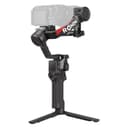
The gimbal most people buying their first one should get. At about 890 g it is light enough that you will actually carry it, and its 2 kg tested payload covers the mirrorless-plus-small-prime kit almost everyone in our camera guides owns. Automated axis locks mean it folds and unfolds without a three-minute ritual, which is the single biggest reason gimbals end up in a closet.

Best overall
$259.00 · View on Amazon

$369.0030% off

Price as of October 9, 2026. #ad How we’re funded

2
DJI RS 4

DJI RS 4

The full-size RS, and the one to buy if your camera is a full-frame body with a real zoom on the front. Its 3 kg tested payload is 50% more than the Mini's, which is the difference between balancing comfortably and balancing right at the edge. You pay for that in weight - about 1,066 g before the grip - so this is a gimbal for planned shoots rather than all-day carry.

Best for full-frame kits
$369.00 · View on Amazon

$469.0021% off

Price as of October 9, 2026. #ad How we’re funded

3
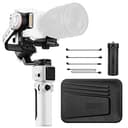
Zhiyun Crane M3S

Zhiyun Crane M3S

The lightest camera gimbal here at 705 g, and the only one with a usable light built into the head - a bi-color panel Zhiyun rates at 1,000 lux. For a solo creator shooting handheld in a hotel room or a cafe that removes a whole second piece of gear from the bag. The trade is payload: 1 kg is a compact mirrorless with a pancake or small prime, and not much more.

Lightest, with a built-in light
$239.00 · View on Amazon

Price as of October 9, 2026. #ad How we’re funded

4
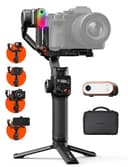
Hohem iSteady MT2 Kit

Hohem iSteady MT2 Kit

The value pick, and the one that includes the extras the others charge for: a magnetic AI tracker that follows you around the frame, and a magnetic fill light with CCT and RGB modes, both in the box. Hohem is a smaller name than DJI or Zhiyun and the app is rougher, but 1.2 kg of payload at 653 g, with tracking included, is a lot of gimbal for the money.

Best value with tracking
$263.20 · View on Amazon

Price as of October 9, 2026. #ad How we’re funded

5
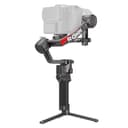
DJI RS 4 Pro

DJI RS 4 Pro

More gimbal than almost anyone reading this needs, which is exactly the point of including it: it marks the ceiling. The 4.5 kg tested payload takes a cinema camera with a cage, a matte box and a follow focus, and the included Ronin Image Transmitter sends a monitoring feed about 200 m to a director. If you are not being paid to hold it, buy the RS 4 Mini and spend the difference on glass.

Best for professional rigs
$869.00 · View on Amazon

Price as of October 9, 2026. #ad How we’re funded

The picks in full

#1Best overall

DJI RS 4 Mini

The gimbal most people buying their first one should get. At about 890 g it is light enough that you will actually carry it, and its 2 kg tested payload covers the mirrorless-plus-small-prime kit almost everyone in our camera guides owns. Automated axis locks mean it folds and unfolds without a three-minute ritual, which is the single biggest reason gimbals end up in a closet.

Strengths

  • Automated axis locks - fold it, pull it out, shoot, with no manual latches
  • About 890 g, the lightest DJI gimbal that still handles a real camera
  • DJI publishes 13 hours of stationary runtime and roughly a 1h50m recharge

Trade-offs

  • 2 kg tested payload rules out a full-frame body with a fast 24-70mm zoom
  • Subject tracking needs the separate Intelligent Tracking Module, sold on its own
Tested payload0.4-2 kg (0.88-4.4 lb)
WeightApprox. 890 g (gimbal, excluding tripod and quick-release plate)
BatteryUp to 13 h stationary (DJI figure; less in active use)
ChargingApprox. 1 h 50 min with a 30W charger
Axis locksAutomated
TrackingDJI RS Intelligent Tracking Module (19 g, magnetic) sold separately

Specifications read from the manufacturer listing, on October 9, 2026.

#2Best for full-frame kits

DJI RS 4

The full-size RS, and the one to buy if your camera is a full-frame body with a real zoom on the front. Its 3 kg tested payload is 50% more than the Mini's, which is the difference between balancing comfortably and balancing right at the edge. You pay for that in weight - about 1,066 g before the grip - so this is a gimbal for planned shoots rather than all-day carry.

Strengths

  • 3 kg tested payload handles a full-frame body with a 24-70mm f/2.8
  • 360-degrees-per-second maximum controlled rotation on all three axes
  • Continuous 360-degree pan for whip-around and orbit moves

Trade-offs

  • Roughly 1,066 g before the grip and plates - noticeably more to hold up
  • Published charge time is about 2.5 hours, the slowest of the DJI gimbals here
Tested payload3 kg (6.6 lb)
WeightApprox. 1,066 g gimbal; grip approx. 203 g, plates 98 g
BatteryUp to 12 h stationary (DJI figure; less in active use)
ChargingApprox. 2.5 h with an 18W PD charger
Max rotation360 degrees/s on pan, tilt and roll

Specifications read from the manufacturer listing, on October 9, 2026.

#3Lightest, with a built-in light

Zhiyun Crane M3S

The lightest camera gimbal here at 705 g, and the only one with a usable light built into the head - a bi-color panel Zhiyun rates at 1,000 lux. For a solo creator shooting handheld in a hotel room or a cafe that removes a whole second piece of gear from the bag. The trade is payload: 1 kg is a compact mirrorless with a pancake or small prime, and not much more.

Strengths

  • 705 g - the lightest camera gimbal in this guide by a clear margin
  • Built-in bi-color 2700-5500K fill light rated at 1,000 lux
  • Handles a phone or an action camera as well as a compact mirrorless body

Trade-offs

  • 1 kg payload is the tightest here - a fast zoom will overload it
  • 7.5-hour rated runtime is about half what the DJI gimbals publish
Max payload1 kg
Weight705 g
Battery7.5 h (Zhiyun lab figure); PD charge in approx. 2 h
Fill lightBuilt-in bi-color 2700-5500K, 1,000 lux
Screen1.22-inch color touchscreen
Mechanical range360-degree pan, 305-degree tilt, 314-degree roll

Specifications read from the manufacturer listing, on October 9, 2026.

#4Best value with tracking

Hohem iSteady MT2 Kit

The value pick, and the one that includes the extras the others charge for: a magnetic AI tracker that follows you around the frame, and a magnetic fill light with CCT and RGB modes, both in the box. Hohem is a smaller name than DJI or Zhiyun and the app is rougher, but 1.2 kg of payload at 653 g, with tracking included, is a lot of gimbal for the money.

Strengths

  • AI tracker and a magnetic CCT/RGB fill light are both included, not add-ons
  • 653 g carrying 1.2 kg - a better payload-to-weight ratio than the Zhiyun
  • Hohem rates the 2,600 mAh battery at up to 17 h, or 6-8 h with AI tracking running

Trade-offs

  • App and firmware are less polished than DJI's Ronin ecosystem
  • Published charge time is about 3 hours, the longest in this guide
Max payload1.2 kg
Weight653 g
Battery2,600 mAh; up to 17 h, 6-8 h with AI tracking
ChargingApprox. 3 h
IncludedMagnetic AI tracker module and magnetic CCT/RGB fill light
Mechanical range360-degree pan, 290-degree tilt, 200-degree roll

Specifications read from the manufacturer listing, on October 9, 2026.

#5Best for professional rigs

DJI RS 4 Pro

More gimbal than almost anyone reading this needs, which is exactly the point of including it: it marks the ceiling. The 4.5 kg tested payload takes a cinema camera with a cage, a matte box and a follow focus, and the included Ronin Image Transmitter sends a monitoring feed about 200 m to a director. If you are not being paid to hold it, buy the RS 4 Mini and spend the difference on glass.

Strengths

  • 4.5 kg tested payload swallows a rigged cinema setup
  • DJI Ronin Image Transmitter included, with roughly 200 m of range
  • Rated from -20 to 45 degrees C, and recharges in about 1.5 h

Trade-offs

  • Several times the price of the RS 4 Mini for capability most creators never use
  • Approx. 1.27 kg before the grip, battery and whatever camera you mount
Tested payload4.5 kg (10 lb)
WeightApprox. 1.27 kg gimbal; grip approx. 265 g
BatteryUp to 13 h stationary (DJI figure; less in active use)
ChargingApprox. 1.5 h with a QC 2.0 / PD charger
TransmissionDJI Ronin Image Transmitter, approx. 200 m range
Operating temp-20 to 45 degrees C

Specifications read from the manufacturer listing, on October 9, 2026.

How we picked

Gimbals are sold on motor torque and app features. In practice, five things decide whether you keep using one, and we ranked in this order:

  • Tested payload against your real kit weight.Not your camera body — your camera plus the lens, plus the plate, plus anything on the hot shoe. A Sony a7 IV with a 24-70mm f/2.8 is comfortably past 1.5 kg, which immediately rules out the 1 kg class. The honest rule is to leave 20-30% of headroom so the motors are not working at their limit, because a gimbal run at its ceiling runs hot, holds balance worse and empties its battery faster.
  • Weight of the gimbal itself.This is the spec that decides whether it comes with you. The spread below is large — from 653 g to about 1.27 kg before you add a camera — and you hold the whole thing at arm’s length. A heavier gimbal is more stable and takes more camera; a lighter one is the one that is actually in the bag on the day.
  • How fast it sets up.Balancing a gimbal is a five-minute job the first time and a 60-second one once you know the camera, but only if the hardware helps. Automated axis locks — which the DJI RS 4 Mini has — mean you fold it, drop it in a bag, and pull it out ready. Manual latches on every axis are the single most common reason a gimbal ends up unused in a cupboard.
  • Battery runtime and charge time.Published runtime figures are measured stationary and balanced, so treat them as a ranking rather than a promise — active use with a heavy lens cuts them substantially. Charge time matters just as much in practice: a gimbal that recharges in 1.5 hours can be revived over lunch, one that takes 3 hours cannot.
  • What is in the box versus what you buy later. This is where the value picks earn their place. Subject tracking on the DJI RS line needs a separate Intelligent Tracking Module; the Hohem includes a tracker and a fill light, and the Zhiyun builds a light into the head. Comparing sticker prices without comparing what each one includes is how people end up spending more than they planned.

What we did not do is claim hands-on results. There is no test footage here and no shoot-out. The specs are published manufacturer figures, dated in the sources; the judgments are ours.

Match the gimbal to your camera, not to your budget

Work out your kit weight before you look at a single price. Weigh the body with the battery and card in it, add the heaviest lens you intend to use on the gimbal, and add about 100 g for the quick-release plate. Then read the payload ratings below against that number. Three bands cover almost everyone:

Up to about 1 kg— a compact mirrorless body with a pancake or small prime: a Sony ZV-E10 with a 35mm, a Fujifilm X-T30 II with the 27mm, a Canon R50 with the kit lens. The Zhiyun Crane M3S at 705 g is the lightest way to stabilize that kind of setup, and the Hohem iSteady MT2 gives you a little more headroom at 1.2 kg.

Up to 2 kg — the band most readers of our hybrid camera guide land in: an APS-C or entry full-frame body with a standard zoom or a fast prime. The DJI RS 4 Mini is built precisely for this and is our overall pick for that reason.

3 kg and up— full-frame with a professional f/2.8 zoom, or anything with a cage, monitor and microphone bolted to it. That is RS 4 territory, and a rigged cinema camera with a matte box and follow focus is RS 4 Pro territory.

Buying one band up “to be safe” is a common mistake, and it is not free: you pay in weight, bulk and money for capability you will not use. Buying one band down to save money is worse — an overloaded gimbal does not partly work, it fails to hold balance at all.

What a gimbal does not fix

Gimbals get sold as a cure for bad-looking footage, and they only fix one specific cause of it. Worth knowing before you spend:

It does not fix your footsteps.A gimbal cancels rotation — pan, tilt and roll — but it does not cancel vertical travel. If you walk normally, the camera still rises and falls with your gait, and the result is smooth but bouncy. The technique is to walk with bent knees in a slight crouch, heel to toe, which is unglamorous and is exactly what separates good gimbal footage from mediocre gimbal footage.

It does not fix autofocus.Smooth motion makes focus errors more obvious, not less. If your camera hunts on a static tripod shot, it will hunt on a moving gimbal shot too — our autofocus modes explainer is the better place to start on that.

It does not fix a wobbly lens choice. Long focal lengths magnify every residual movement, so a 70-200mm on a gimbal will look less stable than a 24mm on the same gimbal. Gimbal work favors wide and standard lenses, which is part of why the primes in our video lens guide pair so well with one.

And it does not replace a tripod.A gimbal makes moving shots good; a tripod makes still shots perfect, costs a fraction as much, and needs no charging. If you have neither, buy the tripod first — our tripod guide covers that. The gimbal is the second purchase, for when your edit needs motion rather than steadiness.

Gimbal, in-body stabilization, or an action camera?

These three solve overlapping problems at wildly different prices, and picking the wrong one is expensive.

In-body stabilization(IBIS) is free if your camera has it and genuinely excellent for handheld static shots and small movements. It cannot stabilize a walking shot — the sensor simply does not have enough travel to counteract that much motion. Our image stabilization explainer covers what it can and cannot do.

An action camera uses electronic stabilization, which crops into the frame and shifts the crop window to cancel shake. It is remarkably effective and needs no setup at all, which is why the models in our action camera guide produce smoother walking footage straight out of the box than a mirrorless camera does. The costs are the tiny sensor, the fixed ultra-wide lens and the cropped field of view.

A gimbal is the only one of the three that gives you smooth motion andyour real camera, your real lens and your real sensor. That is the entire reason to carry one, and it is why gimbal footage has a look that electronic stabilization cannot imitate — the movement is mechanically constant rather than algorithmically corrected. The cost is setup time, weight, and one more battery to remember.

For most creators the honest answer is that you want two of the three: a camera with IBIS for everyday shooting, and a gimbal for the days when the shot needs to move. If you shoot weddings or events, the gimbal goes in the bag every time; if you shoot talking-head video at a desk, you may never need one, and the money is better spent on lighting or audio.

Setup, in the order that saves you time

Three habits make the difference between a gimbal you use and one you resent. First, balance it with the lens you will actually shoot, and if you use a zoom, balance it at the focal length you will use most — extending a zoom shifts the center of gravity and unbalances the roll axis. Second, balance it before you power it on; the motors are there to make fine corrections, not to hold up a lopsided camera, and a gimbal balanced properly will hold its position with the power off. Third, save the balance— mark the plate position with a pencil line or use the app’s profile memory, so the next setup is seconds rather than minutes.

Beyond that, learn one move properly rather than five badly. A slow, straight push toward a subject, walked heel-to-toe with bent knees, cuts into almost any sequence and immediately looks deliberate. The whip pans and orbits the marketing videos show off are worth learning second. Our b-roll guide has the shot list we would practice first.
Frequently asked questions

Do I need a gimbal if my camera already has in-body stabilization?

For handheld static shots, no - in-body stabilization handles those well and costs you nothing. For walking shots, yes. IBIS moves the sensor a few millimeters to cancel small vibrations; it has nowhere near enough travel to cancel the slow roll and drift of a person walking, which is why handheld walking footage still looks unsettled on cameras with excellent IBIS. A gimbal physically holds the whole camera level instead. The two work together rather than competing: most people leave IBIS on while using a gimbal.

What payload rating do I need?

Weigh your camera with its battery and card, add the heaviest lens you plan to use on the gimbal, and add about 100 g for the quick-release plate - then add 20-30% headroom on top. A compact mirrorless body with a small prime usually lands near 700-900 g, so a 1 kg gimbal is tight and a 1.2 kg one is comfortable. An APS-C or entry full-frame body with a standard zoom is typically 1.2-1.6 kg, which is what the 2 kg class is for. Full-frame with a professional f/2.8 zoom, or any caged setup, needs 3 kg or more. Running a gimbal at its rated limit makes it hold balance worse and drains the battery faster, so the headroom is not optional.

Is the DJI RS 4 Mini enough for a full-frame camera?

It depends entirely on the lens. Its tested payload is 0.4-2 kg, so a full-frame body with a compact prime - something like a 35mm or 50mm f/1.8 - fits inside that with room to spare. A full-frame body with a 24-70mm f/2.8 is usually past the sensible working limit once you include the plate, and that is what the full-size RS 4 and its 3 kg rating exist for. If your main video lens is a fast standard zoom, buy the RS 4; if it is a prime or a light kit zoom, the Mini is the better everyday choice because you will carry it more.

Does a gimbal track my subject automatically?

Some do, and it is a real differentiator in what each one costs you overall. The Hohem iSteady MT2 Kit includes a magnetic AI tracker in the box, so subject following works out of the box. DJI's RS line supports tracking through the separate RS Intelligent Tracking Module, which is a 19 g magnetic accessory sold on its own - so a DJI gimbal plus tracking costs more than the headline price suggests. Tracking is most useful if you shoot yourself solo, with the camera on a tripod-mounted gimbal; for operating the gimbal by hand, you are framing manually anyway.

Why does my gimbal footage still look bouncy?

Because a gimbal stabilizes rotation, not vertical travel. It cancels pan, tilt and roll, but when you walk your whole body rises and falls, and the gimbal faithfully carries the camera up and down with you. The fix is technique rather than hardware: walk in a slight crouch with bent knees, roll heel to toe, keep your arms slightly extended and let them absorb the movement, and move more slowly than feels natural. Shooting a little wider also helps, because wide lenses magnify residual movement far less than long ones do.

Gimbal or tripod first?

Tripod, in almost every case. A tripod costs a fraction as much, needs no charging or balancing, and solves the more common problem - keeping a shot perfectly still for interviews, low light, long exposures and product work. A gimbal only earns its place once your edits genuinely need camera movement. If you are building a first video kit, the honest order is tripod, then audio, then lighting, then gimbal.

Sources

Keep reading