Wide Open. Gear

The Best Photography Books

Six books that each do one thing well - exposure, composition, vision, light, looking and thinking - and why reading in that order is the point.

By Stephen V.Last updated How we pick

If you are buying one photography book, buy Bryan Peterson’s Understanding Exposure — 176 pages that teach the one technical idea everything else depends on, using paired photographs of the same scene shot different ways. If you have already got the settings and your pictures still feel flat, the book you need is Read This if You Want to Take Great Photographs, which is about composition and intent and takes an evening. And if you light anything — product, food, faces — Light Science & Magic is the reference, and there is no real competition for it.

The problem with photography book lists is that they treat books as interchangeable, when the useful question is which problem are you stuck on. A book about exposure will not fix a composition problem. A monograph will not teach you flash. Criticism will not make your photographs sharper and is not trying to. So this list is organized by the problem each book solves, and the honest advice is to buy one, finish it, and shoot for a month before buying another.

All six are currently in print and in stock, which is not true of most of the famous titles you will see recommended. For every pick we list the publisher, the specific edition and the page count, read from the publisher’s own listing or the cataloging record — because with books the edition matters, and “Understanding Exposure” alone describes four different books published across twenty years.

How this is funded:we earn a commission if you buy through our links, at no extra cost to you. It never changes which product we recommend, and we’ll tell you plainly when to skip one. Full disclosure.

Quick picks

Ranked on published specs and buyer fit. Select a row to jump to the full write-up. We have not tested these products — here is exactly what we do instead.

#ProductBest forPrice
1
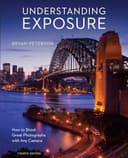
Bryan Peterson Understanding Exposure (4th Edition)

Bryan Peterson Understanding Exposure (4th Edition)

The book to buy first, and for most people the only technical photography book they will ever need. It teaches one idea — that aperture, shutter speed and ISO are three ways of answering the same question — and it teaches it with paired example photographs of the same scene shot different ways, which is why it works on people who bounce off written explanations. If you shoot on auto and want to stop, this is the shortest route out.

Best first book
$15.03 · View on Amazon

$30.0050% off

Price as of October 27, 2026. #ad How we’re funded

2
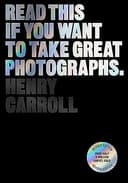
Henry Carroll Read This if You Want to Take Great Photographs

Henry Carroll Read This if You Want to Take Great Photographs

The fastest useful photography book in print. 144 pages, each idea on a spread, each illustrated with a photograph by someone whose work you should know — Cartier-Bresson, Arbus, Leibovitz. It is not a technical manual and does not try to be; it is a book about composition and intent that a complete beginner can finish in an evening and come away shooting differently.

Best on composition
$17.05 · View on Amazon

$19.9915% off

Price as of October 27, 2026. #ad How we’re funded

3
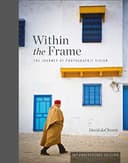
David duChemin Within the Frame (10th Anniversary Edition)

David duChemin Within the Frame (10th Anniversary Edition)

The book for the stage after the settings make sense and the photographs still do not. duChemin's subject is vision — deciding what a photograph is about before you raise the camera — worked through travel and documentary photography of people and places. The tenth-anniversary edition is the redesigned one, at 304 pages with the author's own images throughout.

Best on finding your vision
$21.99 · View on Amazon

$39.9545% off

Price as of October 27, 2026. #ad How we’re funded

4
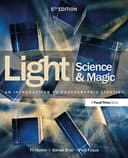
Hunter, Biver & Fuqua Light Science & Magic (5th Edition)

Hunter, Biver & Fuqua Light Science & Magic (5th Edition)

The reference on how light behaves, and the one book on this page that will change what you can photograph rather than how you think about it. It starts from the physics — the family of angles, reflection, transmission — and works up to specific setups for metal, glass, liquid, food and faces. It is a textbook, it reads like one, and nothing else covers the ground.

Best on lighting
$36.95 · View on Amazon

Price as of October 27, 2026. #ad How we’re funded

5
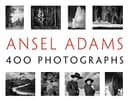
Ansel Adams 400 Photographs

Ansel Adams 400 Photographs

The monograph to own if you own one, and the cheapest way to study tonal control at a high level. 440 pages of Adams's work selected and sequenced by Andrea G. Stillman, who worked as his assistant — which matters, because the editing is what separates a useful monograph from a calendar. Looking hard at photographs is a skill, and this is a good place to practice it.

Best book of photographs
$25.96 · View on Amazon

$39.9935% off

Price as of October 27, 2026. #ad How we’re funded

6
Susan Sontag On Photography

Susan Sontag On Photography

Six essays on what photographs do to us, first published in 1977 and still the book serious photographers argue about. Sontag is interested in questions no gear review raises: what it means to photograph suffering, whether a photograph is evidence, what the act of photographing does to the person holding the camera. It is criticism rather than instruction, and it will not help you take a sharper picture.

Best on why it matters
$17.65 · View on Amazon

$19.007% off

Price as of October 27, 2026. #ad How we’re funded

The picks in full

#1Best first book

Bryan Peterson Understanding Exposure (4th Edition)

The book to buy first, and for most people the only technical photography book they will ever need. It teaches one idea — that aperture, shutter speed and ISO are three ways of answering the same question — and it teaches it with paired example photographs of the same scene shot different ways, which is why it works on people who bounce off written explanations. If you shoot on auto and want to stop, this is the shortest route out.

Strengths

  • Built around side-by-side example images rather than diagrams, so the effect of each setting is visible
  • 176 pages — short enough to finish, which matters more than comprehensiveness in a first book
  • The fourth edition expands the flash coverage and replaces much of the imagery

Trade-offs

  • Covers exposure, not composition — you will want a second book for seeing
  • Some of the camera-specific advice reads as dated next to modern mirrorless metering
AuthorBryan Peterson
PublisherAmphoto Books
EditionFourth edition, published March 15, 2016
Pages176

Specifications read from the manufacturer listing, on October 23, 2026.

#2Best on composition

Henry Carroll Read This if You Want to Take Great Photographs

The fastest useful photography book in print. 144 pages, each idea on a spread, each illustrated with a photograph by someone whose work you should know — Cartier-Bresson, Arbus, Leibovitz. It is not a technical manual and does not try to be; it is a book about composition and intent that a complete beginner can finish in an evening and come away shooting differently.

Strengths

  • One idea per spread, each anchored to a well-known photograph — it teaches by example
  • 144 pages and genuinely readable in a sitting
  • The revised edition adds new photographers and a chapter on photographing feeling

Trade-offs

  • Deliberately thin on technique — pair it with a book on exposure
  • Several follow-up titles in the same series cover people and places, so it is an entry point rather than a complete course
AuthorHenry Carroll
PublisherLaurence King Publishing
EditionRevised and updated edition, June 2023
Pages144

Specifications read from the manufacturer listing, on October 23, 2026.

#3Best on finding your vision

David duChemin Within the Frame (10th Anniversary Edition)

The book for the stage after the settings make sense and the photographs still do not. duChemin's subject is vision — deciding what a photograph is about before you raise the camera — worked through travel and documentary photography of people and places. The tenth-anniversary edition is the redesigned one, at 304 pages with the author's own images throughout.

Strengths

  • Addresses intent and storytelling, which is the gap most self-taught photographers hit at around year two
  • 304 pages, and the author's travel and documentary work carries the argument
  • Strongest on photographing people in unfamiliar places, honestly and with consent

Trade-offs

  • Aimed at travel and documentary work — less direct value if you shoot studio, product or sport
  • Essentially no technical instruction; it assumes you already have that
AuthorDavid duChemin
PublisherRocky Nook
Edition10th anniversary edition, March 2019
Pages304

Specifications read from the manufacturer listing, on October 23, 2026.

#4Best on lighting

Hunter, Biver & Fuqua Light Science & Magic (5th Edition)

The reference on how light behaves, and the one book on this page that will change what you can photograph rather than how you think about it. It starts from the physics — the family of angles, reflection, transmission — and works up to specific setups for metal, glass, liquid, food and faces. It is a textbook, it reads like one, and nothing else covers the ground.

Strengths

  • Explains why a lighting setup works, so you can derive your own instead of copying diagrams
  • The definitive treatment of the hardest subjects: polished metal, glass and liquid
  • Equipment-agnostic — the principles apply to a window, a speedlight or a studio strobe

Trade-offs

  • Written as a textbook; it is work, not a weekend read
  • The most expensive book here, and sellers list its length inconsistently
  • Studio-oriented — less relevant if you shoot available light outdoors
AuthorsFil Hunter, Steven Biver and Paul Fuqua
PublisherRoutledge / Focal Press
EditionFifth edition, 2015
Pages382 (retailer listings differ slightly)

Specifications read from the manufacturer listing, on October 23, 2026.

#5Best book of photographs

Ansel Adams 400 Photographs

The monograph to own if you own one, and the cheapest way to study tonal control at a high level. 440 pages of Adams's work selected and sequenced by Andrea G. Stillman, who worked as his assistant — which matters, because the editing is what separates a useful monograph from a calendar. Looking hard at photographs is a skill, and this is a good place to practice it.

Strengths

  • 440 pages of work spanning Adams's career, edited by his former assistant
  • The reference for what black-and-white tonal separation can do before you touch a slider
  • Paperback edition, so it costs a fraction of a typical large-format monograph

Trade-offs

  • A book of photographs, not instruction — it teaches by looking, not telling
  • Landscape only; nothing here about photographing people
  • Reproduction in a paperback cannot match a large-format print edition
PhotographerAnsel Adams, edited by Andrea G. Stillman
PublisherLittle, Brown and Company
EditionFirst paperback edition, 2013
Pages440

Specifications read from the manufacturer listing, on October 23, 2026.

#6Best on why it matters

Susan Sontag On Photography

Six essays on what photographs do to us, first published in 1977 and still the book serious photographers argue about. Sontag is interested in questions no gear review raises: what it means to photograph suffering, whether a photograph is evidence, what the act of photographing does to the person holding the camera. It is criticism rather than instruction, and it will not help you take a sharper picture.

Strengths

  • The standard critical text on photography, and short enough to read in a weekend at 224 pages
  • The chapter on photographing other people's pain is the most useful thing written on documentary ethics
  • Current Picador paperback edition, so it is cheap and in print

Trade-offs

  • Contains no practical instruction of any kind
  • Written before digital photography, so some of its examples feel historical
  • Dense, polemical prose — it demands attention in a way a technique book does not
AuthorSusan Sontag
PublisherPicador
EditionPicador paperback, April 2025 (first published 1977)
Pages224

Specifications read from the manufacturer listing, on October 23, 2026.

How we chose these six

We applied four criteria, in this order, and they ruled out more famous books than they let in.

1. It solves one stated problem.Every book here has a single job, and the six jobs do not overlap: exposure, composition, vision, light, looking, and thinking about the medium. A “complete guide to photography” that covers all six covers none of them well, which is why no such book is on this list.

2. It is short enough to finish.This is a harsher filter than it sounds. An unfinished 600-page encyclopedia teaches you nothing; a finished 144-page book changes how you shoot on Saturday. Four of the six picks are under 310 pages, and the two long ones are long for a reason — one is a reference you consult, the other is a book of photographs.

3. It is in print, in a specific edition we can name. Photography books go out of print constantly, and recommendation lists full of unbuyable titles are everywhere. Every pick here had a buyable offer when this page was published, and we name the edition because editions differ: the fourth edition of Understanding Exposure has different images and expanded flash coverage compared with the third.

4. It teaches with photographs, not just prose.The books that work on photographers show you the result. Peterson pairs exposures of the same scene; Carroll anchors every idea to a photograph by someone well known; Hunter, Biver and Fuqua diagram a setup and then show what it produced. The one exception is Sontag, which contains no photographs at all — and that is deliberate, because it is a book about photographs rather than a book of them.

Read them in this order

Stage one: the camera is the obstacle. You are shooting on auto, or on manual and guessing. Read Understanding Exposure. The goal is to reach the point where you can look at a scene and predict what settings it needs, which takes most people a few weeks of shooting after reading it. Our aperture, shutter speed and ISO explainers cover the same ground for free if you want to test whether the subject interests you before you spend anything.

Stage two: the pictures are technically fine and boring. This is where almost everyone stalls, and it is a composition problem, not a gear problem. Read Read This if You Want to Take Great Photographs. Then go shoot the same subject twenty times. Our composition basics guide is the short version of this stage.

Stage three: you can make a good photograph and you do not know what to point it at. Read Within the Frame. This is the book about having something to say, and it is the stage where most self-taught photographers either find a subject or quietly stop shooting.

In parallel, whenever you start controlling light. Read Light Science & Magic— not cover-to-cover, but the chapters for the surface you are fighting. Metal, glass and liquid each have their own chapter, and each will save you an afternoon. Pair it with our three-point lighting explainer and, if you are buying rather than borrowing, the lights we recommend for product work.

Alongside all of it, slowly. Ansel Adams: 400 Photographs and On Photography are not stages, they are habits. Looking hard at good photographs is a trainable skill and a monograph is the gym; thinking about what photographs do is what stops you making the same picture for ten years.

What we deliberately left off

Camera manuals dressed as books. Anything titled for a specific body goes out of date with that body and is worse than the free manufacturer PDF. Buy nothing with a model number in the title.

Software books. Lightroom and Photoshop change twice a year, and a printed book about either is stale before it ships. Video is the right medium for software. Our editing guide covers the concepts that outlast the interface.

The 600-page encyclopedias. They are reference works sold as courses. Nobody reads them, and the people who recommend them have usually read the first three chapters.

Out-of-print classics.Several books that genuinely belong on a list like this — Adams’s own instructional trilogy, some of the Freeman titles — are currently hard to buy new at a sensible price. We will not pad a list with books you cannot get, though they are worth looking for secondhand.

Are photography books still worth buying?

Reasonably asked, when every topic here has a thousand free videos. Two arguments for the book.

The first is sequence. A book is an argument built in order, where chapter four assumes chapter three. A video is a self-contained answer to a question you already knew to ask, which is useless for the things you do not know you are missing — and the gap in a stalled photographer’s knowledge is almost always something they do not know to search for.

The second is the printed image. Photographs on paper read differently from photographs on a backlit screen: the tonal range is narrower, so the photographer’s decisions about where to put the detail become visible. That is most of what a monograph teaches, and it does not survive the transfer to a phone.

Against that: books cost money that could buy a lens, and nothing you read substitutes for shooting. If you have a kit zoom, no prime, and $30, the cheapest fast prime will improve your photographs faster than any book on this page. Books are what you buy when the gear is no longer the limitation — our camera or lens upgrade guide is the honest test of whether you are there yet.
Frequently asked questions

What is the best photography book for beginners?

Understanding Exposure, Fourth Edition by Bryan Peterson — 176 pages from Amphoto Books that teach the relationship between aperture, shutter speed and ISO using paired photographs of the same scene. It is the standard first recommendation because it is short, visual and about the one thing every other skill depends on.

Which photography book should I read after Understanding Exposure?

A composition book, because exposure is where beginners get stuck first and composition is where they get stuck second. Read This if You Want to Take Great Photographs by Henry Carroll is 144 pages, one idea per spread, each anchored to a well-known photograph. After that, Within the Frame for the question of what to photograph at all.

What is the best book on photography lighting?

Light Science & Magic by Fil Hunter, Steven Biver and Paul Fuqua, now in its fifth edition from Routledge. It explains why lighting setups work rather than listing diagrams to copy, with dedicated chapters on the hardest surfaces — polished metal, glass and liquid. It reads like a textbook, because it is one.

Are photography books worth it when everything is on YouTube?

For things you do not know to search for, yes. A book is built in sequence, so it fills gaps you cannot name; a video answers a question you already had. Printed photographs also read differently from screen images, which is most of what a monograph teaches. For software and for specific camera menus, video is the better medium.

Should I buy a book of photographs or a how-to book?

Both, eventually, and the how-to book first. Instruction gets you to competence; looking hard at good photographs is how you get past it. Ansel Adams: 400 Photographs is the cheap way to start — 440 pages edited by his former assistant, in a paperback edition that costs far less than a typical monograph.

Does the edition of a photography book matter?

Yes, more than for most non-fiction. Understanding Exposure has run to four editions with different images and expanded flash coverage; Light Science & Magic is on its fifth; Within the Frame's tenth-anniversary edition is a redesign of the 2009 original. We name the exact edition for every pick, and the ISBN is what to match when you buy.

Is On Photography by Susan Sontag worth reading?

If you want to think about the medium rather than improve at it. Sontag's six essays, first published in 1977 and now in a 224-page Picador paperback, are about what photographs do to the people who take and look at them. The essay on photographing suffering is the most useful thing written on documentary ethics. It contains no technical instruction at all.

What photography book makes a good gift?

Ansel Adams: 400 Photographs — it is a book of photographs rather than homework, it costs the same as a mid-range gift, and it does not assume anything about the recipient's skill level or camera system. Read This if You Want to Take Great Photographs is the better gift for someone who has just bought their first camera.

Sources

Keep reading