Sony vs Canon for Video
Two systems, two philosophies - specification and lens choice against color and ease. Which brand to commit to if video is what you shoot.
If you are choosing a system for video in 2026: Sony if you want the widest lens choice and the stronger specification for the money, Canon if you want color you like straight out of the camera and a body that fights you less. Both brands make cameras that are entirely capable of professional work, and nobody has ever noticed the badge on a camera in a finished video. What you are really choosing is a lens system you will live inside for a decade, and a set of defaults you will either enjoy or work around.
That is the honest headline. Everything below is the detail behind it, and the four bodies at the end are the specific cameras we would buy in each brand at each budget.
Where Sony is genuinely ahead
The lens system.This is the strongest argument either brand has and it belongs to Sony. E-mount is the largest mirrorless lens system there is, and crucially it has full third-party autofocus support — Sigma and Tamron both build for it, which means at nearly every focal length there is a cheap option, a sharp option and a fast option. Canon has restricted third-party autofocus lenses on RF for most of the mount’s life, so your choices are Canon’s choices. On a budget, that difference is the whole game: the fast primes we recommend most often in best prime lenses are Sigma E-mount lenses.
Specification per dollar.Sony tends to put the newer video features into cheaper bodies first — log profiles, 10-bit capture, higher frame rates. If you want to shoot log and grade, you reach it sooner and for less on Sony. See log video explained for whether you actually want to.
Creator-specific design. The ZV line is built for talking to a lens rather than through a viewfinder: good built-in directional microphones, windscreens in the box, background-blur and product-showcase buttons. These are small conveniences that add up on a camera you use daily.
Where Canon is genuinely ahead
Color out of the camera.Canon’s default rendering of skin tones is the most widely liked in the industry, and that is not a vague aesthetic claim — it is time. Footage that looks right without grading is footage you publish sooner. If you are a one-person operation posting weekly, that matters more than a specification.
Ease of use.Canon’s menus are clearer, its guided interface on entry bodies genuinely teaches, and its Dual Pixel autofocus is the easiest system in this class to simply trust. For a first camera, these are the things that determine whether you keep using it.
Uncropped 4K where it counts.This has flipped over the last few years. Canon’s entry R50 shoots oversampled, uncropped 4K30, and the R6 Mark II shoots uncropped 4K60 — while Sony’s cheaper bodies crop in 4K and even the a7 IV takes a Super 35 crop at 4K60. If you hold a camera at arm’s length, an uncropped sensor readout is worth more than a longer spec list.
Adapting DSLR glass. If you already own Canon EF lenses, the EF-to-RF adapter works well and keeps your investment alive. That alone settles the question for a lot of people upgrading from a Canon DSLR.
What does not actually differ
Three things people argue about that should not decide your purchase.
Image quality at the sensor level. Two cameras of the same generation and sensor size produce images that are indistinguishable in normal use. Lens choice and lighting move your image quality far more than the brand does.
Autofocus reliability.Both are very good. Canon’s feels more natural in how it hands focus between subjects; Sony’s is more tenacious once locked. Neither will cost you a shot you would otherwise have got.
Stabilization.Both brands’ in-body stabilization is effective, and neither brand’s stabilization can smooth a walking shot — that is a gimbal’s job regardless of badge. See image stabilization explained and best gimbals for cameras.
Decide on these three questions
How many lenses will you own?One or two, forever? The lens argument mostly evaporates and you should buy on handling and color, which favors Canon. Building a kit over years? Sony’s catalogue and third-party support will save you real money at every step.
Do you grade your footage?If you color-grade every project, you want the most flexible capture for the money, which is Sony. If you want to cut and publish, Canon’s defaults do more of the work for you.
Do you hold the camera at arm’s length?If you vlog selfie-style, check the 4K crop on the specific body rather than the brand — it changes your effective focal length, and it is the most common unpleasant surprise for new buyers in either system.
With those answered, the four bodies below are where we would actually put the money: one Sony and one Canon at each of two budgets.
How this is funded:we earn a commission if you buy through our links, at no extra cost to you. It never changes which product we recommend, and we’ll tell you plainly when to skip one. Full disclosure.
Quick picks
Ranked on published specs and buyer fit. Select a row to jump to the full write-up. We have not tested these products — here is exactly what we do instead.
| # | Product | Best for | Price |
|---|---|---|---|
| 1 | 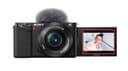 Sony ZV-E10 The interchangeable-lens vlogging camera most people should actually buy: a big APS-C sensor, a fully articulating screen, and Sony's E-mount so you can grow into better glass later. It skips a viewfinder and IBIS to hit its price, which is the right trade for a creator shooting off the screen. | Best Sony on a budget | |
| 2 | 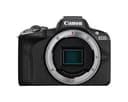 Canon EOS R50 The friendliest beginner mirrorless camera going: Canon's excellent Dual Pixel autofocus, a genuinely helpful guided interface, and oversampled 4K30 in a body small enough to carry everywhere. It leans consumer — small grip, one slot — but it nails the thing beginners actually struggle with, which is focus. | Best Canon on a budget | |
| 3 | 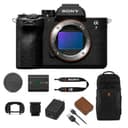 Sony a7 IV The default full-frame hybrid for good reason: 33 megapixels is plenty for stills and cropping, autofocus is excellent, and it shoots 4K60 in Super 35. It is more camera than most creators need — but if you are building a paid photo-and-video kit, it is the safe center of it. | Best Sony for serious work | $1,998.00 · View on Amazon Price as of October 10, 2026. #ad How we’re funded |
| 4 | 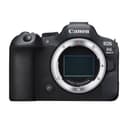 Canon EOS R6 Mark II Canon's do-everything full-frame hybrid and the natural rival to the Sony a7 IV. Uncropped 4K60, superb autofocus and in-body stabilization, tuned more for speed and video than for megapixels. If you are on Canon glass and want one body for paid work, this is it. Canon shipped the R6 Mark III in late November 2025, so the Mark II is now the value option in the line rather than Canon's newest hybrid — which is exactly why it still earns a place here. | Best Canon for serious work |
How those four line up
At the entry level, the ZV-E10 and the R50 are the same price and opposite in character. The Sony is purpose-built for talking to a lens — a directional three-capsule mic with a windscreen in the box, a background-defocus button, a product-showcase mode — and its mount opens onto the largest cheap-lens catalogue in mirrorless. Its weakness is a crop in 4K30, which costs you field of view at arm’s length. The Canon answers with oversampled, uncropped 4K30, the friendliest autofocus in the class, and a guided interface that teaches while you shoot; its weakness is the thin RF-S lens lineup. Shorthand: Sony if you will buy lenses, Canon if you want the camera to be easy and your 4K to stay wide.
At the serious end, the a7 IV and the R6 Mark II are the two default full-frame hybrids and the choice is clean. The Sony gives you 33 megapixels — real cropping room, better for anyone whose video work sits alongside paid stills — but its 4K60 comes with a Super 35 crop. The Canon gives you uncropped 4K60 with good rolling-shutter control from 24 megapixels, which is the better video specification and the weaker stills one. Both have in-body stabilization and dual card slots. One honest note on the Canon: the R6 Mark III shipped in late 2025, so the Mark II is now the value option in Canon’s line rather than its newest hybrid.
Check the live prices above before committing. Both brands discount aggressively at different times of year, and at these prices a few hundred dollars either way is a lens.
If you are starting from zero today
Pick on the two questions that are hard to reverse. First: do you want the widest possible lens choice at the lowest possible prices, including Sigma and Tamron? That is Sony, and it is the strongest single argument in this whole comparison. Second: do you want to spend as little time as possible fighting the camera and grading footage? That is Canon.
Everything else — sensor quality, autofocus reliability, build, battery — is close enough in 2026 that it should not decide the purchase. Neither brand will hold you back. What will hold you back is a lens you cannot afford, a camera you find annoying to operate, or a workflow you do not enjoy, and those are the things these two questions actually predict.
For the specific bodies in context, see best Sony cameras, best cameras for YouTube and best hybrid cameras for photo and video.
Frequently asked questions
Is Sony or Canon better for video?
Sony usually wins on specification and lens choice; Canon usually wins on color straight out of the camera and ease of use. At the entry level Canon's uncropped 4K and guided interface make it the easier first camera, while Sony's lens system makes it the better long-term platform. At full-frame, Canon's R6 Mark II has the stronger video spec and Sony's a7 IV the stronger stills spec.
Which brand has better autofocus for video?
Both are excellent and the gap is small. Canon's Dual Pixel system is famously easy to trust and has a slight edge in how naturally it hands focus between subjects; Sony's AI-based subject recognition is extremely tenacious once locked on. Neither will be the reason your footage fails.
Does Canon still crop its 4K?
It depends on the body, and it is worth checking per camera rather than per brand. The R50 shoots oversampled, uncropped 4K30 and the R6 Mark II shoots uncropped 4K60. Older and cheaper Canon bodies — the R100, for example — do crop heavily in 4K, which is one of the main things the extra money buys you.
Is Sony or Canon color better?
Canon's out-of-camera color is the more widely liked, particularly for skin tones, and that means less time grading. Sony's color has improved substantially and its log profiles are well supported, so it is the more flexible starting point if you grade every project anyway. This is genuinely a preference rather than a quality gap.
Which lens system is better for video?
Sony E-mount, on availability and price. It is the largest mirrorless system with full third-party support from Sigma and Tamron, so there is a cheap, a sharp and a fast option at nearly every focal length. Canon RF has excellent first-party glass but limited third-party autofocus lenses and a thin RF-S lineup for crop bodies.
Can I use Canon EF lenses on an RF body?
Yes, with Canon's EF-to-RF adapter, and it works well — which makes Canon the easier choice if you already own DSLR glass. Sony offers adapters for other mounts too, but adapting EF lenses to a Canon RF body is the smoothest version of this since both ends are first-party.
Should I switch brands if I already own lenses?
Almost never. A lens collection is usually worth more than the body it sits on, and switching means selling at a loss and rebuying at retail. Spend that money on better glass or on lighting and audio, both of which improve your video more than a brand change will.
Which brand is cheaper overall?
Sony, once you count lenses. Bodies are competitive and both brands discount heavily, but third-party support means the cost of building out an E-mount kit is lower at every stage. If you only ever buy one or two lenses, that advantage is small.
Sources
- Sony — Official camera specifications — Sony's official Alpha and ZV camera spec pages (accessed July 18, 2026)
- Canon USA — Official EOS specifications — Canon's official EOS R and PowerShot spec pages (accessed July 18, 2026)
Keep reading
Best Cameras for YouTube
The bodies we point growing channels at, across both brands.
See YouTube camerasSony a7 IV vs Canon R6 Mark II
The brand argument at full-frame, head to head.
Compare themBest Hybrid Cameras for Photo and Video
One body for both jobs, ranked across every brand.
See hybrid camerasLog Video Explained
What S-Log and C-Log are for, and when to leave them off.
Read the explainer